Could a T-Shirt Save Your Life? The Rise of Comfortable Stab-Proof Clothing in Europe
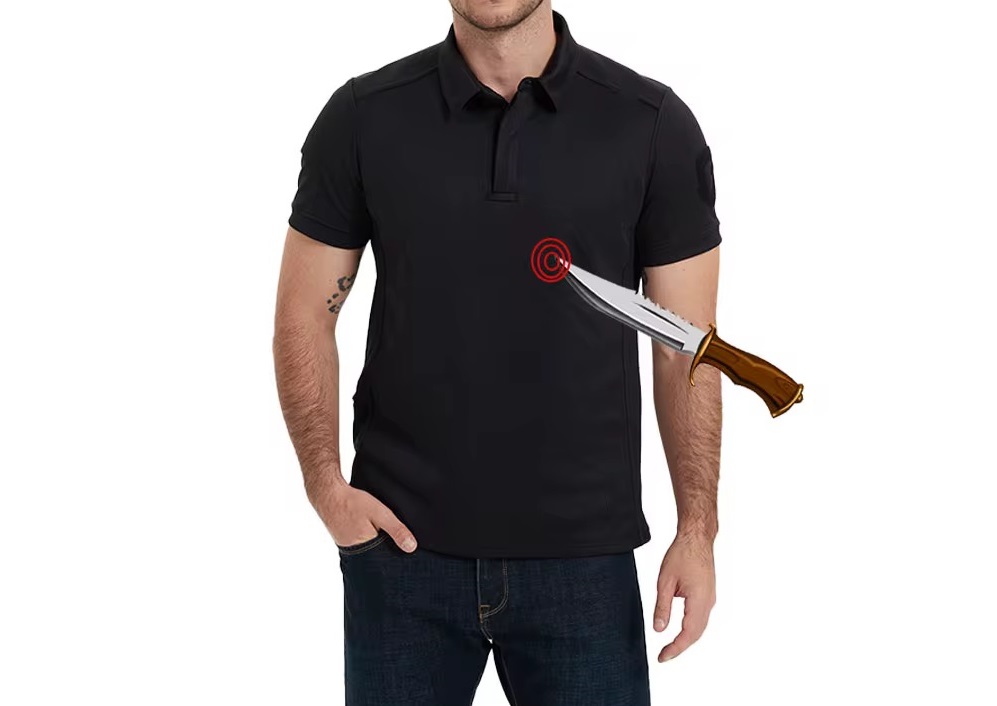
Full Stab Proof Polo T Shirt
Personal Safety in Europe’s Major Cities: What the Data Actually Shows
Most people who visit or live in London, Paris, Berlin, Rome, Budapest, Antwerp or any other major European city will never experience violent crime firsthand. That’s the first fact worth stating plainly, because it gets lost in headlines. The second fact is that risk isn’t evenly distributed — it clusters by neighbourhood, time of day, and type of crime, and understanding that pattern is far more useful than a vague sense of unease.
This guide pulls together official police statistics, government travel advisories, and independent safety indices for seven major European cities, and translates them into practical, unremarkable, everyday habits. Nothing here requires special equipment or a change in lifestyle — just an accurate picture of where risk actually sits.
A note on the data before we start
Three very different kinds of sources get cited when people ask “is this city safe,” and they measure different things:
- Official police-recorded crime statistics (e.g., the UK’s Office for National Statistics, Germany’s Landeskriminalamt figures, France’s SSMSI). These count reported offences and are the most rigorous, but they miss unreported crime and can shift when police change how they classify or record an offence.
- Perception-based indices like Numbeo’s Crime and Safety Index, built from user-submitted survey responses rather than police records. Useful for a general “feel” of a city, but subjective and prone to sampling bias (people who post are often more likely to have had a bad experience).
- Government travel advisories, such as the UK Foreign, Commonwealth & Development Office (FCDO) or the US Overseas Security Advisory Council (OSAC), which weigh risks to travellers specifically, including political and geopolitical factors that don’t show up in local crime statistics at all.
Where possible, this guide draws on the first category and flags clearly when a figure comes from the second or third.
London
London is the most heavily documented city on this list, thanks to detailed Metropolitan Police and Home Office reporting.
- Police recorded around 16,344 knife or sharp-instrument offences in London in the year to March 2025, up from 15,016 the year before, the highest figure in the series to that point.
- Across England and Wales as a whole, there were roughly 53,000 sharp-instrument offences in the year to March 2025 — a slight (1.2%) fall on the prior year.
- The Metropolitan Police recorded the highest knife-offence rate of any force area in England and Wales, at 182 per 100,000 people, but London also posted one of the steepest year-on-year improvements: knife crime fell by around 16.6% in 2025, according to Mayor’s Office for Policing and Crime figures, and the decline continued into early 2026 (down roughly 6% between January and April 2026 versus the same period a year earlier).
- Within that overall improvement, one category moved the other way: domestic-abuse-linked knife offences rose 15.6% in the same four-month window, a reminder that “knife crime” in the statistics is not solely a stranger-danger phenomenon.
- Teenage homicides fell sharply — down 48% to 34 victims in the year to March 2025, with knife-related teenage deaths down 59%.
- Sharp instruments were involved in 46% of all homicides recorded in England and Wales in 2023/24.
What this means practically: London’s knife crime is real, concentrated in specific boroughs and specific hours (late evening into the early morning, particularly around nightlife and transport hubs), and has been trending downward. Most boroughs and most hours carry low risk. If you’re commuting, the main practical steps are unremarkable: stay aware near known nightlife clusters late at night, keep phones and valuables out of sight on the Tube and buses, and use licensed minicabs or black cabs rather than unlicensed pickups, which is where a disproportionate share of serious incidents against travellers originate.
Paris
Paris presents an unusually clear split between property crime (very common, mostly non-violent) and violent crime (comparatively rare by international standards).
- The French interior ministry’s statistical service (SSMSI) recorded around 259,000 reported incidents across the city of Paris in 2024, against a population of roughly 2.3 million residents.
- Homicide attempts rose 5% nationally to 4,501 in 2025, and non-domestic and domestic physical violence combined rose to roughly 473,000 incidents nationally — but within Paris itself, violent incidents actually fell by 6.5% that year, and by 3.2% across the wider metropolitan area.
- Paris’s intentional homicide rate has stayed below roughly 1.5 per 100,000 residents in recent years, in line with other major Western European capitals and markedly lower than most large US cities.
- The US State Department’s OSAC rates Paris low on its violent-crime scale, explicitly flagging non-violent street crime — pickpocketing, phone snatching, distraction scams — as the dominant risk to visitors rather than violence.
- The 1st, 2nd and 8th arrondissements post the highest recorded theft rates, but this largely reflects tourist foot traffic and wealth concentration rather than danger to residents; the areas requiring more caution after dark tend to be around major train stations and parts of the northern 18th, 19th and 20th arrondissements.
What this means practically: in Paris, your realistic risk is a stolen phone or wallet, not a violent encounter. Keep bags zipped and worn across the body, be sceptical of anyone approaching you with a “found ring,” petition, or friendship-bracelet routine near major landmarks, and treat crowded platforms at Gare du Nord, Châtelet and similar hubs as prime pickpocket territory.
Berlin
Berlin’s official crime statistics, published annually by the city’s Interior Senate, show a mixed picture: overall crime falling, but specific violent categories rising.
- Total recorded offences fell 6.7% in 2025, from 539,049 the year before to 502,743.
- Knife-related incidents rose 5.5% to 3,599 in 2025 (roughly ten reported incidents per day citywide), though officials noted a more detailed recording system contributed to part of that increase, and roughly half of recorded “knife attacks” involved threats rather than physical injury.
- Berlin introduced weapon-and-knife-free zones around Görlitzer Park, Kottbusser Tor and Leopoldplatz in 2025; police reported knife incidents within those specific zones fell between 25% and 45% over the year.
- Robbery and bodily-harm offences both declined slightly in 2025, while home burglaries rose sharply (up 24.5%) and firearms-related offences increased.
What this means practically: as in most large cities, Berlin’s risk is concentrated around a short list of known nightlife and transit hotspots rather than spread evenly across the city. The knife-free zones are a useful signal of where local authorities themselves have identified elevated risk.
Rome
Rome’s safety profile is dominated by opportunistic property crime rather than violence.
- Independent tourism-safety analyses and OSAC-style guidance consistently describe Rome as safe for visitors, with violent crime targeting tourists “rare,” while pickpocketing and bag-snatching are common around major monuments and transport.
- One tourism-industry analysis of theft-related review data estimated pickpocketing risk in Rome at roughly 1 in 250 visits, concentrated around the Colosseum, Trevi Fountain, Vatican approaches and Termini station.
- Rome’s Numbeo perception-based Safety Index sits around 53 out of 100 (mid-range for major European capitals — safer-feeling than Paris or London in this particular survey-based measure, less safe-feeling than Northern European capitals).
What this means practically: the standard advice applies — front pockets or zipped bags for valuables on crowded buses and metro Line A, healthy scepticism toward staged distractions (spilled substances, “free” bracelets, petitions) near landmarks, and normal caution after dark around Termini.

Full Stab Proof T-Shirt
Budapest
Budapest is one of the better-documented “safe capital” cases in the data.
- Hungary’s Central Statistical Office data, cited in independent safety analyses, shows Budapest recording significantly lower violent crime than most comparable European capitals, with mugging and kidnapping risk both rated low.
- The city’s Numbeo Safety Index (around 76–77 out of 100 in recent measures) consistently places it among Europe’s ten safest capitals by that survey-based metric.
- The US State Department rates Hungary at its lowest travel-advisory tier (Level 1: “exercise normal precautions”).
- The dominant risk to visitors is pickpocketing on public transport, particularly metro escalators, and around Váci utca and Buda Castle.
What this means practically: Budapest’s data supports a genuinely lower baseline concern than most cities on this list — the main precaution worth taking is the same crowded-transport awareness that applies everywhere.
Moscow
Moscow requires a different framing than the other cities on this list, because the dominant risk factor isn’t street crime — it’s the broader security and political environment.
- The UK Foreign, Commonwealth & Development Office currently advises against all travel to Russia, a status reconfirmed through 2026. This is the FCDO’s highest advisory level, reserved for situations it considers too dangerous for routine travel.
- The stated reasons are the ongoing war in Ukraine and its associated risks (drone activity and air-defence incidents in Russian cities, including Moscow), an elevated risk of British nationals being detained, severely limited UK consular support, and disrupted flight access.
- Dual British-Russian nationals are treated as Russian nationals by local authorities, with correspondingly limited consular protection, and are subject to Russian conscription rules.
What this means practically: for UK nationals, Moscow sits outside the normal “situational awareness” framework that applies to the rest of this guide. The relevant risks are not comparable to pickpocketing or knife crime in Western European capitals, and official guidance is to avoid travel altogether rather than to take extra precautions while there.
Antwerp
Antwerp’s profile closely resembles Rome and Budapest: low violent crime, routine petty theft.
- Independent travel-safety assessments describe Antwerp as “relatively safe,” with violent crime against tourists rare and petty theft (pickpocketing in crowded shopping streets and at Antwerp Central Station) the main concern.
- Public transport is widely described as reliable and safe, and licensed taxi and ride-hailing services are considered trustworthy.
- As with the rest of Belgium, visible policing and surveillance in central areas have increased in recent years, a legacy of earlier terrorism-related security reviews across Western Europe.
What this means practically: normal precautions around Antwerp Centraal and the Meir shopping street — bag awareness, sensible caution late at night near transit hubs — cover the bulk of realistic risk.
Principles that apply across every city on this list
A handful of habits do more for personal safety than any single statistic, and they’re the same regardless of destination:
- Know before you go. Check your government’s travel advisory (FCDO for UK nationals, State Department/OSAC for US nationals) before travelling, not just for crime but for any current political or security context — advisories change, sometimes quickly.
- Public transport is where most petty crime happens, and where it’s easiest to prevent. Keep bags zipped and in front of you on crowded metros and buses; keep phones in inside pockets rather than back pockets or open bag tops.
- Late-night risk concentrates around nightlife and transport hubs, in every city studied here. If you’re out late, plan your route home in advance and use licensed transport.
- Distraction is the pickpocket’s actual tool, not stealth. Anything that stops you for a few seconds near a landmark — a dropped item, a “free” gift, a petition, a spilled drink — is worth treating with polite scepticism.
- Blend in where practical. Visible tourist markers (maps held open, cameras worn around the neck, valuables in outer pockets) make you easier to identify from a distance; this is a documented pattern across pickpocketing hotspots.
- Keep a copy of important documents separate from the originals, digitally or on paper, in case of loss or theft.
- Learn the local emergency number before you need it — 112 works across the EU and UK; Russia’s local number is 112 as well, though FCDO guidance for Russia should be read in full given the current advisory.
Some people choose additional precautions — and that’s a personal decision, not a universal one
For the overwhelming majority of residents and visitors, the steps above are sufficient. Some people — often those in specific professions (security, delivery, late-night retail and hospitality work), those who’ve had a prior incident, or those who simply feel more reassured with an extra layer of precaution — choose to go further, whether that’s varying their route home, carrying a personal alarm, or in some cases wearing protective clothing designed for close-range incidents. None of that is necessary for a typical visit or commute, and it’s worth being wary of any source that suggests otherwise. If you’re considering additional precautions, it’s reasonable to weigh the actual, current data for your specific situation (profession, neighbourhood, travel pattern) rather than a generalised sense of risk, and to talk to your employer’s health and safety team if the concern is work-related.
The takeaway
Across all seven cities, the pattern repeats: violent crime is heavily concentrated by location and time, most of it doesn’t touch tourists or typical commuters at all, and the crimes visitors are actually likely to encounter are non-violent — theft, scams, distraction. London and Berlin both show recent, real increases in specific knife-related categories alongside broader overall improvement; Paris, Rome and Antwerp are dominated by petty theft rather than violence; Budapest ranks among Europe’s safest capitals by most measures; and Moscow is currently a special case governed by a formal “avoid all travel” advisory unrelated to ordinary street crime. Read the actual data for wherever you’re going, take the same unglamorous precautions that work everywhere, and keep the headlines in proportion to what the numbers actually show.

Full Stabproof Long Sleeve Shirt
Sources
- Metropolitan Police Service, Data Bulletin: Knife-enabled Crime, March 2026
- Office for National Statistics / House of Commons Library, Knife crime statistics: England and Wales, briefing SN04304
- Statista/ONS, Knife or sharp instrument offences in London, 2015/16–2024/25
- Mayor’s Office for Policing and Crime (MOPAC), London Policing Board presentation, July 2025, and January 2026 homicide figures
- Berlin.de (Senate Department for the Interior), Number of criminal offences in Berlin, 2025 and 2026 releases
- French Ministry of the Interior statistical service (SSMSI), 2025 annual delinquency report
- Numbeo, Europe: Current Safety Index by City, 2026
- US Department of State, Overseas Security Advisory Council (OSAC), France and Hungary country security reports
- UK Foreign, Commonwealth & Development Office, Foreign travel advice: Russia, 2026
- Hungary Central Statistical Office (cited via independent safety analysis)
- Independent tourism-safety and travel-industry analyses (Radical Storage, TravelSafe-Abroad, RoamRome) for pickpocketing and general safety context
A note on sensitive topics: this guide discusses crime statistics for general awareness. If you’ve been affected by violent crime or feel unsafe in your current situation, contact local emergency services or your national victim-support service
Stab Resistant Clothing: Your Questions Answered
Everything you need to know about stab resistant clothing — comfort, legality, everyday wear, and who actually buys it
Stab resistant clothing has moved a long way from bulky, visible body armour. Today’s lightweight designs are built to be worn under normal clothes, all day, without anyone noticing. But if you’re considering it for the first time, you probably have practical questions before deciding whether it’s right for you.
Below, we’ve answered the questions we’re asked most often — honestly, without the sales pitch.
Are stab proof T-shirts worth it?
That depends on your situation. A stab resistant T-shirt is designed to reduce the risk of serious injury from a knife or sharp-force attack; it isn’t a guarantee against harm, and no manufacturer can honestly claim otherwise. People who tend to find them worthwhile are those in higher-exposure roles — security, late-night retail, delivery and taxi driving — or anyone who commutes through areas or hours where they’d simply feel more reassured with an extra layer. If you’re weighing it up, it’s worth thinking about your actual routine (where you go, when, how you get there) rather than a general sense of risk, and treating stab resistant clothing as one part of everyday personal safety, alongside the ordinary precautions everyone should take regardless of what they’re wearing.
Can you wear stab proof clothing every day?
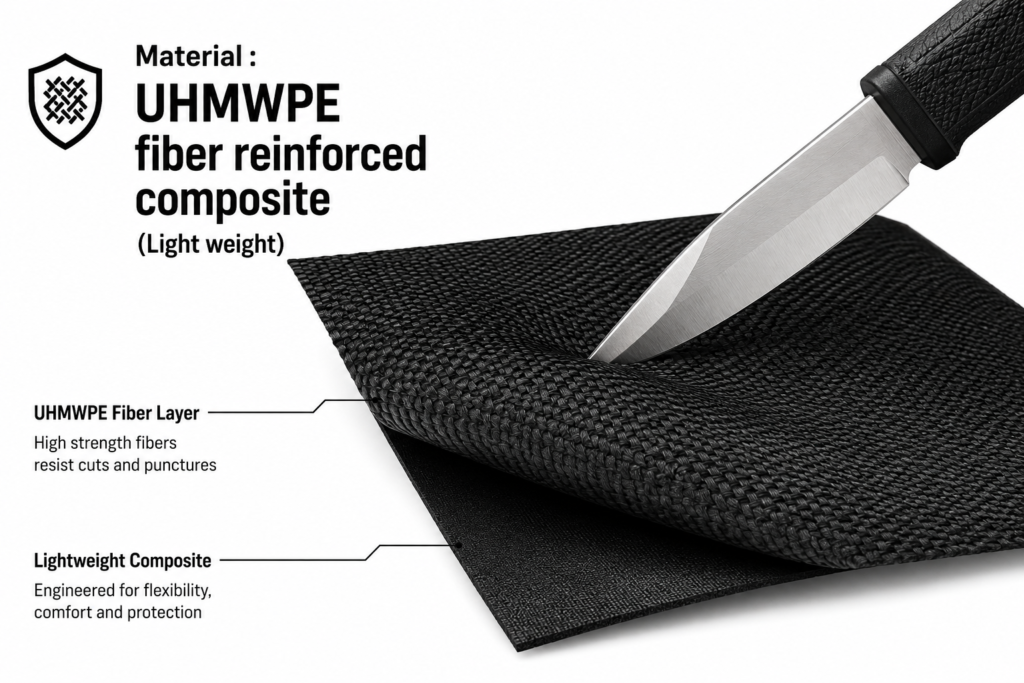
Yes — that’s specifically what modern stab resistant clothing is designed for. Older-style body armour was heavy, rigid, and impossible to wear discreetly for long periods. Current materials, particularly UHMWPE (Ultra-High Molecular Weight Polyethylene) fibre-reinforced composite, are built with everyday wear in mind: light enough for a full working day, flexible enough to move naturally in, and cut to sit under a normal T-shirt, shirt, or jumper without changing how you look.
Is stab proof clothing comfortable?
Modern stab resistant clothing is considerably more comfortable than older body armour, though “comfortable” is relative — it’s still a reinforced garment, not a plain cotton tee. What’s changed is the weight and flexibility of the materials. UHMWPE fibre composite has a very high strength-to-weight ratio, so manufacturers can build in protection without the rigid panels or heavy bulk that made older vests noticeably uncomfortable. Fit matters too: a well-sized garment worn as a base layer tends to feel far less noticeable than one worn as an outer layer.
What is the lightest stab proof shirt?
Within StabApparel’s range, the stab resistant T-shirt is the lightest garment on offer, built specifically for close-to-skin, all-day wear rather than as an outer layer. It uses the same UHMWPE fibre-reinforced composite as the brand’s heavier pieces (hoodie, jacket, long sleeve shirt) but in the lightest available construction, rated to EN388:2003 — Cut Resistance Level 5, Puncture Resistance Level 4 (the highest puncture rating in the standard), Abrasion Resistance Level 4, and Tear Resistance Level 4.
Can stab proof clothing be worn in summer?
Yes, though it’s worth setting expectations: any reinforced fabric will be warmer than an ordinary T-shirt of the same weight, and no manufacturer marketing “breathable armour” is claiming it wears exactly like plain cotton. What lightweight UHMWPE-based clothing does offer, compared with older heavy vests, is a much smaller thermal penalty — customers commonly wear the T-shirt or a covert vest under normal summer clothing for shorter periods (commuting, a shift, an evening out) rather than as all-day wear in hot conditions. If you’re considering it specifically for summer, the T-shirt (the lightest option) is the sensible starting point rather than the hoodie or jacket.
Who buys stab resistant clothing?
The customer base is broader than people often expect. Common groups include:
- Security professionals and door staff
- Delivery, taxi, and rideshare drivers
- Retail, hospitality, and warehouse staff working late shifts
- Parents buying protection for teenagers
- Commuters and students who travel through higher-footfall areas late at night
- Everyday members of the public who simply want extra peace of mind
There’s no single “typical” buyer — most people who purchase stab resistant clothing are doing so as one part of a broader approach to personal safety, not as a substitute for the ordinary precautions everyone should take.

Anti-cut protective safety Gloves
Can civilians wear stab proof clothing in the UK?
Yes. Stab resistant clothing is legal for civilians to buy, own, and wear in the UK. It’s not classified as a weapon or restricted item — it’s protective clothing, in the same broad category as any other reinforced or high-visibility workwear. It’s worn lawfully by security staff, delivery drivers, retail workers, and private individuals across the country. (This is separate from body armour import/export rules that apply commercially in some other countries, which don’t affect ordinary UK retail purchases.)
How comfortable is modern stab resistant clothing compared to older body armour?
Meaningfully more comfortable. The key change is material: UHMWPE fibre-reinforced composite replaced many of the heavier, more rigid materials used in older stab vests, cutting weight substantially while keeping protection levels high. In practice, this means:
- No rigid plates or panels in lightweight garments (T-shirt, base layers)
- A full range of motion for normal daily activity
- A profile that sits under ordinary clothing without visibly changing your silhouette
- Machine-washable construction in most lightweight pieces (always check the specific care label for your garment)
It’s still not identical to wearing plain cotton — there’s more fabric and more weight than an ordinary T-shirt — but it’s a genuine step change from the body armour most people picture when they hear “stab proof.”
A fair note before you buy
Stabproof clothing reduces risk; it doesn’t eliminate it, and protection levels vary by product, material, and the nature of an attack. Treat it as one layer of a broader approach to personal safety — alongside situational awareness, safe routes, and normal precautions — rather than a replacement for them. If you’re unsure which product suits your situation, it’s worth checking the specific EN388 rating and construction of each item rather than assuming all “stab proof” clothing offers the same level of protection.
Have a question we haven’t covered? Get in touch and we’ll answer it directly — no obligation.