Stabproof clothing
Stab Proof Clothing UK: The Complete Guide to Staying Safe Without Sacrificing Comfort.
Personal safety has become a growing priority for many individuals in majority of big cities in the UK. Whether you are a security professional, a frontline worker, or simply a civilian looking for peace of mind during your daily commute, stab-proof clothing offers a practical solution. The landscape of body armour has evolved significantly by 2026, moving away from bulky, rigid vests toward lightweight, discreet, and comfortable garments that can be worn seamlessly under or as everyday clothing. This comprehensive buyer’s guide explores the legality, standards, materials, and top options for stab-proof clothing in the UK, helping you make an informed decision on what actually works for everyday protection.
Stabproof Hoodie
The Legality of Stab-Proof Clothing in the UK
A common misconception is that body armour is restricted to law enforcement or military personnel. However, the law in the United Kingdom is clear: it is entirely legal to buy, own, and wear stab-proof vests and body armour . There are no specific laws prohibiting civilians, security professionals, or emergency service workers from purchasing or using stab-resistant clothing for personal protection.
The only legal caveat is that body armour must not be worn for the purpose of committing a crime. If an individual is found wearing body armour while engaging in criminal activities, it can lead to more severe legal consequences . For the average citizen seeking personal safety, wearing a stab-proof vest or jacket is a perfectly legal and sensible precaution.
Understanding UK Body Armour Standards
When purchasing stab-proof clothing, it is crucial to understand the certification standards to ensure the garment provides adequate protection. In the UK, body armour levels are typically certified via the Home Office Scientific Development Branch (HOSDB), which was later updated to the Centre for Applied Science and Technology (CAST) standards . These standards classify stab-resistant vests based on the energy levels they can withstand.
The standards are divided into two main categories: KR (Knife Resistance) and SP (Spike Protection). It is important to note that a vest designed solely to stop a slashing or stabbing motion from a knife may not stop a fine-pointed spike or needle, which is why dual certification is often recommended.
Knife Resistance (KR) Levels
The KR levels are designed to simulate the types of knives and impact energies an individual might encounter on the street:
•KR1: This is the lowest level of protection, capable of withstanding attacks with an energy equivalent of 24 joules . It is suitable for low-risk environments where knife threats are likely to be opportunistic rather than planned. KR1 vests are generally lighter, more flexible, and easier to conceal under everyday clothing.
•KR2: Offering a higher level of protection, KR2 vests are designed to resist attacks with energy levels up to 33 joules . This level is recommended for individuals working in environments with a higher risk of knife attacks, such as certain areas of law enforcement, private security, or door supervision.
•KR3: This level provides the highest protection against stab threats, capable of withstanding 43 joules of energy . KR3 vests are typically heavier and are utilised by those who regularly face severe knife threats in volatile environments.
Spike Protection (SP) Levels
Spike protection is crucial for defending against improvised weapons like screwdrivers, needles, or ice picks, which can slip through the woven fibres of standard knife-resistant vests:
•SP1, SP2, and SP3: These levels correspond to the energy resistance of the KR levels but are specifically tested against engineered spikes . For example, a vest rated KR1 + SP1 offers basic protection against both knives and spikes.
| Protection Level | Threat Type | Energy Resistance | Recommended Use Case |
| KR1 | Knife | 24 Joules | Everyday civilian wear, low-risk security, covert use. |
| KR2 | Knife | 33 Joules | High-risk security, door supervisors, overt wear. |
| KR3 | Knife | 43 Joules | Severe threat environments, specialist law enforcement. |
| SP1 / SP2 / SP3 | Spike / Needle | Matches KR Level | Environments with risks of improvised sharp objects. |
Table 1: Summary of UK HOSDB/CAST Stab and Spike Protection Levels.
Stabproof Hoodie
How Modern Stab-Proof Clothing Works
The technology behind stab-proof clothing has advanced remarkably. Traditional body armour relied on heavy steel or ceramic plates, which were uncomfortable and highly visible. Today, manufacturers use advanced composite materials to create flexible, lightweight garments.
Soft Armour vs. Hard Armour
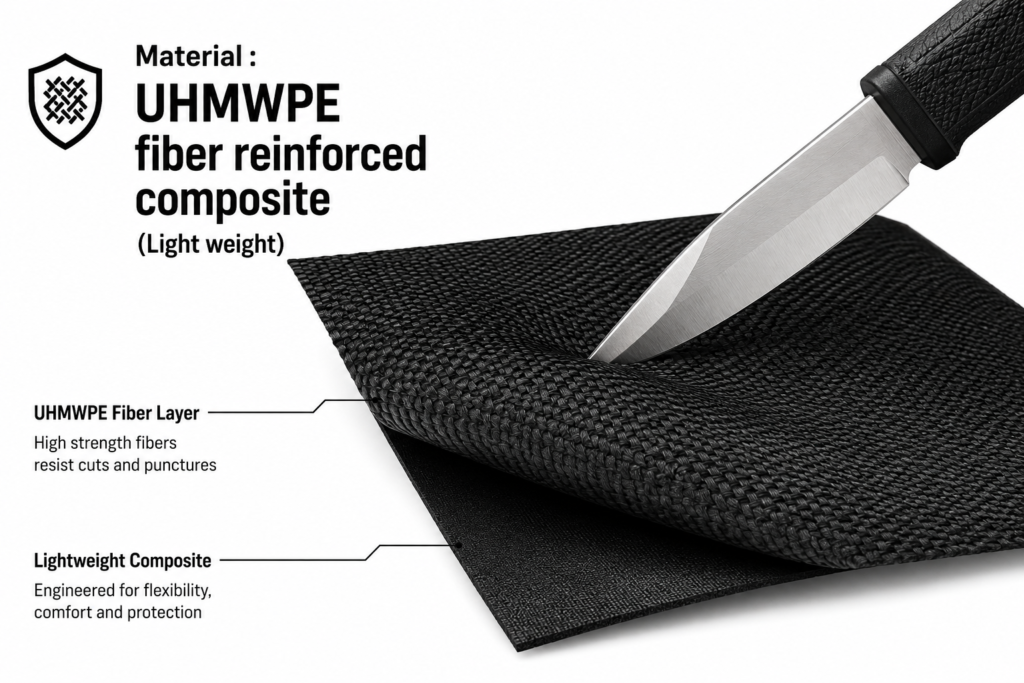
Most everyday stab-proof clothing falls under the category of soft armour. Soft armour is typically made of multiple layers of tightly woven or laminated high-performance fibres, such as Kevlar (aramid fibres) or Ultra-High-Molecular-Weight Polyethylene (UHMWPE) . These materials work by catching the blade and dispersing the energy of the impact across a wider area, preventing penetration.
Hard armour, on the other hand, incorporates rigid plates (steel, ceramic, or hard plastics) and is generally reserved for high-threat ballistic (bulletproof) protection or severe blunt trauma resistance . For everyday civilian or standard security use, soft armour is the preferred choice due to its flexibility and concealability.
Advanced Composite Technologies
Innovative brands in 2026 are combining materials to achieve “zero-gap” protection. For instance, some modern vests use a staggered layering system. A solid carbon-fibre bottom layer sits beneath a flexible aramid fabric top layer. This combination ensures that while the fabric catches and blunts the edge of a knife, the carbon-fibre backing prevents fine spikes or needles from slipping through the microscopic gaps in the weave .
Top Recommendations for Everyday Protection in 2026
When selecting stab-proof clothing for everyday wear, the key factors are discretion, comfort, and certified protection. Here are some of the top styles and options available in the UK market:
1. Covert Stab-Proof Vests
Covert vests are designed to be worn underneath regular clothing, such as a shirt or jumper. They are the most popular choice for civilians and undercover security personnel who want protection without drawing attention.
•What to look for: Ensure the vest is rated at least KR1. Look for moisture-wicking inner linings to manage sweat and heat during extended wear. Brands like ArmorLite offer ultra-lightweight covert vests (e.g., the SoftGuard series) that use flexible carbon-fibre composites, making them virtually undetectable under a standard button-down shirt .
2. Stab-Resistant Jackets and Coats
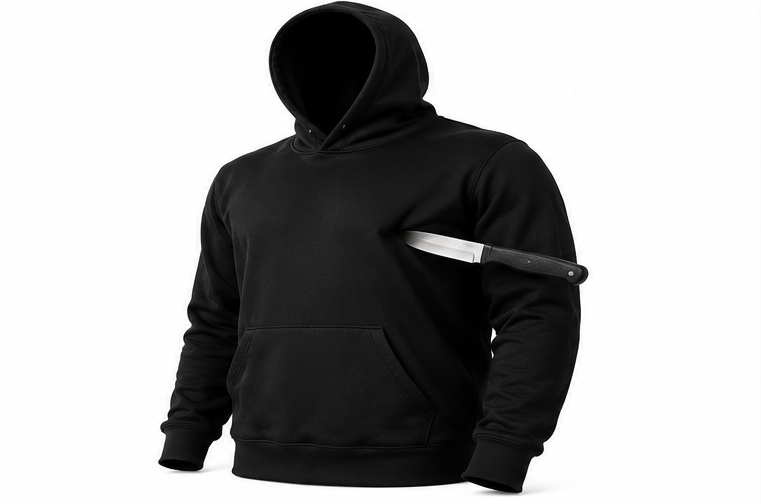
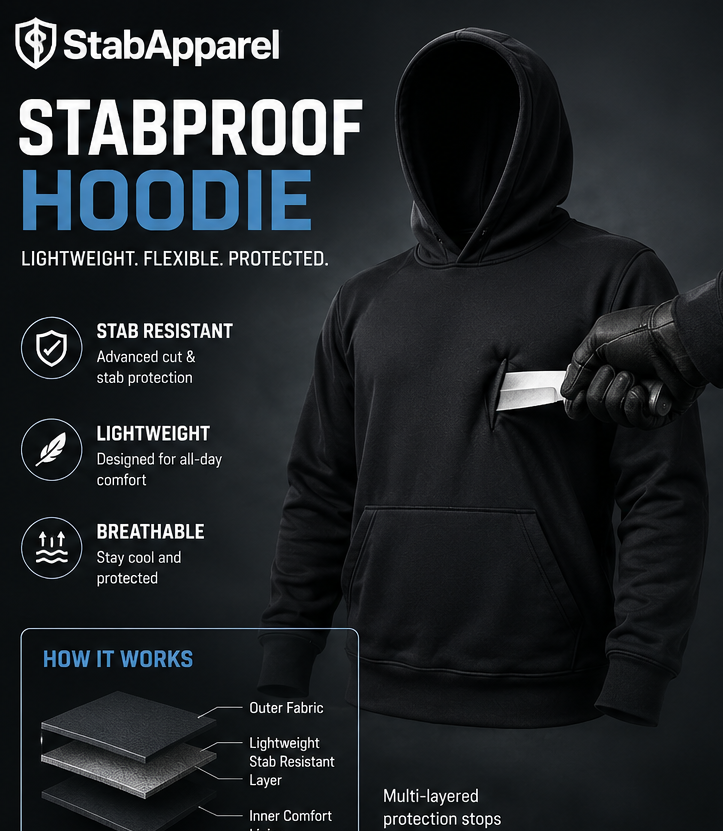
For those who prefer not to wear an under-vest, stab-resistant outerwear is an excellent alternative. These garments look like ordinary high-street fashion—such as softshell jackets, hoodies, or winter coats—but feature hidden protective panels lining the vital organs.
•What to look for: Check if the protective panels are removable. Removable panels make the garment easier to wash and allow you to transfer the armour to different compatible clothing items depending on the season.
3. Tactical and Overt Vests
While less suitable for discreet everyday civilian wear, overt vests are essential for visible security roles. They are worn over clothing and often feature MOLLE (Modular Lightweight Load-carrying Equipment) systems for attaching radios, body cameras, and other gear.
•What to look for: Overt vests should ideally offer KR2 or higher protection, depending on the specific threat assessment of the role. High-visibility options are also available for traffic management or event security.
Key Considerations Before Buying
Before investing in stab-proof clothing, consider the following practical advice:
1.Always Buy Certified: Never purchase uncertified or “novelty” stab-proof clothing. Ensure the product explicitly states its compliance with recognised standards like HOSDB, CAST, or VPAM. A vest without a certification certificate from an accredited laboratory is a dangerous gamble .
2.New vs. Second-Hand: It is highly recommended to buy body armour new. The protective fibres in soft armour degrade over time, especially when exposed to moisture, UV light, or extreme temperatures. Second-hand armour may have invisible internal damage or expired warranties, compromising its effectiveness .
3.Proper Sizing is Critical: Ill-fitting armour can restrict movement or leave vital organs exposed. The armour should cover your heart, lungs, and lower torso but should not be so long that it pushes up into your throat when you sit down . Always follow the manufacturer’s specific sizing guide, measuring your chest, waist, and torso length accurately.
4.Understand the Limitations: No body armour is 100% “stab-proof” under all conceivable circumstances; it is stab-resistant. Furthermore, standard stab vests do not protect against firearms unless they are specifically rated for ballistic protection (e.g., HO1 or NIJ Level IIIA) .

Full Stab Proof T-Shirt
Stabproof clothing
FREE additional stab vest or stab proof T-shirt when buying 2 or more products -Free UK shipping for a Limited-time offer
Staying safe in the UK does not mean you have to sacrifice comfort or walk around looking like a tactical operator. The stab-proof clothing available in 2026 offers incredible flexibility, allowing you to commute, work, and socialise with confidence. By understanding the legal landscape, familiarising yourself with the KR and SP protection standards, and choosing certified, properly fitted garments, you can effectively integrate life-saving protection into your everyday wardrobe.