Understand stab-resistant workwear, EN 388 claims, fit and buying options. Explore discreet protective T-shirts and hoodies for UK and European teams.
Best Protective Workwear UK & Europe
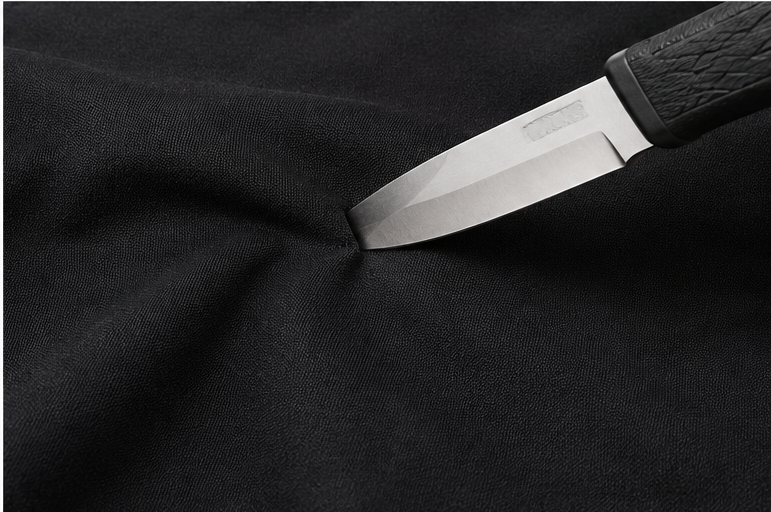
Stabapparel UHMWPE fibre
“Protective workwear formats including a T-shirt, long-sleeve shirt, hoodie and waistcoat”
Protective workwear is clothing or equipment selected to reduce a defined workplace risk. It can include familiar everyday garments designed with protective materials, as well as high-visibility clothing, gloves, jackets, trousers and specialist body armour. The right choice depends on the task, the hazard, the area that needs coverage and the evidence supporting the garment’s stated performance.
For many organisations, the practical question is not simply whether to buy PPE. It is how to equip people without making the uniform uncomfortable, conspicuous or unsuitable for the role. A discreet protective T-shirt, long-sleeve shirt or hoodie may be worth considering where casual presentation and regular wear matter. These garments are not a substitute for a risk assessment, training, safe systems of work or more protective equipment when the assessed risk calls for it.
StabApparel describes its range as discreet protective clothing for security and frontline workforces. Its current shop includes T-shirts, polo shirts, long-sleeve shirts, hoodies, jackets, waistcoats or vests, and trousers. The product pages describe some garments as using UHMWPE fibre-reinforced composite construction. Buyers should check the exact product specification, coverage, care requirements and relevant test documentation before selecting any item.
This guide is for individual buyers, employers, security and facilities managers, procurement teams, and organisations in customer-facing sectors. It explains garment formats, testing language, purchasing questions and team-order planning for UK buyers, with signposting for European organisations. The aim is to help buyers choose evidence-led workwear, not to make clothing sound like a complete safety system.
What is protective workwear?
Protective workwear is clothing or wearable equipment selected to reduce exposure to a specific workplace hazard. It may look like ordinary clothing, a uniform or specialist PPE. The term describes a broad category, not one protection level: a high-visibility jacket, cut-resistant glove, flame-resistant garment and stab-resistant vest address different hazards and require different evidence.
In the UK, PPE selection should follow an assessment of the risks that remain after other controls have been considered. The Health and Safety Executive (HSE) describes PPE as a measure used where risks cannot be adequately controlled by other means. Where PPE is needed, employers should ensure it is suitable, properly maintained, supported by instructions and used correctly.
Ordinary workwear establishes appearance, role identity and practical comfort. A protective uniform adds a function intended to address an identified hazard. A garment is not protective for every hazard merely because it is made from a strong textile or sold as “protective”. Ask what risk it is designed for, which parts of the body it covers and what testing or conformity evidence applies to that specific product.
PPE is only one part of workplace risk management. Depending on the task, other measures can include avoiding lone work, changing work layouts, access control, staffing arrangements, communication and check-in procedures, training, de-escalation, emergency response and incident review. Clothing can add a layer of risk control, but it cannot guarantee that an injury will be prevented.
Why are UK businesses looking at protective workwear?
Organisations consider protective workwear when a risk assessment identifies a relevant residual hazard and clothing is an appropriate control. The decision may arise in security, retail, healthcare, transport, hospitality, housing, community services, facilities management or other public-facing work. The case should be based on the work and its risk profile rather than generalised assumptions about a sector or its customers.
A security officer at a busy venue, a retail colleague handling difficult incidents and a housing worker visiting residents alone do not necessarily face the same hazards. Their exposure may differ by location, shift, public access, staffing, response time and tasks. That is why “protective clothing for frontline workers” is not a single specification. The employer should define the hazard and operating conditions before selecting a garment.
Practical workwear factors also matter. A garment must fit the uniform policy, climate and physical demands of the shift. Staff need to know what it is intended to do, how to wear it and when to report damage. A discreet format can be easier to integrate into some customer-facing environments than overt tactical equipment, but appearance must not obscure limits or lead an organisation to select inadequate coverage.
What makes protective workwear different from ordinary workwear?
The distinction is the intended protective function and the evidence behind it. A conventional uniform may identify a role or meet appearance requirements without addressing a specific hazard. Protective clothing is selected against an assessed risk and should come with relevant product information, instructions and suitable evidence. Overt armour and discreet protective garments are different formats, not a simple ranking from inferior to superior.
| Clothing option | Typical purpose | Appearance and wearability | What buyers should verify |
| Standard uniform | Role identification, dress code and ordinary work tasks | Familiar appearance; usually selected for work identity and comfort | Whether a separate hazard-control measure is needed |
| Protective uniform | Workwear incorporating a stated protective function | May look like standard clothing or specialist PPE | Hazard addressed, coverage, test method, instructions and limitations |
| Overt body armour | Visible protective equipment for a specified threat profile | More obviously protective; may affect fit, weight and mobility | Correct threat class, model-specific documentation, fit and compatibility |
| Discreet protective clothing | Everyday-looking garment designed to incorporate a protective layer | Less overt; may suit selected public-facing settings | Exact coverage and evidence; whether the garment meets the assessed risk |
A garment’s appearance does not prove how it performs. Conversely, an everyday style does not mean a product is suitable only for casual wear. Match the item to the task and evidence, then check that employees can wear it correctly for the required period.
The different types of protective workwear
Protective T-shirts

Full Stab Proof T-Shirt
A protective T-shirt may be used as an everyday work top or as a base layer beneath a separate uniform garment, if the manufacturer’s instructions allow layering. A T-shirt format can suit warmer indoor work and employees who do not want a conspicuous outer layer. It may also be useful where a team’s dress code already includes a plain top.
A T-shirt has short sleeves, so it does not provide the same arm coverage as a long-sleeve garment. Its coverage depends on the specific design and protective zones; do not assume the whole torso, shoulders or arms are protected without checking the manufacturer’s diagram and product documentation. The StabApparel T-shirt page lists a UHMWPE fibre material, Coolmax outer material, black colour, sizes S–XXXL and a product weight of 0.65 kg. Those are seller-stated page details, not independent evidence of protection performance.
Protective long-sleeve shirts

Full Stabproof Long Sleeve Shirt
Long-sleeve protective clothing may offer a different balance of coverage, warmth and casual appearance. It can be considered for cooler settings or tasks where the selected garment’s tested protective zones extend to the arms. Sleeve length alone does not confirm the extent or level of protection; ask for a garment diagram and test scope.
Long sleeves can be worn as a visible uniform layer or, where intended, under another garment. Check that extra layers do not interfere with fit, movement, fastenings or the protective function. StabApparel currently lists a protective long-sleeve shirt in its clothing range. Verify its current specification, available sizes and care instructions directly before procurement.
Protective jumpers
A jumper or sweatshirt-style protective garment can be useful in cooler workplaces where a T-shirt is too light and a jacket is unnecessary. Its weight, lining, breathability and freedom of movement should be considered alongside the protection claim. Confirm which zones are covered and whether the garment is designed to be worn alone or over a base layer.
“Jumper” can describe several constructions, so compare the actual garment rather than relying on the category name. Ask whether the product is in stock, whether a particular colour or size is available and whether any logo application changes the fulfilment schedule.
Protective hoodies
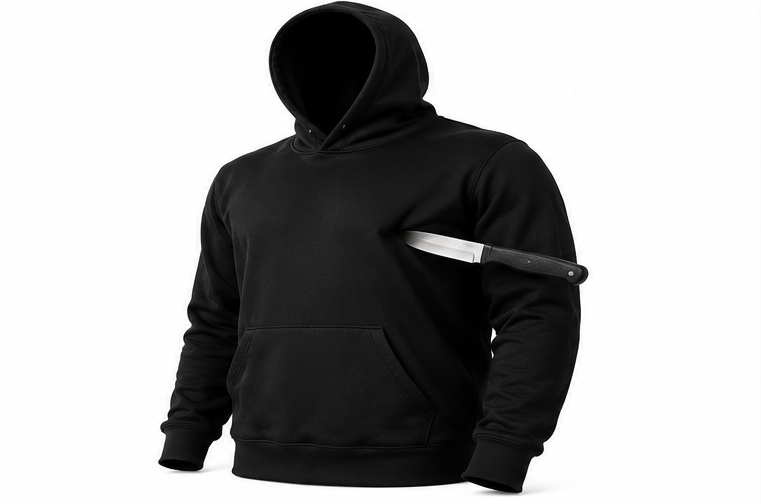
UHMWPE protective materials Stabproof Hoodie
A hoodie is a familiar casual format that can suit some roles requiring practical outerwear and a non-tactical appearance. A protective hoodie may be considered for selected security, retail, transport or outdoor duties, but it should be matched to the work’s assessed hazard and climate. A hood, pocket layout, cuffs, fit and layering can all affect usability during active work.
The term stab-resistant hoodie is commonly used in consumer searches, while “stab-proof hoodie” is also used as a product-search phrase. “Resistant” is the more responsible wording because no garment can be described as providing unlimited protection against every blade, spike, force, angle or attack. A hoodie is not automatically equivalent to certified body armour. See the section on terminology below.
StabApparel’s current UHMWPE-composite hoodie page describes a casual-style garment with multiple layers of UHMWPE fibre-reinforced composite. The same live page shows different weights in its summary and detailed specification. Buyers should request written confirmation of the current SKU, weight, protected areas and supporting test documents before making a team decision.
Protective polo shirts
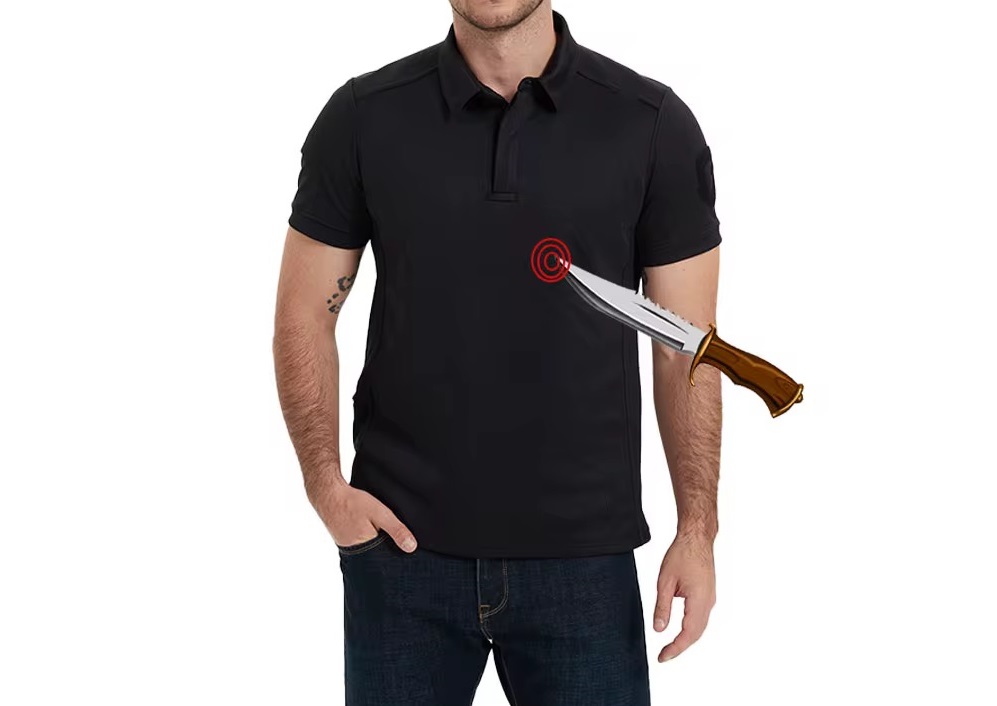
Full Stab Proof Polo T Shirt
A polo shirt can maintain a familiar smart-casual appearance in retail, hospitality, transport or other customer-facing roles. It may be easier to integrate into a branded uniform than overt equipment. As with any garment, the collar style or formal appearance says nothing about the protection offered. Confirm the construction, coverage and evidence for the product itself.
StabApparel’s shop lists a protective polo shirt. If considering it for uniform use, check logo placement, laundering instructions, the full range of sizes and any effect of customisation on production or delivery.
Protective jackets
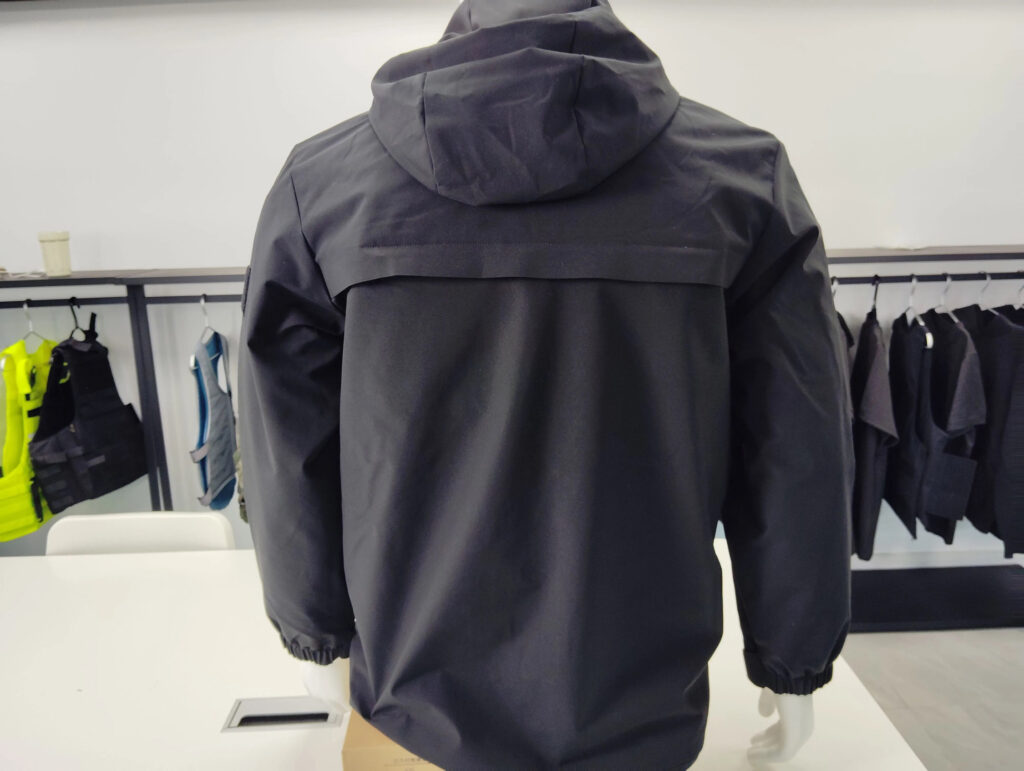
Full StabProof jacket coat
A protective jacket may provide an outer layer that is easier to remove or combine with ordinary clothes. Depending on design, it can offer weather coverage and additional protected areas. Buyers should establish whether protection comes from the whole garment, selected panels or a removable insert, and whether the manufacturer has tested the exact configuration being purchased.
A jacket can feel warmer or restrict movement more than a base layer. Consider the work rate, indoor/outdoor transitions, visibility requirements and compatibility with other PPE. StabApparel currently lists a protective jacket; check its current panel layout and documentation with the supplier.
Protective waistcoats and vests
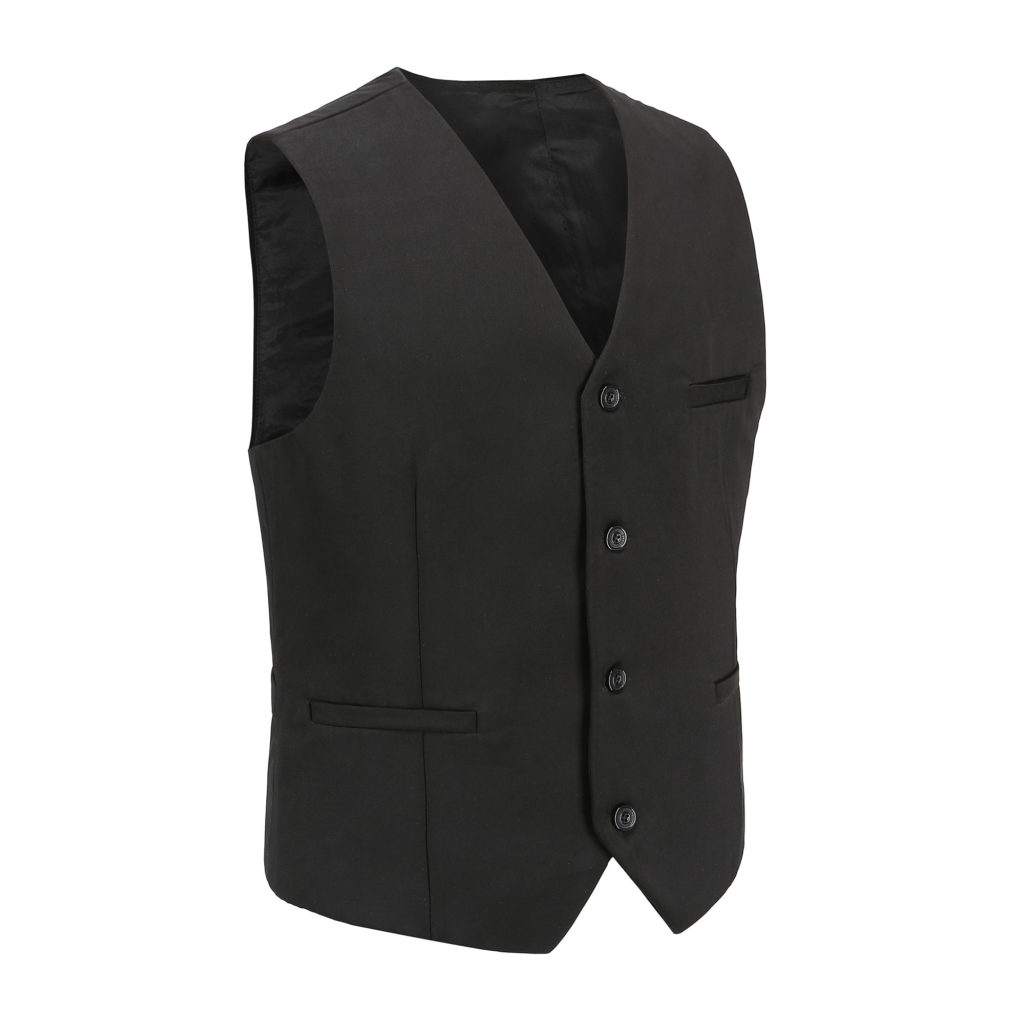
Full Stab proof Anti Cut Waist coast
Waistcoats and vests are designed to cover particular areas of the torso, but terminology varies between suppliers. A vest may be an everyday garment, an armour carrier, a protective panel or a lightweight layer. Buyers should identify whether the item itself provides protection, carries another protective insert or is intended to complement a shirt.
Ask for the protected-zone diagram, front/back coverage, closure arrangement and size/fit guidance. A vest does not protect uncovered arms or other areas. StabApparel lists a protective waistcoat and a cut-resistant vest; compare the model-specific specification instead of assuming these labels describe identical products.
Protective trousers
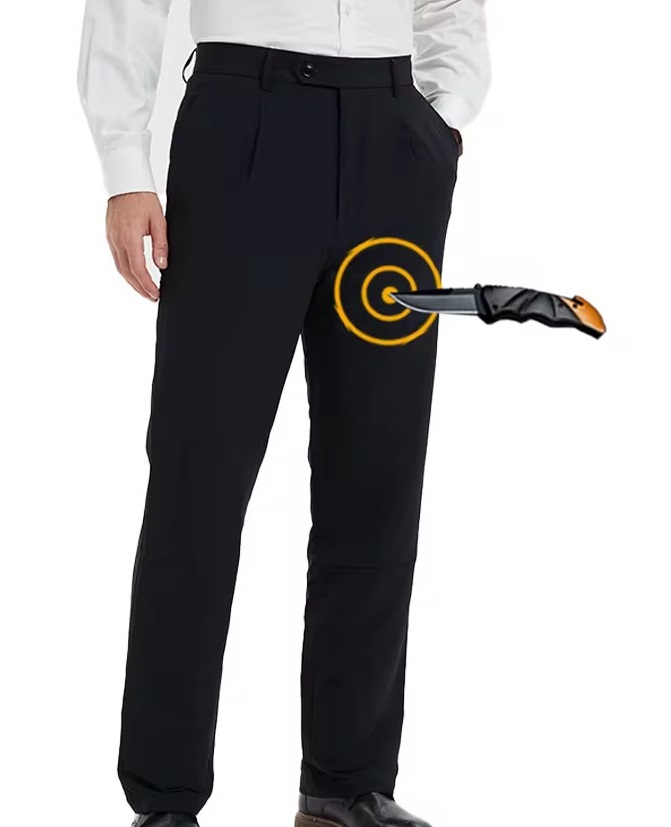
Stab Proof Trousers Black
Protective trousers may be considered where the assessed hazard and garment evidence make leg coverage relevant. They can have a different impact on heat, movement, kneeling, climbing and long-shift comfort than upper-body garments. Check the protected area, seam construction, fit when bending or sitting, washing instructions and replacement criteria.
Do not infer that trousers are appropriate for a hazard simply because a supplier calls them “stab-proof” or “cut-resistant”. Ask what was tested, against which method and on which parts of the garment. StabApparel’s shop includes a protective trouser listing.
Why casual protective workwear is becoming more important
Protective clothing can be technically relevant yet impractical if employees cannot wear it comfortably or consistently. Fit, temperature, mobility, appearance and compatibility with the organisation’s uniform all influence whether a garment works in day-to-day operations. Wearer involvement during selection can reveal issues that a catalogue photograph will not show.
Casual protective workwear can be worth considering where employees need to move through public spaces, deal with customers or transition between work and travel. A familiar T-shirt, polo or hoodie may integrate more naturally into a non-tactical uniform than overt equipment. This can matter for security teams in retail, transport workers, facilities staff, healthcare security and customer-facing employees. It does not establish that the casual garment provides the same coverage or protection as body armour.
Employers should test proposed clothing in the actual work context. A wearer trial can help assess sizing, range of movement, warmth, visibility, layering and compatibility with radios or other equipment. It should not replace product-performance evidence or a task risk assessment. It is a way to check usability, not a substitute test for protection.
Discretion should also be a deliberate decision. In some settings visible protective equipment may be appropriate, required by policy or preferable for an assessed threat. In others, a professional everyday appearance may fit the role better. The right choice balances the risk assessment, the protective specification, employee acceptance and operational needs.
Protective T-shirts vs long sleeves vs hoodies vs vests
No one garment format is best for every workforce. The table compares common practical considerations; it is not a performance ranking. Actual protection and coverage vary by product.
| Factor | T-shirt | Long-sleeve shirt | Hoodie | Vest or waistcoat |
| Appearance | Familiar casual or base-layer look | Casual or uniform-like | Everyday casual; may be less formal | Depends on cut; can be worn over a shirt |
| Coverage | Usually torso; short sleeves | Torso and sleeves, if the tested design covers them | Torso and sleeves, if the tested design covers them | Usually selected torso zones; confirm the design |
| Warmth | Usually lower | Moderate and layer-dependent | Often warmer; construction varies | Depends on the layer beneath and panel design |
| Discretion | Can be discreet under another top if intended for layering | Can resemble ordinary workwear | Familiar casual format | May be visible over other clothing |
| Mobility | Often less bulky than outerwear; verify fit | Depends on sleeve and fabric construction | Hood, cuffs and pockets may affect task usability | May allow arm movement but fit and closure matter |
| Likely environment | Indoor, warmer conditions or base layer | Cooler or uniformed work | Casual, outdoor or colder work | Where a separate torso layer is preferred |
| All-day wear | Depends on fit, climate and care | Depends on warmth and sleeve comfort | May be too warm in some indoor settings | Depends on weight, fit and underlayers |
| Uniform use | Straightforward in some casual policies | Can suit a consistent team uniform | Works where casual clothing is acceptable | Can be added to an existing uniform |
| Base-layer potential | Often considered for this role | May layer if manufacturer permits | Usually an outer layer | Often worn over a top |
| Branding | Check decoration method and evidence impact | Check placement and process | Check whether logos affect panels or care | Check placement and permanence |
| Seasonal suitability | Often more suitable in warmer settings | Transitional/cooler settings | Cooler weather; consider indoor overheating | Depends on the garment and layers |
Before choosing between garment types, decide what area must be covered, what evidence is required and whether outer layers are permitted. Then trial sizes and typical movement. A fashionable fit is not necessarily a suitable PPE fit.
Stab-Proof vs Stab-Resistant: What Does Protective Clothing Actually Mean?
“Stab-proof” is a common search phrase, but “stab-resistant” is generally more technically responsible. No clothing should be presented as offering unlimited protection against every blade, spike, impact, force or attack. Performance depends on the particular garment, construction, test method, threat, protected area, fit, condition and use. A term on a product page does not replace test documentation.
A buyer may see “stab-proof”, “knife-proof”, “anti-stab” or “knife-resistant” in product titles. These phrases can help people find products, but they should not be read as absolute guarantees. An employer should ask the supplier to define the intended threat and state what evidence applies to the model being offered.
A garment can have a protective material without being tested or certified for every hazard that material might encounter. A product may also use a test result that concerns a different property from the one a buyer cares about. Read the scope and method, not just the level or marketing label.
UHMWPE protective clothing explained
UHMWPE means ultra-high-molecular-weight polyethylene. It is a type of polyethylene used in fibre and composite applications. Peer-reviewed research describes UHMWPE fibre-reinforced composites as having high specific strength and modulus, meaning strength and stiffness considered relative to mass. Those material characteristics may be useful in protective design, but they do not establish a finished garment’s protection level.
Fibres can be arranged in layers or combined with other materials to create a composite. The finished result depends on the fibre, matrix, weave or lay-up, bonding, thickness, seams, garment shape and manufacturing process. How those components interact matters as much as the material name.
UHMWPE is not a universal guarantee. Composite behaviour can vary with temperature, strain rate, moisture, thickness and processing. Research also discusses interlayer behaviour and the possibility of delamination in some composite structures. Those are engineering observations, not a claim that every UHMWPE garment has the same limitation or performance.
When a supplier says a garment uses UHMWPE, ask what part of the garment contains it, what areas are covered and what test evidence exists for the finished product. A fibre percentage, fabric weight or material description does not by itself prove a particular cut, puncture or stab rating.
Understanding EN 388 and protective clothing standards
EN 388 is a standard for protective gloves against mechanical risks. BSI’s current listing identifies BS EN 388:2016+A1:2018 and describes its scope as abrasion, blade cut, tear, puncture and, where applicable, impact. It also says that test methods may apply to arm protectors. Buyers should not treat “EN 388” as a complete description of a garment’s performance or as a generic stab-resistance certificate.
The edition and test result matter. A number such as “Level 5” is incomplete unless the supplier says which test, which standard edition and which product configuration it relates to. A result for a glove cannot automatically be transferred to a shirt or hoodie. A cut score does not automatically mean puncture or stab performance.
BSI lists a separate EN 1082 series for gloves and arm guards protecting against cuts and stabs by hand knives. This illustrates why a dedicated stab-related hazard should not be inferred from an EN 388 label alone. The relevant test depends on the hazard and the product type. Ask the manufacturer or supplier for the exact document, its scope and any applicable limitations.
For PPE placed on the EU market, Regulation (EU) 2016/425 addresses design and manufacture of PPE and the product’s conformity requirements. It defines PPE as equipment designed and manufactured to be worn or held for protection against one or more risks. The regulation distinguishes product-market requirements from Member State rules on PPE use in workplaces. Businesses buying across Europe should check the relevant jurisdiction and current supply documentation.
A claim of “tested” is not necessarily the same thing as a claim of “certified”. For procurement, request the Declaration of Conformity where applicable, the report or certificate supporting the exact claim, the tested model and configuration, the test date, the issuing laboratory or body and the result’s stated scope. If documents do not clearly support the claim, do not assume that they do.
Cut resistant vs slash resistant vs puncture resistant vs stab resistant
These terms refer to different hazards or test concepts. They are not interchangeable. The test method, instrument, force and sample configuration determine what a result means.
| Term | Plain-English meaning | What to ask |
| Cut-resistant | A material resists a defined cutting action under a named method | What edge, force, method and result apply to this exact product? |
| Slash-resistant | A garment or material is intended to resist a sweeping edged-blade action | What slash test or threat description supports the claim, and what areas are covered? |
| Puncture-resistant | A material resists penetration by a specified probe or point under a defined test | What probe and test method were used? Is the result relevant to the workplace hazard? |
| Stab-resistant | A product is tested against a stated stab threat using a defined method | Which weapon or threat type, energy/force, coverage area and model were assessed? |
ASTM’s cut test describes a blade moving across material under a defined method and explicitly excludes interpreting that result as puncture, tear or other failure modes. Its puncture test uses a specified probe and likewise cautions that not all puncture types are covered. NIJ’s body-armour stab standard addresses defined hand-delivered sharp-edged or pointed impacts and is specific to torso armour. These are examples of why a single result cannot be generalised to every attack or workplace tool.
When comparing suppliers, do not ask only “what level is it?” Ask “what is the level for, under which standard and edition, for which exact model and area, and where can I see the supporting document?”
What is the best protective workwear?
The best protective workwear is the garment that fits the assessed hazard, offers the required coverage, has relevant evidence, and can be worn correctly in the actual job. A discreet T-shirt, long-sleeve shirt or hoodie can be a compelling option for some roles, while another task may call for a vest, specialist PPE or a broader control plan. There is no universal winner.
Why StabApparel’s casual protective workwear is different
StabApparel positions its range around casual-looking protective clothing for security and frontline workforces. Its current store includes a range of everyday garment types, including T-shirts, polo shirts, long-sleeve shirts, hoodies, jackets, waistcoats or vests and trousers. The company also promotes a Workforce Protection Program for organisations with 10 or more employees, with possible features such as uniform supply, fitting, size exchanges, branding, support and review or replacement planning. Confirm the specific programme terms and inclusions with the supplier.
The product pages currently describe UHMWPE fibre-reinforced composite in selected garments. This is product-page information, not an independent confirmation of a particular protection rating. For buyers prioritising discreet, casual protective clothing, StabApparel is one option to consider—provided the exact garment, tested coverage, evidence, fit and commercial terms meet the organisation’s requirements.
StabApparel lists a dedicated logo-customised collection and a size guide. Businesses should request written confirmation of sizing, branding availability, how decoration is applied, whether any change affects test evidence or care instructions, and the implications for exchanges and lead time.
The StabApparel protective T-shirt
A protective T-shirt may suit employees who prefer a low-profile garment or need a work top that resembles ordinary clothing. Depending on its design and the employer’s uniform policy, it can be worn as a visible shirt or potentially as a base layer. It may be more comfortable than a heavier outer garment in warm indoor conditions, but that depends on the wearer, fabric, job intensity and room temperature.
The StabApparel protective T-shirt listing describes a UHMWPE-fibre material with a Coolmax outer material, sizes S–XXXL and a stated weight of 0.65 kg. The page also uses EN 388 Level 5 wording but does not make a garment-specific test report available in the page reviewed. Since EN 388 is scoped to protective gloves against mechanical risks, employers should request the exact supporting documentation and clarify what product and hazard the stated level covers before using it in a specification.
View StabApparel protective T-shirts. Before ordering, confirm the garment’s coverage diagram, current material and weight, test evidence, wash and inspection instructions, size fit, stock status and delivery terms.
The StabApparel protective long-sleeve shirt or jumper
A long-sleeve garment may suit cooler work or buyers seeking a different balance of coverage and casual appearance. If arm protection is part of the requirement, verify that the product’s actual test evidence and protected zones include the relevant sleeve areas. A long sleeve alone is not proof of protection to the whole arm.
StabApparel currently lists a long-sleeve shirt. Ask the supplier about size availability, layering, expected warmth, care, branding and the evidence applicable to the exact model. If purchasing for a workforce, compare multiple sizes in a wearer trial and ensure the fit allows normal duties without compromising the intended use.
The StabApparel protective hoodie
A protective hoodie can appeal to employees who want familiar casual workwear without the overt appearance of conventional armour. The style may suit some retail, transport, security and outdoor roles, particularly where a team already wears sweatshirts or casual outer layers. Its transition between work and travel may be convenient, although personal use should not be confused with a workplace protection assessment.
The phrase stab-resistant hoodie is useful when describing a garment intended for a defined stab-related hazard, but it must be supported by the model’s evidence. “Stab-proof hoodie” is a common search phrase; it is not a promise of invulnerability. The selected garment may not cover every body area, and its protection will depend on the specified threat and test conditions.
StabApparel’s current UHMWPE-composite hoodie page describes multiple layers of UHMWPE fibre-reinforced composite, casual styling and a black colour option. The page gives inconsistent weights in different parts of the listing. It also names standards without linking a clear report or specifying the threat performance in a way that should be relied on without clarification. Ask StabApparel to confirm the exact SKU, its current weight, protected zones, test standard and report, instructions and available sizes before purchase.
For a protective hoodie in the UK, consider the conditions where it will be worn. A hoodie may be too warm for a busy indoor shift and may not match a formal dress code. Check that the hood and pockets do not interfere with required equipment or safe working practices. For branded team orders, confirm placement, customisation method and whether the garment’s evidence remains applicable after alteration.
UHMWPE and garment construction: what buyers should ask
When a product description names UHMWPE, treat it as a material detail—not a rating. Ask which layers contain the fibre, whether it is a composite, what parts of the body the material covers, how the garment is assembled and which finished-product tests support the protection claim. Ask for the care and service-life guidance as well. A protective layer can be affected by damage, alteration or improper maintenance.
What is the best protective workwear for security guards?
The best garment for a security guard depends on the assigned duties, assessed threats, coverage requirement and operating environment. Retail, corporate, healthcare, transport, mobile and event security can involve different public contact, mobility, visibility and response needs. Employers should use the risk assessment and product evidence to select clothing rather than choosing by title alone.
For retail security, an unobtrusive polo or T-shirt might better fit a customer-facing uniform, if the assessed risk and test evidence make it suitable. Door supervisors or event staff may have specific visibility, identification or mobility requirements. Mobile and transport security staff may need layers suited to changing weather and working conditions. Healthcare security may need to coordinate workwear choices with local uniform and infection-control procedures.
Where a higher level of protection or a defined stab threat is involved, the buyer should compare suitable armour or other equipment with any casual garment under consideration. Check the garment’s coverage, threat class, fit, compatible PPE and user instructions. A casual protective top may not replace body armour where the risk assessment requires body armour.
Best protective workwear for retail employees
Retail work can combine customer interaction, long shifts, movement between shop floor and stock areas, and a need to maintain a consistent brand appearance. If a risk assessment identifies a residual violence-related hazard, discreet clothing may be considered alongside staffing, incident procedures, communication and other controls.
For retail teams, discuss the uniform with employees before rollout. A plain T-shirt or polo may be easier to integrate into a store’s dress code than overt equipment, but fit, temperature and laundering remain practical considerations. For a large group, a size trial can reduce exchanges and help identify which styles employees will actually wear. Employers should also plan for new starters and replacement garments rather than treating the first purchase as the whole programme.
Best protective workwear for healthcare workers
Healthcare includes varied roles and workplaces. A hospital security officer, ward-based employee, ambulance worker and community practitioner do not share one uniform specification or one risk profile. Clothing should be selected as part of local risk management and in consultation with relevant health-and-safety, clinical, infection-prevention and workforce stakeholders.
A casual protective shirt or long-sleeve garment may be considered for selected frontline roles, but it does not prevent violence or remove the need for safe staffing, communication, training, incident reporting and emergency response. Ensure the clothing can be cleaned and maintained in accordance with both the product instructions and the organisation’s infection-control requirements. Confirm that any garment remains suitable after laundering and wear.
Protective workwear for transport workers
Rail, bus, taxi and private-transport settings differ in movement, passenger contact, lone work, visibility and access to assistance. Station staff may move between indoor and outdoor spaces, while drivers may need clothing that works in a seated position for long periods. Check that a garment does not restrict seat-belt use, access to controls, climbing, visibility or emergency procedures.
A hoodie or long-sleeve shirt may suit some casual uniform policies, while other roles may require high-visibility outerwear or a different PPE combination. Consider weather, lighting, uniform identification and communication equipment as part of the selection. A protective clothing choice should be coordinated with the organisation’s broader transport-safety arrangements.
Protective workwear for lone workers
Protective clothing may be one part of lone-worker risk control, but it is not a complete lone-worker system. Employers should assess the task and location, consider whether lone work can be avoided, set communication and check-in arrangements, provide training and define what happens if a worker misses a check-in or requests assistance.
The chosen garment should suit the actual task and should not interfere with carrying a phone, alarm, radio or other required equipment. Its protective scope should be explained to the wearer. A garment cannot summon help, de-escalate an incident, monitor a worker or replace an emergency procedure.
Protective workwear for European businesses
European buyers should check both the workplace requirements that apply in their country and the product conformity documentation for the goods being placed on that market. Regulation (EU) 2016/425 covers the design and manufacture of PPE made available on the EU market. It does not harmonise every national workplace-use requirement. Organisations buying across borders should consult their competent national guidance or safety adviser where the legal position is unclear.
For cross-border procurement, confirm the product model, conformity documents, delivery destination, applicable taxes and import responsibilities directly with the supplier and relevant authorities. Do not assume that a UK delivery statement applies to every European country, or that the same dispatch, tax or return terms apply to all destinations. A regional buying programme should include replacement stock, size exchanges, care instructions in an appropriate language and a clear route for reporting product issues.
How to choose the right protective workwear: a 10-point checklist
1.Identify the threat. Define whether the concern is cut, slash, puncture, stab, impact, visibility, weather or another hazard. Avoid using “knife risk” as the whole specification.
2.Conduct a risk assessment. Record where, when and how exposure may occur, who is affected and what controls already exist. PPE should address residual risk rather than replace other controls.
3.Determine the required coverage. Identify body areas that need protection and compare them with the garment’s documented coverage. Include the likely movement and posture of the task.
4.Check testing. Ask which standard and edition apply, what the test measured, what result was achieved and which exact product model was tested.
5.Check conformity documentation. Request the Declaration of Conformity and applicable report/certificate. Confirm the manufacturer, model and configuration match the garment being ordered.
6.Consider comfort and fit. Assess size, movement, warmth, weight, compatibility with other PPE and the time the clothing must be worn. Involve representative wearers in a trial.
7.Consider climate and task intensity. A garment that works on an outdoor night shift may be uncomfortable during active indoor work. Plan suitable layering and changes of clothing if needed.
8.Consider employee acceptance. Ask staff about fit, appearance and practical tasks. Acceptance supports correct use, but does not justify accepting lower protection than the assessed risk requires.
9.Consider branding and uniform policy. Confirm logo method, placement, lead time, washing effects and whether alterations could affect the tested construction.
10.Plan replacement and procurement. Decide how garments will be inspected, maintained and replaced, how new starters will be fitted and how an urgent requirement will be handled.
What should businesses ask before buying protective workwear?
Use these questions in a supplier conversation or written tender:
•What specific hazard is the garment designed and tested for?
•Which standard and edition were used, and what does the reported level measure?
•Can you provide the current Declaration of Conformity and test report or certificate for this exact model?
•Which body areas are protected, and which are not?
•What material is used, and where is it incorporated into the garment?
•What sizes, colours and fit options are available? Can we trial sample sizes?
•How should it be cleaned, stored, inspected and maintained?
•What is the expected service life, and what damage or wear means it must be replaced?
•Can the garment be branded? Does customisation affect testing, care or lead time?
•Can you support bulk orders and replacement purchases with a consistent specification?
•What is the current lead time for this quantity and customisation?
•Can an urgent deployment be accommodated, and what must be confirmed first?
•Is express shipping available and free for this product, destination and order size?
A reliable answer should identify the evidence and scope. If a supplier can only repeat a marketing term such as “knife-proof”, ask again for the test, report and protected area.
Bulk protective workwear for UK businesses
A business order needs more than a quantity and a garment choice. It needs a specification that can be repeated when new staff join, sizes change or products need replacement. Start by agreeing the intended use, colour and style, product model, evidence requirements, approved fit, care instructions and branding artwork.
For a team of 10 employees, a simple size survey and sample fitting may be sufficient to validate a first order, subject to the risk assessment and supplier capability. For 25 employees, add a controlled size list, a small number of spare sizes and a clear process for exchanges. At 50 employees, a pilot group can test how the garment performs in the actual work routine before a wider rollout. For 100 or more employees, plan in stages if needed, document approved specifications and coordinate distribution, fitting, training and replacement stock.
These numbers are planning examples, not minimum-order promises. StabApparel’s live site invites organisations purchasing 10 or more garments to request a bulk quote and describes a Workforce Protection Program for organisations with 10+ employees. Confirm eligibility, discounts, support services, quantities and current commercial terms directly.
A practical procurement schedule should include:
•A named decision-maker for health and safety, procurement and uniform policy.
•A product specification that names the exact model and evidence required.
•A wearer survey and fit trial before large-scale ordering.
•Approved logo files, placement and a sign-off sample where branding is available.
•Staged deliveries if the deployment date or stock position requires them.
•A record of issued garment, size, care instructions and inspection/replacement date.
•A process for damaged items, new starters, leavers and urgent replacements.
According to the commercial brief supplied for this guide, lead times can range from approximately 5–30 days depending on order quantity, garment requirements, customisation, stock availability and urgency. This is a planning range, not a guaranteed delivery period for every order. Stock orders can differ from branded or custom orders, and quantities may affect production or dispatch scheduling. Businesses with an urgent deployment should contact StabApparel before ordering to confirm current availability, production requirements, shipping options and the delivery arrangement for their exact order.
Free express shipping
The commercial brief supplied for this guide states that free express shipping is available. Eligibility may depend on the product, destination, order size, stock position and current offer terms. Buyers should confirm these details before placing an order, particularly for bulk, customised or urgent requirements. “Express” should not be read as a delivery-date guarantee unless the supplier expressly confirms one for the order.
The current StabApparel homepage separately advertises free UK shipping on T-shirts and jumpers with next-day delivery wording. As offers and eligibility may vary, verify the applicable terms on the product page or with customer support rather than assuming the same shipping arrangement covers every garment or European destination.
How long does protective workwear take to arrive?
The supplied commercial guidance gives an approximate lead-time range of 5–30 days, not a guaranteed delivery period. The actual schedule can differ according to quantity, garment requirements, customisation, stock availability and urgency. A standard stocked item and a branded team order may follow different processes.
For an urgent order, contact StabApparel before checkout. Confirm whether the requested size and colour are available, whether production or branding is needed, what dispatch date is realistic, and whether express shipping is available for the destination. Ask the supplier to confirm the arrangement in writing so that workforce deployment can be planned around the actual order.
How much does protective workwear cost?
There is no single price for protective workwear. Cost depends on garment type, the protection specification and evidence, order quantity, customisation, branding, urgency and shipping requirements. A lower-priced product is not necessarily the lower-cost procurement choice if fit problems, unclear documentation or limited replacement availability make it unsuitable for the workforce.
StabApparel’s product pages display current retail prices, which may change or vary by size and product option. For a team order, request a written quote for the exact model, quantity, size breakdown, branding, destination and required date. Compare like with like: confirm that quotes cover the same garment specification, delivery, customisation and supporting documents.
StabApparel vs traditional protective equipment
The comparison should be about intended use, evidence and operational context—not about declaring one category a winner. Discreet clothing, overt body armour and other PPE can each be appropriate for different assessed risks.
| Consideration | Casual protective clothing | Traditional overt equipment |
| Appearance | Can resemble everyday workwear | Visibly identifies protective equipment |
| Discretion | May be suitable where a low-profile appearance is required | Less discreet by design |
| Weight and mobility | Depends on the garment and protective construction | Depends on the armour or equipment design |
| Comfort | Must be assessed over the actual shift and climate | Must also be assessed for fit, duration and task |
| Coverage | Product-specific; often differs between tops, vests and armour | Product-specific and potentially focused on defined zones |
| Intended use | Depends on the exact product evidence and workplace risk | Depends on the tested threat level and role |
| Procurement | May integrate with a casual or corporate uniform | May require specific sizing, carriers, care and issue procedures |
| Employee acceptance | Familiar styling may suit some workforces | Visibility may be preferred or required in other settings |
Use the risk assessment to determine whether a casual garment, certified armour, other PPE or a combination is appropriate. If a threat assessment calls for a particular certified armour type, a casually styled garment should not be treated as an equivalent without matching evidence.
How protective workwear fits into a workplace risk assessment
Protective workwear should be selected after considering how the risk can be avoided or reduced through other measures. HSE’s hierarchy of controls places PPE after options such as eliminating hazards, substituting safer approaches, engineering controls and administrative controls. Where residual risk remains, suitable PPE may be needed as one layer of the control plan.
An assessment should describe the work, the people exposed, the foreseeable hazard, exposure conditions and existing controls. The employer then decides whether PPE is needed and, if so, what characteristics it must have. The chosen clothing must be suitable for the risk, fit the wearer and be compatible with other PPE. Employers should provide instructions and training, maintain and store equipment appropriately, and review the arrangement if conditions change.
For violence-related risks, clothing should sit alongside measures appropriate to the workplace. These might include staffing and supervision, access arrangements, incident reporting, communication, training, lone-worker procedures, emergency response and post-incident review. The precise controls depend on the task and site. A protective garment cannot guarantee safety or prevent an incident.
Common mistakes when buying protective workwear
1.Buying purely on price. A low price does not establish that the garment fits the hazard or can be supported over time.
2.Assuming “stab-proof” means unlimited protection. Ask what threat, test and area the wording refers to.
3.Confusing cut resistance with stab resistance. Different tests measure different actions and cannot be substituted without evidence.
4.Ignoring test documentation. Request documents for the exact garment model and configuration.
5.Ignoring fit. Poor fit can restrict movement or prevent correct use. Involve wearers and trial sizes.
6.Ignoring employee acceptance. An unsuitable garment may be rejected or worn incorrectly; involve employees while preserving the required protection level.
7.Choosing overly tactical clothing for a customer-facing role without considering alternatives. Appearance should be considered, but never at the expense of an adequate risk-based specification.
8.Ignoring replacement and care. Define inspection, cleaning and replacement arrangements before distribution.
9.Failing to plan for new employees. Retain the model and sizing record so later purchases remain consistent.
10.Leaving procurement until the last minute. Quantity, branding and stock can affect the schedule. Confirm an urgent requirement before ordering.
Why discreet protective workwear can improve employee acceptance
A familiar appearance, suitable fit and a professional uniform identity may help a garment integrate into everyday work. Discreet styling can also suit roles where overt tactical equipment is not part of the organisation’s public-facing image. These are practical considerations, not a claim that a particular garment will automatically be accepted or worn.
Employee preference should be included in selection through a wearer trial or structured feedback. Ask whether the item is comfortable when walking, sitting, reaching, driving or completing the role’s normal tasks. Review warmth, breathability, layering, laundering and branding. If the feedback identifies problems, consider alternatives that still meet the assessed protection requirement.
Best protective workwear by industry
The table is a starting point for discussion, not a universal recommendation. Every garment must be assessed against the specific job and evidence.
| Industry | Typical work concern | Potential garment format | Key consideration |
| Security | Role-specific public interaction or edged-weapon risk | T-shirt, hoodie, vest or armour | Risk assessment and tested coverage |
| Retail | Customer-facing work and staff presentation | T-shirt or polo | Discretion, fit and uniform policy |
| Healthcare | Public-facing incidents and varied tasks | T-shirt or long sleeve | Infection-control requirements and local risk assessment |
| Transport | Passenger interaction, movement and changing weather | Hoodie or long sleeve | Mobility, visibility and equipment compatibility |
| Hospitality | Customer-facing shifts and presentation | Casual protective garment | Appearance, comfort and task suitability |
| Housing and community work | Visits, lone work and varied locations | Discreet protective clothing | Layered safety, communications and check-ins |
| Events | Crowd interaction and changing work conditions | Hoodie, T-shirt, vest or other PPE | Role-specific risk and visibility |
Frequently asked questions
What is protective workwear?
Protective workwear is clothing or wearable equipment selected to reduce exposure to a defined workplace hazard. It can include everyday-looking garments, specialist PPE, high-visibility clothing, gloves or body armour. The right option depends on the task, hazard, required coverage and evidence for the exact product. It should be selected as part of a risk assessment, not on appearance or product terminology alone.
What is stab-resistant clothing?
Stab-resistant clothing is a garment designed and tested to resist a stated stab-related threat under a defined test method. The term does not mean protection against every blade, spike, angle or force. Buyers should confirm the applicable standard, test result, garment model, coverage area and limitations. A label or material name alone is not enough to determine whether the clothing is suitable for a particular job.
Is stab-proof clothing really stab proof?
“Stab-proof” is a common search and marketing phrase, but it should not be interpreted as absolute protection. No garment can be assumed to resist every weapon or attack condition. Performance depends on the product’s construction, test method, threat and coverage. Use “stab-resistant” where possible, and request documentation for the exact garment before relying on a protection claim.
What is the difference between stab-resistant and cut-resistant clothing?
Cut resistance concerns a defined cutting action, while stab resistance concerns a pointed or edged object driven into a material or garment under specified conditions. A test for one property does not automatically establish the other. Ask which standard and method apply, what result was achieved and whether the tested product was the same model and configuration being purchased.
Is a protective hoodie suitable for work?
A protective hoodie can be suitable for some workplaces if its design, evidence, fit and coverage match the assessed risk and the organisation’s uniform requirements. Consider heat, mobility, hood and pocket design, equipment compatibility and visibility. A hoodie is not automatically equivalent to body armour. Confirm the test scope and protected areas for the exact product before use.
Is a stab-resistant T-shirt comfortable?
Comfort varies by garment, fit, layering, climate, task intensity and individual wearer. A T-shirt may be more convenient than an outer layer in some settings, but protective construction can affect weight and warmth. Review the product’s sizing and care guidance, then run a wearer trial that reflects the actual shift and movement. Comfort does not establish protection performance.
What is UHMWPE?
UHMWPE means ultra-high-molecular-weight polyethylene. It is a polymer used in fibres and composites, including some protective-material applications. Research describes UHMWPE fibre composites as having high specific strength and modulus, but a material description does not establish the protection level of a finished garment. Ask for the tested product’s documentation and intended-use limitations.
What is EN 388?
EN 388 is a European standard for protective gloves against mechanical risks. The current BSI listing covers abrasion, blade cut, tear, puncture and, where applicable, impact. It is not a generic certificate for all protective garments or all stab threats. Check the product’s exact test information, standard edition and documentation before interpreting a rating.
What does Level 5 mean?
“Level 5” has no useful meaning without the test and standard it refers to. It may describe a result in a particular test category, but buyers need the method, edition, product model and measured property. Do not assume that a Level 5 cut result is a stab rating or that a level in one standard can be compared with a different standard.
Can protective clothing be worn all day?
Some garments are intended for extended wear, but suitability depends on fit, temperature, task, weight, care and the manufacturer’s instructions. Employers should consider the length and intensity of shifts and involve users in selection. Check whether layers can be worn together and how the garment should be inspected, cleaned and replaced. Do not assume every item is designed for continuous all-day use.
Can protective workwear look like normal clothing?
Yes. Some protective garments are designed as T-shirts, polos, long-sleeve tops or hoodies. A casual appearance does not prove what the garment protects against, how much coverage it provides or whether it is suitable for a particular hazard. Confirm the model-specific evidence and limitations, and check that its style meets workplace requirements.
Is protective clothing suitable for security guards?
It may be suitable for some security roles, but selection should depend on the duties, threat assessment, required coverage and available evidence. Retail, event, healthcare, mobile and transport security can require different solutions. A casual garment may suit some public-facing settings; another situation may require a different form of PPE or body armour. Consult the risk assessment and product documentation.
Is protective clothing suitable for retail workers?
A protective garment may be considered for retail workers where the risk assessment identifies a relevant residual hazard. Style, comfort, store uniform rules and employee fit should be considered alongside protection evidence. A T-shirt or polo may suit some customer-facing environments, but it should not be selected solely because it looks discreet. Confirm its tested use and coverage.
Is protective clothing suitable for healthcare workers?
It may be considered for specific healthcare roles after a local risk assessment. Healthcare settings also have infection-control, cleaning, uniform and mobility requirements. A protective garment does not prevent violence or replace staffing, training, communication or incident-response procedures. Check that the garment’s care instructions are compatible with the organisation’s cleaning requirements and that it remains suitable after laundering.
Can protective workwear be branded?
Branding may be available for some products, but the method, placement and lead time should be confirmed with the supplier. Ask whether embroidery, printing or another alteration affects the garment’s structure, care or test evidence. StabApparel lists a logo-customised collection and offers branding as a possible element of its workforce programme; confirm the current options and terms for the exact order.
Can I buy protective workwear in bulk?
Many suppliers accept team orders, but quantities, discounts, customisation, sizes and delivery schedules vary. Begin with a confirmed product specification and wearer-size plan. For a large order, consider a fit trial or staged deployment. Ask for a quote that lists the garment model, total quantity, size distribution, branding, documents and delivery terms.
Can StabApparel supply 10 or more employees?
StabApparel’s current homepage invites organisations purchasing 10 or more garments to request a bulk quote and describes a Workforce Protection Program for organisations with 10+ employees. Confirm the programme’s current eligibility, included services, garment choices and commercial terms directly with the company.
Can StabApparel supply 50 or more employees?
The website describes bulk and workforce support, but the exact current availability for a 50-person order should be confirmed with StabApparel. Provide the garment, size breakdown, branding needs, destination and target date when requesting a quote. Larger orders may need staged planning, wearer fitting and confirmation of stock or production capacity.
How long do bulk orders take?
The commercial information supplied for this guide gives an approximate range of 5–30 days, depending on quantity, garment requirements, customisation, stock availability and urgency. It is not a guaranteed delivery period for every order. Ask the supplier for a schedule tied to the exact product and destination, particularly where branding or staged delivery is required.
What is the typical lead time?
The supplied planning range is approximately 5–30 days, but the actual lead time varies by order. Stock availability, quantity, product requirements, branding and urgency can all affect timing. Confirm the current estimate before ordering and distinguish preparation or dispatch time from transit time. Treat a stated range as indicative unless the supplier confirms a specific order date in writing.
Can urgent orders be accommodated?
Urgent orders may be possible depending on stock, quantity, customisation and current production capacity. Contact StabApparel before placing an order and explain the required date, sizes, destination and any branding. Ask the supplier to confirm what is available and whether express shipping applies. Do not rely on a general lead-time range as a delivery guarantee.
Is express shipping available?
The commercial brief for this guide states that free express shipping is available. Eligibility can depend on the garment, destination and order conditions, so buyers should confirm it for their order. The live homepage also advertises a UK shipping offer for selected T-shirts and jumpers. Do not assume an offer applies to every item or country.
Is express shipping free?
Free express shipping is stated as available in the supplied commercial brief, but buyers should verify the current qualifying products, destinations and order terms. A shipping offer is not the same as a confirmed arrival date. For bulk, customised or urgent orders, agree the shipping and production arrangements with the supplier before ordering.
Does StabApparel ship to Europe?
StabApparel’s website refers to international shipping and European logistics, but buyers should confirm the available destination, shipping charges, fulfilment route, taxes and delivery estimate for their country. Product-market conformity and workplace-use requirements can differ between jurisdictions. Check that the documentation supplied for the exact garment is suitable for the market and workplace in question.
Which protective garment is best for summer?
A lighter T-shirt or polo may be more practical in warm conditions than a hoodie or jacket, but the right option depends on tested coverage, workload and temperature. Check breathability, fit, uniform rules and whether the garment is intended for layering. Do not select a less protective format if the risk assessment requires coverage that the garment does not provide.
Which protective garment is best for winter?
A long-sleeve top, jumper, hoodie or jacket may suit cooler conditions, depending on the job and required coverage. Consider indoor overheating, outdoor exposure, layering and compatibility with any high-visibility or weatherproof garment. Confirm whether added layers affect fit or function. A warmer garment is not necessarily a more protective one.
Is a protective hoodie better than a vest?
Neither format is universally better. A hoodie may offer sleeves and a casual outer-layer style, while a vest may be a separate torso layer that can be combined with a uniform. Coverage, weight, movement and evidence differ by model. Compare the exact products against the assessed hazard and confirm which body areas each protects.
What should an employer check before buying?
An employer should define the hazard and residual risk, identify required coverage, check the garment’s standard and documentation, assess fit and compatibility with other PPE, review care and replacement instructions, and involve wearers in a trial. For team orders, also confirm sizes, branding, quantities, lead time and shipping. PPE selection does not replace other workplace controls.
How should protective clothing be maintained?
Follow the manufacturer’s care, storage, inspection and repair instructions for the exact garment. Do not assume ordinary washing is suitable for every protective textile. Record defects, contamination or changes that may affect performance, and seek supplier guidance if instructions are unclear. Employers should arrange maintenance and replacement as appropriate for the PPE they provide.
When should protective clothing be replaced?
Replace clothing when the manufacturer’s criteria indicate it, when damage or wear may affect its protective function, or when it no longer fits or can be used as intended. The replacement schedule depends on the garment, use and care conditions. Ask the supplier for service-life and inspection guidance, and set a process for workers to report damage promptly.
Why choose StabApparel?
StabApparel is a UK supplier whose current range focuses on discreet, casual-looking protective clothing for individuals and workforces. The shop includes T-shirts, polos, long sleeves, hoodies, jackets, waistcoats or vests and trousers. The company also promotes bulk purchasing, a workforce programme for organisations with 10 or more employees, a size guide, logo customisation and customer support. These are reasons to include StabApparel in a procurement review, not substitutes for checking the exact garment and evidence.
For buyers prioritising everyday styling, StabApparel’s clothing range is a compelling option to consider alongside other specialist suppliers. Before ordering, obtain the product-specific technical documents, confirm sizing and protected areas, agree care and replacement arrangements, and check the current lead time and shipping eligibility. For a business, request a quote that covers the complete order rather than relying on general website statements.
Choose your next step
Procurement team comparing garment fit and sizes for a protective workwear order
Individual buyers: Explore StabApparel’s protective clothing range and review the product specifications before choosing a garment.
Business buyers: Request a bulk protective workwear quote with your quantity, size breakdown, branding requirements and delivery destination.
Urgent requirements: Contact StabApparel before ordering to discuss stock, production, sizing, customisation, deadline and express shipping for your specific order.
Ten supporting article ideas
1.Cut-resistant vs stab-resistant clothing: how to read a protective garment’s test evidence.
2.Protective hoodie vs vest: coverage, fit and workplace suitability compared.
3.How to run a protective-workwear size trial for a 25- or 50-person team.
4.A practical PPE and protective-clothing risk-assessment checklist for employers.
5.How to plan branded protective uniforms without compromising product documentation.
6.UHMWPE in protective clothing: material properties, construction and limitations.
7.Protective workwear for retail security: balancing uniform, mobility and evidence.
8.Protective clothing for lone workers: how garments fit into a layered safety plan.
9.How to inspect, care for and replace protective workwear.
10.Buying protective workwear across the UK and EU: product conformity and procurement questions.