Stab Proof Workwear for Frontline Teams | Protective Uniforms & Bulk Orders UK
Stabproof Workwear
Introduction B2B Protective Workwear & Uniforms
Every day, across the United Kingdom, thousands of frontline employees report for duty expecting to do their jobs professionally and return home safely. Security guards, door supervisors, retail loss-prevention officers, transport staff, healthcare security teams and lone workers all share a common reality: their work brings them into direct, unpredictable contact with members of the public.
For many organisations, this reality has prompted a fundamental question. Is ordinary workwear sufficient when employees face verbal abuse, physical intimidation or the genuine threat of assault? The answer, increasingly, is no.
Data from the Office for National Statistics shows that violence at work remains a significant concern across multiple sectors. Security companies, retailers, transport operators and healthcare providers have all reported incidents involving edged weapons, improvised implements and other threats that ordinary uniforms offer no defence against.
The challenge is not simply one of protection. It is also one of professionalism. Traditional protective equipment—often bulky, overtly tactical and visually intrusive—can create the wrong impression in customer-facing environments. It can undermine the approachable appearance that many organisations work hard to cultivate. It can make employees feel conspicuous or uncomfortable, and in some cases, it can even escalate tension rather than reduce it.
The alternative is discreet protective workwear that looks and feels closer to a normal professional uniform. Garments engineered with advanced protective materials but designed to be worn visibly without drawing unnecessary attention. Clothing that protects without appearing to protect.
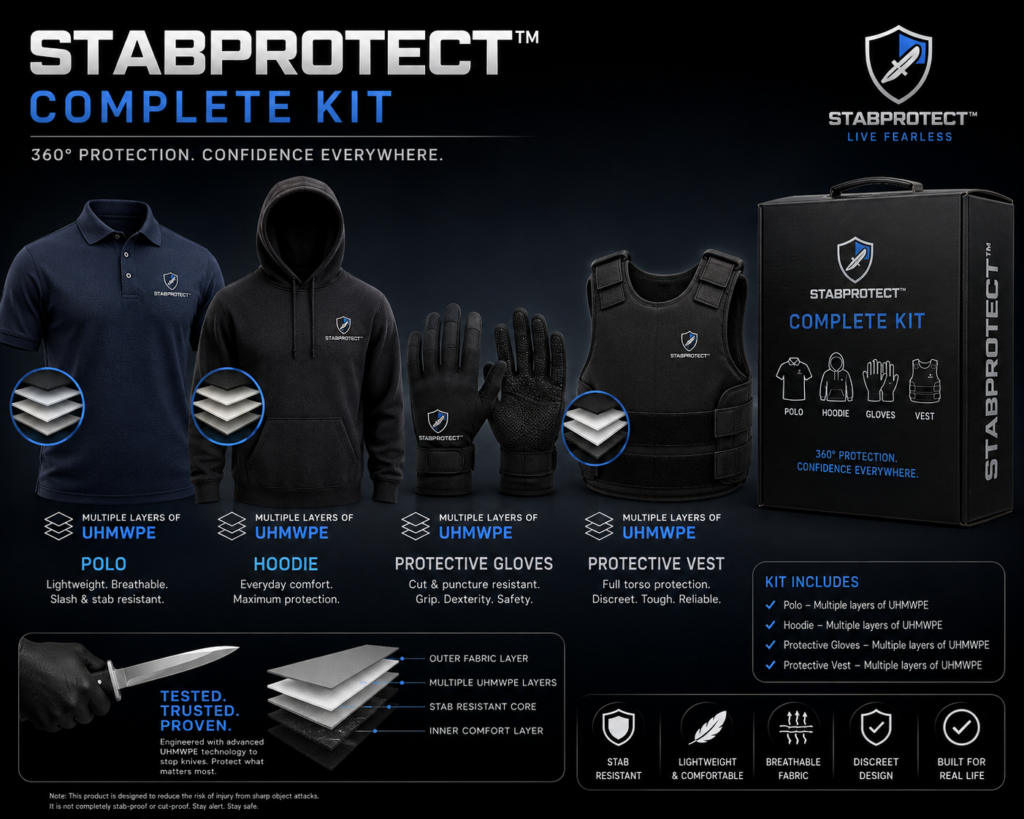
StabApparel has developed the STABPROTECT™ PROFESSIONAL RANGE specifically for this purpose. This is protective clothing designed for frontline workforces who need protection that fits, looks professional and remains comfortable throughout a full shift.
This article provides a comprehensive guide to stab proof protective workwear, discreet stab resistant uniforms and the practical considerations that organisations with 10 or more employees should address when equipping their teams. It explores why protective workwear is becoming a mainstream consideration for UK employers, what to look for when selecting garments and how to manage an ongoing workforce protection programme rather than simply placing a one-off uniform order.
The central argument is straightforward. Protective clothing should be treated as part of a workforce protection system, not as a standalone purchase. Protection does not stop after your first order.
Section 1 — What Is Stab-Proof Protective Workwear?
Defining Protective Workwear
Protective workwear refers to clothing designed to reduce the risk of injury to the wearer during the course of their employment. Unlike ordinary uniforms, which are primarily intended for identification, presentation and comfort, protective workwear incorporates engineered materials and construction techniques intended to provide a measurable defence against specified threats.
In the context of frontline work, these threats often include edged weapons, sharp implements and puncture hazards. Protective workwear is not a substitute for risk assessment, training or other safety controls, but it can form an important layer within a broader workforce protection strategy.
What Does “Stab-Resistant” Mean?
The term “stab-resistant” describes a garment’s ability to resist penetration from a sharp or pointed object under specified test conditions. It is important to understand that no garment can be guaranteed “stab-proof” in an absolute sense. The term “stab proof” is commonly used as a search term by consumers and businesses seeking protective clothing, but the technically accurate description is “stab-resistant” or “puncture-resistant.”
Protective garments are tested against defined standards that simulate specific threat scenarios. A garment that passes these tests at a given energy level can be described as stab-resistant to that standard. This does not mean it will provide unlimited protection against all possible threats.
How Protective Workwear Differs from Ordinary Uniforms
The difference lies in construction, material and certification. Ordinary uniforms are made from conventional fabrics selected for appearance, durability and cost. Protective workwear incorporates materials such as high-performance polyethylene (HPPE), ultra-high-molecular-weight polyethylene (UHMWPE) or other advanced fibres engineered to resist cutting, slashing and puncture.
Protective workwear is also subject to testing and certification to recognised standards. This provides purchasers with independent verification of the garment’s performance rather than relying solely on marketing claims.
Why Terminology Matters
The language used to describe protective workwear matters for several reasons. First, it affects search behaviour. Businesses searching for “stab proof workwear” are likely looking for protective garments, even if “stab-resistant” is technically more accurate. Second, it affects buyer expectations. Calling a garment “stab-proof” can create unrealistic expectations of absolute protection. Third, it affects procurement compliance. Organisations procuring protective equipment need to ensure they are buying certified garments appropriate to the risks their employees face, not simply relying on marketing terminology.
What Buyers Should Look For
When evaluating protective workwear, organisations should look for clear information about the testing and certification the garment has undergone. They should ask which standards apply, what threats the garment is designed to resist and what evidence the supplier can provide.
It is also essential to understand that protective garments are not a standalone solution. They are one element of a comprehensive workforce protection strategy that should include risk assessment, training, operational procedures and appropriate supervision.
Section 2 — Why Frontline Workforces Need a Different Approach to Workwear
The Reality of Frontline Work
Frontline employees operate in environments that are inherently unpredictable. Security guards monitoring retail premises may encounter shoplifters, aggressive customers or organised criminal activity. Door supervisors managing entry to licensed venues face intoxicated individuals and group conflict. Healthcare security teams working in accident and emergency departments deal with distressed patients and anxious relatives. Transport staff, including train conductors and bus drivers, work alone or in small teams while interacting with large numbers of unfamiliar people.
Each of these roles presents specific risks. Verbal abuse is common. Physical assault is a documented risk. The presence of weapons, including knives and improvised implements, has been reported across all these settings.
The Limits of Ordinary Uniforms
Ordinary uniforms offer no protection against physical assault. A standard polo shirt, hoodie or jacket will not resist a blade or puncture attempt. Employees wearing ordinary uniforms are effectively unprotected if confronted with an edged weapon.
This creates a difficult position for employers. The duty to protect employees from foreseeable risks is well established in UK health and safety law. Employers are required to assess workplace risks and take reasonably practicable steps to control them. Where there is a foreseeable risk of assault, protective clothing may be a relevant consideration.
Why Protective Workwear Is Gaining Attention
Protective workwear is gaining attention because it offers a practical solution to a growing problem. The incidence of workplace violence has increased across multiple sectors, and employers are responding by seeking protective measures that are effective, practical and acceptable to employees.
Unlike overt protective equipment such as body armour, discreet protective workwear is designed to be worn as part of a normal uniform. This means employees can be protected without looking like they are wearing tactical equipment. For many employers, this is a significant advantage.
Protective Uniforms as One Layer of Control
It is important to emphasise that protective workwear is not a panacea. It does not replace the need for risk assessment, training, security procedures, de-escalation skills, adequate staffing or other organisational safeguards. Instead, it adds an additional layer of protection for employees who may face physical threats.
In the hierarchy of controls, protective clothing is considered a form of personal protective equipment (PPE). It sits below measures that eliminate or reduce risks at source, but it remains a valuable tool when residual risks persist. For frontline workers who cannot avoid interacting with potentially hostile members of the public, protective workwear can make a meaningful difference.

Section 3 — Why Discreet Protective Clothing Matters
The Professional Appearance Imperative
For most organisations, professional appearance is non-negotiable. Uniforms are a key part of corporate identity, customer experience and employee pride. A uniform that looks tactical, military or aggressively protective can undermine these objectives.
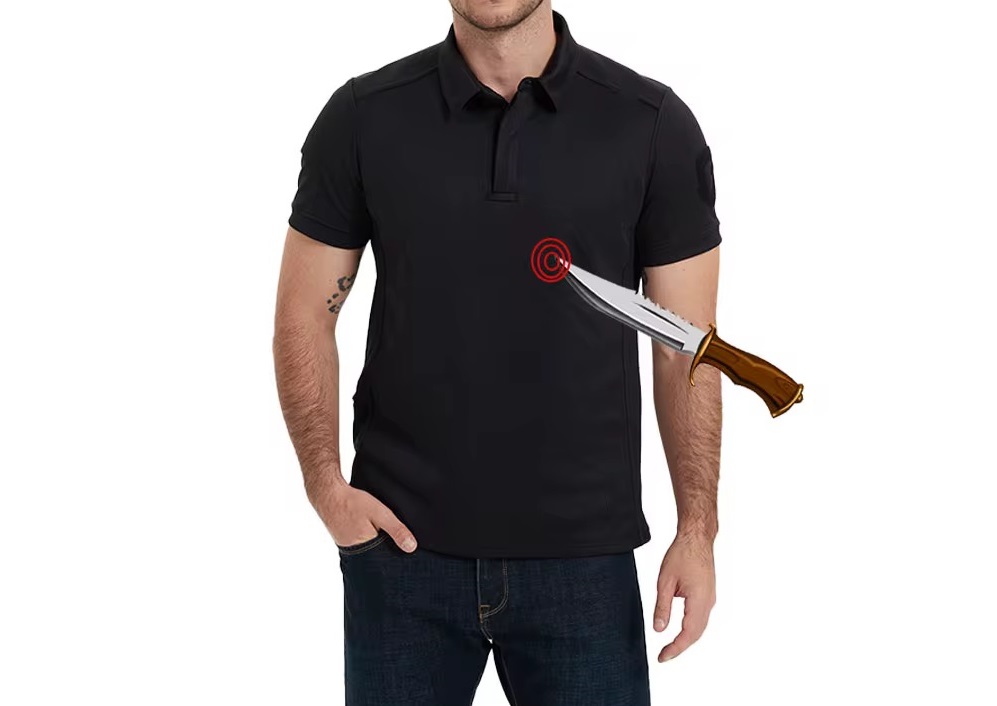
Discreet protective clothing addresses this challenge by integrating protection into garments that look like ordinary workwear. A protective polo shirt, for example, can look indistinguishable from a standard corporate polo while providing a layer of stab-resistant protection. Similarly, a protective hoodie or jacket can appear entirely ordinary while incorporating advanced protective materials.
Employee Confidence and Acceptance
Employees are more likely to wear protective clothing consistently if it looks and feels like normal workwear. Clothing that is conspicuous, uncomfortable or visually unappealing creates a psychological barrier that reduces acceptance and compliance.
The best protective uniform is one employees are willing and able to wear properly throughout their shift. If protective clothing is left in a locker because it feels uncomfortable or looks unprofessional, it cannot protect anyone. Discreet designs that prioritise comfort and appearance are therefore more effective in practice.
Customer Perception and Trust
In customer-facing roles, appearance affects how the public perceives employees. A security guard wearing overt tactical equipment may appear intimidating to customers. A door supervisor in discreet professional workwear can maintain authority without creating unnecessary tension.
This is particularly relevant in hospitality, retail and healthcare environments where approachability is important. Employees need to be able to perform their duties effectively while maintaining positive customer interactions. Discreet protective clothing supports this balance.
Avoiding Unnecessarily Tactical Appearances
The shift away from tactical aesthetics is driven by practical considerations. Overt protective equipment can escalate situations by signalling that conflict is anticipated. It can make employees appear confrontational or aggressive even when they are acting professionally.
Discreet protective workwear sends a different message. It says that employees are professional, prepared and capable, without suggesting that violence is expected. This can help de-escalate tense situations and maintain a more positive working environment.
The Psychological Aspect of Comfort
Comfort is not merely a matter of physical sensation. It also affects psychological wellbeing. Employees who feel comfortable in their uniform are more confident, more engaged and more effective in their roles.
Protective clothing that is heavy, stiff or poorly fitted creates physical discomfort that distracts from the job. It can cause fatigue, restrict movement and reduce overall job satisfaction. Discreet protective workwear that is lightweight, flexible and well-fitted addresses these concerns while providing the necessary protection.
Section 4 — STABPROTECT™ Professional Range
The Product Philosophy
STABPROTECT™ Professional Range is built around a simple idea: frontline employees need protection that works, fits well and looks professional. The range is designed to integrate protection into everyday uniform categories, making it practical for organisations to equip entire workforces without compromising appearance or comfort.
The product philosophy is centred on four pillars:
- Protection — Garments are engineered with advanced protective materials to resist specified threats.
- Professional Appearance — Designs resemble ordinary workwear to maintain corporate identity.
- Discretion — Protective elements are integrated into the garment construction rather than being visibly obvious.
- Comfort — Fit, weight and breathability are prioritised to support all-day wear.
Garment Categories
The STABPROTECT™ Professional Range includes a variety of garment types suitable for different roles, climates and operational requirements.
Protective T-Shirts
Protective T-shirts combine the comfort and practicality of a standard T-shirt with integrated protective materials. They are suitable for warmer environments or as a base layer. They can be worn alone or under other uniform items. Corporate branding can typically be applied.
[INTERNAL LINK: Protective T-Shirts]
Protective Polo Shirts
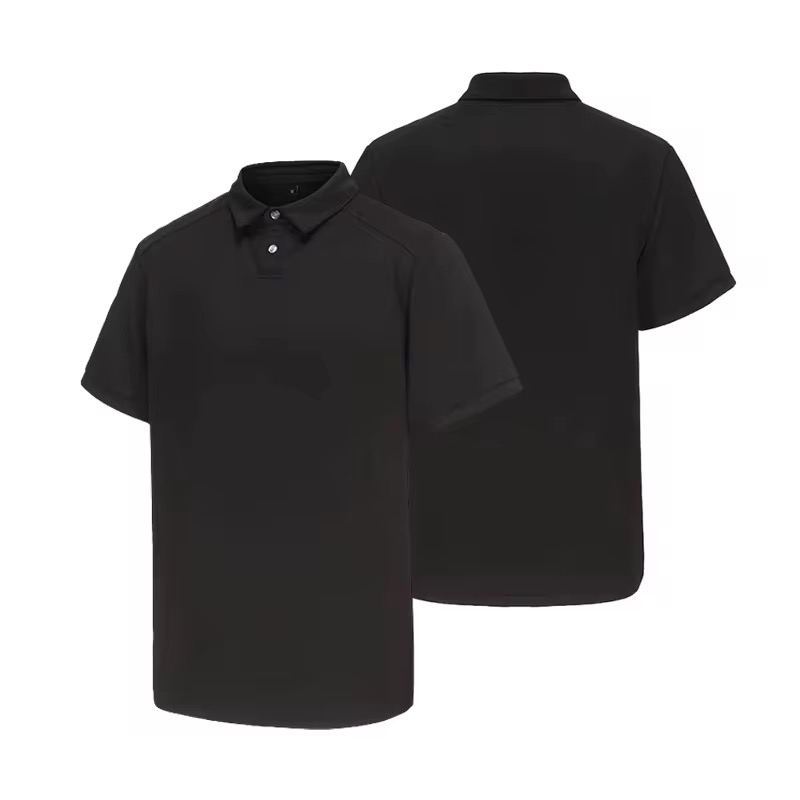
Protective polo shirts offer a smarter, more professional appearance than T-shirts. They are suitable for security, retail and customer-facing roles where a corporate uniform is expected. The protective element is integrated into the garment construction rather than being visibly obvious.
[INTERNAL LINK: Protective Polo Shirts]
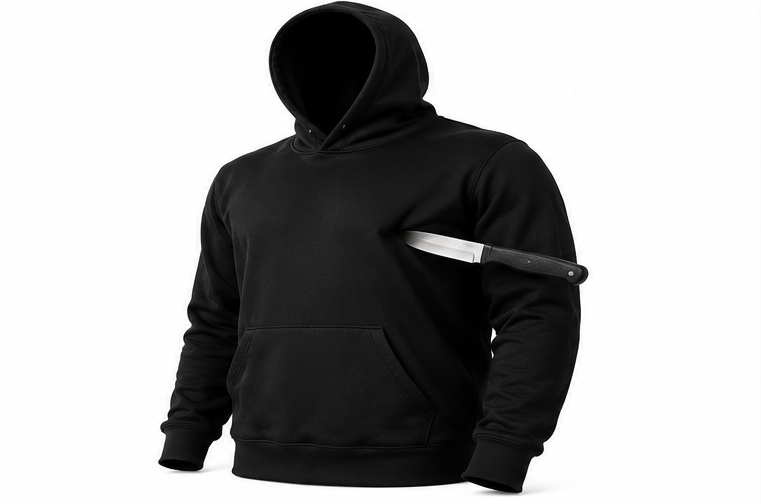
Protective Hoodies
Protective hoodies provide additional coverage and warmth while maintaining a contemporary, professional appearance. They are suitable for outdoor roles, transport workers and employees in cooler environments. The hood provides additional head and neck coverage without appearing tactical.
[INTERNAL LINK: Protective Hoodies]
Protective Jackets
Protective jackets are suitable for more demanding outdoor roles, including security patrols, transport workers and employees working in exposed environments. They offer greater coverage, weather protection and practical features such as multiple pockets and adjustable fit.
[INTERNAL LINK: Protective Jackets]
Protective Base Layers
Protective base layers are designed to be worn under other uniform items, providing an additional layer of protection. They are suitable for roles where the employee already has a uniform that cannot be replaced immediately, or where layering is required for warmth.
[INTERNAL LINK: Protective Base Layers]
Corporate Branding Capability
All garments in the STABPROTECT™ Professional Range can be branded with company logos, employee names, department identifiers and other corporate information. Branding is applied in a way that does not compromise the garment’s protective construction.
This capability is important for organisations that need to maintain a consistent corporate appearance while equipping employees with protective workwear. Branded protective uniforms identify employees as representatives of the organisation while providing the protection they need.
Workforce Deployment
The STABPROTECT™ Professional Range is designed for workforce deployment, meaning it is suitable for equipping teams of 10, 25, 50, 100 or more employees. The range includes a full size range to accommodate different body shapes, and garments can be selected to match the specific requirements of different roles within the organisation.

Section 5 — Protective Uniforms vs Traditional Protective Equipment
| Consideration | Traditional Protective Equipment | Integrated Protective Workwear |
|---|---|---|
| Appearance | Overt, tactical, conspicuous | Discreet, professional, uniform-like |
| Professional Presentation | Can appear aggressive or militaristic | Maintains corporate identity |
| Employee Comfort | Often heavy, bulky, restrictive | Lightweight, flexible, comfortable |
| Corporate Branding | Limited or none | Full branding available |
| Everyday Usability | May be impractical for daily wear | Designed for full-shift wear |
| Employee Acceptance | Resistance due to appearance and discomfort | High acceptance when comfortable |
| Procurement | Specialist procurement required | Integration with uniform procurement |
| Replacement | Often ad-hoc | Structured replacement programmes available |
Understanding the Trade-Offs
Protective workwear is not necessarily a replacement for all other protective equipment. For some roles, overt body armour may still be the most appropriate solution. For others, discreet protective workwear offers the better balance between protection, comfort and appearance.
The choice depends on the specific risk assessment, operational requirements and corporate priorities. Some roles may benefit from both—discreet protective workwear for everyday duties and overt equipment for higher-risk operations.
The important point is that integrated protective workwear offers a middle ground that did not previously exist for many organisations. Employees can be protected without looking like they are wearing tactical equipment, and organisations can maintain their professional image while meeting their duty of care.
When Protective Workwear Is Appropriate
Protective workwear is most appropriate when the risk of edged-weapon attack is foreseeable but not necessarily imminent, and when overt protective equipment would be inappropriate or impractical. Common examples include:
- Retail security teams working in customer-facing environments
- Door supervisors at licensed venues
- Transport workers interacting with the public
- Healthcare security teams in hospital settings
- Housing and community workers visiting properties
- Lone workers in unpredictable environments
In each of these cases, the employee needs protection, but they also need to appear professional and approachable. Discreet protective workwear supports both requirements.
Section 6 — Who Should Consider Protective Workwear?
Security Companies
Security companies are the primary market for protective workwear. Security guards, patrol officers and site supervisors may face threats from members of the public, intruders or organised criminals. Protective workwear offers a practical solution that integrates with existing uniforms and supports professional presentation.
For security companies, the key considerations are protection level, comfort, appearance and branding. Employees need to be protected without looking unnecessarily aggressive, and the uniform needs to project authority while remaining approachable.
Retail Security
Retail security teams face a unique set of challenges. They operate in busy, public environments where customer experience is important. They may need to intervene in shoplifting incidents, manage aggressive customers or respond to organised retail crime.
Protective workwear for retail security should be discreet enough not to alarm customers while providing meaningful protection. Polo shirts and T-shirts are often preferred over jackets or overt armour.
Door Supervisors and Event Security
Door supervisors and event security staff work in high-pressure environments where conflict is a regular occurrence. Licensed venues, concerts and sporting events can all involve intoxicated individuals, group behaviour and potential violence.
Protective workwear for door supervisors needs to balance protection with mobility and professional appearance. Polo shirts, jackets and hoodies are common choices. The ability to brand garments with company details is also important for identification and professional presentation.
Transport and Delivery
Transport workers, including train conductors, bus drivers and delivery drivers, often work alone or in small teams. They interact with members of the public throughout their shift and may face verbal abuse, physical intimidation or assault.
Protective workwear for transport and delivery roles should be comfortable for long shifts, suitable for different weather conditions and discreet enough not to attract unnecessary attention. Hoodies, jackets and base layers are appropriate choices.
Healthcare and Healthcare Security
Healthcare security teams work in hospitals, clinics and other healthcare settings. They may face threats from patients, visitors or members of the public. The healthcare environment requires a professional, non-threatening appearance that reassures patients and visitors.
Protective workwear in healthcare settings should be discreet and professional. Polo shirts, T-shirts and light jackets are common choices. The protective element should not be visibly obvious to patients or visitors.
Universities and Education
Universities, schools and other education providers employ security staff, facilities teams and front-of-house employees who may face risks from members of the public. Protective workwear can provide a layer of protection while maintaining a professional educational environment.
Local Authorities
Local authority employees working in housing, social services, environmental health and other public-facing roles may interact with members of the public in challenging circumstances. Protective workwear can provide protection while maintaining a professional appearance.
Housing and Community Organisations
Housing officers, community workers and support staff often visit properties and interact directly with members of the public. These interactions can sometimes become confrontational. Protective workwear offers a discreet way to provide a layer of protection while maintaining a professional, non-threatening appearance.
Lone Workers
Lone workers face heightened risks because they do not have immediate backup if an incident occurs. Protective workwear should be considered as part of a broader lone-worker safety strategy that includes communication systems, check-in procedures and emergency response plans.
Other Frontline Workforces
Any organisation whose employees interact regularly with members of the public should consider whether protective workwear is appropriate. The key is to conduct a risk assessment and determine whether the risk of physical assault is foreseeable and significant enough to warrant protective measures.
Section 7 — How to Choose the Right Protective Workwear
A Procurement Framework
Choosing the right protective workwear requires a systematic approach. The following framework is designed to help organisations make informed procurement decisions.
1. Identify the Role
Understand what the employee does, where they work and what risks they face. Different roles may require different garments.
2. Conduct a Suitable Risk Assessment
Assess the risks to employees in their specific roles. Consider the likelihood and severity of potential incidents.
3. Define the Threat Profile
Identify the types of threats employees may face. Are they likely to involve edged weapons, blunt instruments or other implements? What is the nature of the threat?
4. Determine Required Coverage
Decide which areas of the body need protection. Some garments protect the torso only, while others provide additional coverage.
5. Consider Employee Comfort
Protective clothing must be comfortable enough to wear throughout a shift. Consider weight, breathability, flexibility and fit.
6. Determine Appropriate Garment Type
Select the garment type that best matches the role, environment and uniform requirements. Options include T-shirts, polo shirts, hoodies, jackets and base layers.
7. Check Relevant Testing and Certification
Ensure the garment has been tested to appropriate standards for the identified threat profile. Buyers should ask suppliers for verification of testing and certification.
8. Check Sizing
Protective clothing must fit correctly to provide effective protection. Garments that are too large or too small may not function as intended. Check the available size range and fitting process.
9. Trial Samples
Before placing a bulk order, obtain samples and test them with employees. Assess comfort, fit, appearance and usability.
10. Gather Employee Feedback
Involve employees in the selection process. Their feedback on comfort, fit and usability is essential for successful adoption.
11. Assess Branding Requirements
Determine whether the garments need to be branded with company logos, employee names or other details. Check what branding options are available.
12. Determine Replacement Requirements
Establish how often garments will need to be replaced, what happens if they are damaged and how new starters will be equipped.
13. Review Supplier Support
Evaluate the supplier’s ability to support a workforce programme, including fitting, replacement, branding and ongoing advice.
14. Calculate Total Cost of Ownership
Consider the full cost of the programme, not just the purchase price. Include administration, fitting, branding, replacement and lifecycle management.
15. Implement and Review
Roll out the programme and review its effectiveness. Gather feedback and make adjustments as needed.
Procurement Checklist
A downloadable-style checklist is provided in Section 29.
Section 8 — Fit, Sizing and Employee Comfort
Why Fit Matters
Fit is critical to both protection and comfort. A garment that is too loose may not stay in the correct position to provide protection. A garment that is too tight may restrict movement or cause discomfort. Both conditions can reduce protection and employee acceptance.
Proper fit also affects mobility. Employees need to be able to move freely to perform their duties. Protective workwear should not restrict movement or cause fatigue.
The Consequences of Poor Fit
- Too loose: The garment may shift position, potentially leaving areas unprotected. It may also create bulges or folds that are uncomfortable or unprofessional.
- Too tight: The garment may restrict movement, cause chafing, reduce circulation and be uncomfortable. It may also be more likely to tear or fail under stress.
- Incorrect length: Garments that are too short may not provide adequate coverage. Garments that are too long may be impractical or uncomfortable.
Fitting for Different Body Shapes
Employees come in different shapes and sizes. A simple “one size fits all” approach rarely works for protective workwear. Organisations should ensure that a full range of sizes is available and that employees have access to proper fitting.
Some suppliers offer employee fitting services to ensure that each employee receives the correct size and garment type. This can significantly improve employee satisfaction and compliance.
Female and Male Fitting
Protective workwear may need to be available in different fits for male and female employees. Body shape differences mean that a unisex garment may not fit everyone well. Organisations with female employees should check whether female-specific options are available.
Layering
Employees may need to wear multiple layers, especially in colder weather. Protective workwear should be designed to accommodate layering without compromising fit or comfort.
Employee Fitting
The STABAPPAREL Workforce Protection Program includes employee fitting capabilities to help organisations ensure that each employee receives the correct garment and size. This service is particularly valuable for larger workforces where managing sizing manually would be impractical.
Size Exchanges
Employees’ sizing requirements can change over time due to weight fluctuation, pregnancy or other factors. A structured size-exchange programme ensures that employees always have correctly fitting protective garments. The Workforce Protection Program includes size-exchange support to help organisations manage this.
Section 9 — Corporate Branding and Professional Appearance
Maintaining Corporate Identity
Protective workwear does not have to mean abandoning corporate identity. Garments can be fully branded with company logos, employee names, department identifiers and other corporate information. This ensures that employees remain recognisable representatives of the organisation while benefiting from the protection.
Branding Options
Common branding options include:
- Logos: Company logos can be embroidered or printed onto garments.
- Employee Names: Individual names help with identification and personalisation.
- Department Identification: Department names or colours help with team identification.
- Roles: Role titles such as “Security,” “Supervisor” or “Manager” can be included.
Branding and Protection
Branding should be applied in a way that does not compromise the garment’s protective construction. This means careful placement and application methods that do not weaken the protective materials. Suppliers should be able to advise on appropriate branding techniques.
Professional Presentation
The combination of protective workwear and corporate branding supports professional presentation. Employees look like part of a professional team, not like they are wearing tactical equipment. This reinforces customer confidence and employee pride.
Consistency Across the Workforce
Consistent branding across the workforce reinforces corporate identity and presents a professional image to the public. Organisations with multiple locations or teams benefit from standardised branding that creates a recognisable brand presence.
Section 10 — Bulk Protective Workwear: Why Buying at Scale Makes Sense
The Advantages of Bulk Procurement
Buying protective workwear in bulk offers significant advantages for organisations with multiple employees.
Standardisation
Bulk procurement allows organisations to standardise their protective workwear across the workforce. This creates a consistent appearance and simplifies management.
Consistency
Employees receive identical garments, ensuring fairness and consistency. There is no variation in quality, appearance or protection level.
Simplified Purchasing
A single bulk order is simpler to manage than multiple small orders. It reduces administrative burden and streamlines procurement.
Centralised Branding
Branding can be applied consistently across the entire order. This is simpler and more cost-effective than branding garments individually.
Easier Replenishment
With a structured bulk procurement approach, replenishment becomes straightforward. The organisation knows what was ordered previously and can reorder accordingly.
Better Employee Coverage
Bulk ordering ensures that all employees receive appropriate protective workwear at the same time. There are no gaps in coverage.
Supplier Consolidation
Working with a single supplier for protective workwear simplifies supplier management. The organisation has a single point of contact for all protective workwear needs.
Administrative Efficiency
One order, one invoice, one delivery. Bulk procurement reduces the administrative overhead associated with multiple small orders.
Potential Volume Savings
Bulk orders may qualify for volume-based discounts. The 25% discount for qualifying bulk workwear orders is one example of how organisations can benefit from ordering at scale.
SAVE 25% ON BULK WORKWEAR ORDERS
StabApparel offers a 25% discount for qualifying bulk workwear orders. This makes equipping a workforce with protective workwear more affordable and supports organisations in taking a structured approach to workforce protection.
Businesses should discuss their specific requirements with StabApparel to confirm eligibility for the 25% bulk-order discount.
Section 11 — Outfitting 10, 25, 50, 100 or More Employees
10 Employees: Pilot or Small Workforce Deployment
For organisations with approximately 10 employees, a bulk order can serve as a pilot or initial deployment. This allows the organisation to test the garments, gather employee feedback and assess the suitability of protective workwear before rolling out to a larger workforce.
Key considerations:
- Involve employees in the selection process
- Gather feedback on comfort and fit
- Assess the impact on professional appearance
25 Employees: Standardised Team Uniform
At this scale, organisations should focus on standardisation. All employees should receive the same protective garments, with consistent branding and fit.
Key considerations:
- Ensure consistent sizing across the team
- Apply corporate branding consistently
- Establish replacement procedures
50 Employees: Structured Sizing, Branding and Replacement
With 50 employees, formal procurement and workforce protection planning become important. Organisations should establish structured sizing, branding and replacement procedures.
Key considerations:
- Formal procurement process
- Employee fitting for correct sizing
- Structured branding across the workforce
- Replacement planning for damaged or worn garments
100 Employees: Formal Procurement and Workforce Protection Programme
At this scale, organisations should consider joining the STABAPPAREL Workforce Protection Program. This provides structured support for sizing, branding, replacement and ongoing workforce protection.
Key considerations:
- Formal workforce protection programme
- Structured sizing and fitting process
- Corporate branding across the workforce
- Replacement programme for damaged or worn garments
- Annual review process
- Staff protection guidance
250+ Employees: Enterprise-Style Procurement
For enterprises with 250 or more employees, protective workwear procurement should be treated as a strategic workforce protection initiative. This involves formal procurement, account management, staged deployment and lifecycle management.
Key considerations:
- Dedicated account management
- Staged deployment across teams or locations
- Lifecycle management for garments
- Structured replacement programme
- Ongoing support and guidance
Section 12 — The StabApparel Workforce Protection Program
Protection Doesn’t Stop After Your First Order
The central message of the StabApparel Workforce Protection Program is that protection does not stop after your first order. For organisations with 10 or more employees, this programme offers a structured alternative to repeatedly placing ad-hoc uniform orders.
Instead of the traditional approach of Buy Clothing → Distribute Clothing → Forget About It, the Workforce Protection Programme follows a different model: Assess → Fit → Equip → Brand → Deploy → Replace → Review → Renew.
Programme Components
Protective Uniforms
A consistent range of discreet protective garments from the STABPROTECT™ Professional Range, selected to match the organisation’s specific roles, environments and corporate identity.
Replacement and Renewal Programme
Help organisations maintain their protective clothing as garments become worn, damaged or require renewal. Regular replacement ensures that protective garments remain effective.
Size Exchanges
Support employees whose sizing requirements change over time. This could be due to weight fluctuation, pregnancy, or other reasons. Employees should always have correctly fitting protective garments.
Employee Fitting
Structured fitting services to help employees receive the correct garment and size. This is particularly valuable for larger workforces where manual sizing would be impractical.
Corporate Branding
Maintain a consistent professional company appearance with branded protective uniforms. Logos, employee names, department identifiers and other corporate information can be applied.
Priority Support
Dedicated support for organisations managing multiple employees. This includes assistance with ordering, sizing, branding, replacement and any other workforce protection queries.
Annual Inspection and Replacement
A structured review process to assess the condition of protective garments and identify those that need replacement. This ensures that the workforce always has effective protective equipment.
Staff Protection Guidance
Ongoing support to help organisations make informed decisions about protective workwear and workforce protection. This includes advice on risk assessment, garment selection, care and maintenance.
Making the Programme Work
The Workforce Protection Programme is designed to be practical and straightforward to implement. It recognises that organisations need more than just protective garments. They need support to manage their workforce protection on an ongoing basis.
The programme is not a subscription gimmick. It is a professional procurement and service solution that helps organisations protect their people effectively and efficiently.

Section 13 — Why Workforce Protection Should Be Managed as a System
The Difference Between Procurement and Protection
Buying protective clothing is a procurement exercise. Managing workforce protection is an ongoing operational responsibility. The difference is significant.
Traditional Approach
Buy Clothing → Distribute Clothing → Finished
This approach treats protective clothing as a one-off purchase. Once the garments are distributed, the organisation considers the task complete. Replacement, new starters, sizing changes and maintenance are not planned for.
Workforce Protection Management
Assess → Select → Fit → Brand → Deploy → Monitor → Replace → Review
This approach treats protective clothing as part of a living system. The organisation plans for the full lifecycle of protective garments, including replacement, new starters, sizing changes and ongoing support.
The Lifecycle of Protective Garments
Initial Assessment
Identify the risks faced by employees and determine the appropriate protection level and garment type.
Selection
Choose garments that match the risk profile, role requirements, comfort needs and corporate identity.
Fitting
Ensure each employee receives the correct garment and size.
Branding
Apply corporate branding to the garments for professional presentation and identification.
Deployment
Distribute the garments and ensure employees understand their proper use, care and maintenance.
Monitoring
Track the condition of garments and identify those that need replacement.
Replacement
Replace damaged, worn or outdated garments to maintain protection levels.
Review
Regularly assess the effectiveness of the workforce protection programme and make adjustments as needed.
Why This Matters
Managing workforce protection as a system is more effective and more efficient than a one-off procurement approach. It ensures that:
- Employees always have correctly fitting protective garments
- Damaged or worn garments are replaced promptly
- New starters receive protective garments promptly
- Garments are maintained properly
- Protection levels are maintained over time
- The organisation meets its duty of care
The Role of the Supplier
A good supplier will support organisations in managing workforce protection as a system. This includes providing advice on risk assessment, garment selection, fitting, branding and ongoing support. The STABAPPAREL Workforce Protection Programme is designed to provide this level of support.
Section 14 — Total Cost of Ownership
Moving Beyond Purchase Price
When organisations evaluate protective workwear, they often focus on the purchase price. This is understandable, but it is not the full picture. The true cost of equipping a workforce is more than just the cost of the garments.
The Components of Total Cost of Ownership
Total Cost of Ownership = Purchase + Administration + Replacement + Sizing + Logistics + Branding + Staff Time + Lifecycle Management
Purchase
The cost of the garments themselves, including any bulk-order discounts.
Administration
The time and resource spent on procurement, ordering, invoicing and payment.
Replacement
The cost of replacing damaged or worn garments over time.
Sizing
The cost of ensuring employees receive the correct garment and size.
Logistics
The cost of delivery, storage and distribution of garments.
Branding
The cost of applying corporate branding to garments.
Staff Time
The time spent by employees on selection, fitting and feedback.
Lifecycle Management
The cost of ongoing support, replacement planning and annual reviews.
Why the Cheapest Garment Is Not Automatically the Best Solution
A garment with a lower purchase price may have higher total cost of ownership if it requires more frequent replacement, causes employee discomfort or fails to provide adequate protection. Conversely, a garment with a higher purchase price may have lower total cost of ownership if it lasts longer, fits better and performs more effectively.
Organisations should consider the full cost of protective workwear over its lifecycle, not just the initial purchase price.
The Value of Standardisation
Standardisation across the workforce reduces total cost of ownership by simplifying procurement, reducing the number of SKUs to manage and enabling volume discounts.
The Value of Replacement Planning
A structured replacement programme ensures that garments are replaced when needed rather than when a problem arises. This reduces the risk of employees wearing ineffective protective garments and reduces the administrative burden of ad-hoc replacement orders.
The Value of Supplier Consolidation
Working with a single supplier for protective workwear simplifies procurement, reduces administrative overhead and creates a more efficient working relationship. It also ensures consistency in garment quality, branding and support.
Section 15 — How to Implement a Protective Uniform Programme
A 90-Day Implementation Plan
Stage 1 — Risk Assessment (Days 1–14)
Identify the roles that require protective workwear, assess the risks employees face and determine the appropriate protection level and garment type.
Stage 2 — Product Selection (Days 15–21)
Select the garment types that match the risk profile, role requirements and corporate identity. Consider T-shirts, polo shirts, hoodies, jackets and base layers.
Stage 3 — Sampling (Days 22–28)
Obtain samples of the selected garments and test them with a representative employee group. Assess comfort, fit, appearance and usability.
Stage 4 — Fitting (Days 29–35)
Confirm employee sizes and arrange fitting sessions. This ensures that each employee receives the correct garment and size.
Stage 5 — Employee Feedback (Days 36–42)
Gather feedback from employees on comfort, fit and usability. Use this feedback to inform any adjustments to the garment selection.
Stage 6 — Branding (Days 43–49)
Confirm corporate branding requirements, including logos, employee names, department identifiers and other details. Place the branding order.
Stage 7 — Pilot (Days 50–56)
Deploy the protective garments to a small, controlled group of employees. Gather feedback and assess operational suitability.
Stage 8 — Review (Days 57–63)
Review the pilot deployment. Assess comfort, usability, protection and professional appearance. Make any necessary adjustments.
Stage 9 — Full Rollout (Days 64–70)
Roll out the protective garments to the entire workforce. Ensure that all employees receive their garments and understand proper use, care and maintenance.
Stage 10 — Lifecycle Management (Days 71–90 and ongoing)
Establish a lifecycle management plan for the protective garments, including replacement, new starters, annual reviews and ongoing support.
Implementation Tips
- Involve employees early. Employees are more likely to accept protective workwear if they are involved in the selection process.
- Provide clear information. Ensure employees understand the purpose of the protective garments and how to care for them.
- Monitor and adapt. Gather feedback and make adjustments as needed. A successful programme is one that evolves to meet changing needs.
Section 16 — Employee Acceptance: The Often-Ignored Part of Protective Workwear
Why Employee Acceptance Matters
Protective clothing only works if employees actually wear it. A garment that is left in a locker provides no protection. Employee acceptance is therefore critical to the effectiveness of any protective workwear programme.
Factors Affecting Employee Acceptance
Comfort
Protective clothing must be comfortable enough to wear throughout a shift. Heat, weight, stiffness and chafing all affect comfort.
Appearance
Employees want to look professional. Protective clothing that looks awkward or conspicuous may be rejected.
Weight
Heavy garments cause fatigue. Lightweight materials are more likely to be worn consistently.
Mobility
Employees need to move freely. Garments that restrict movement are unlikely to be accepted.
Temperature
Protective clothing should be suitable for the working environment. Overly warm garments may be rejected in summer.
Fit
Poorly fitting garments are uncomfortable and unprofessional. Correct fit is essential for acceptance.
Ease of Care
Garments that are difficult to clean or require special care may be less acceptable to employees.
Professional Appearance
Employees are ambassadors for their organisation. They want to look professional and approachable, not like they are wearing tactical equipment.
The Role of Employee Involvement
Employees are more likely to accept protective workwear if they are involved in the selection process. Giving employees the opportunity to try different garments and provide feedback leads to better outcomes.
The Psychological Impact
Protective workwear can also have a psychological impact. Employees who feel protected are more confident in their work. Conversely, employees who feel uncomfortable or conspicuous in their protective clothing may feel less confident and more stressed.
Protection only becomes part of an organisation’s everyday safety culture when employees actually wear and use the equipment appropriately. This requires a focus on comfort, appearance and employee involvement.
Section 17 — Maintenance, Replacement and Garment Lifecycle
Inspection
Protective garments should be inspected regularly for signs of wear and tear, damage or contamination. Employees should be trained to inspect their own garments and report any issues promptly.
Wear and Tear
Like any clothing, protective garments wear out over time. Friction, washing and regular use all contribute to wear. Organisations should monitor the condition of protective garments and replace them as needed.
Damage
Protective garments that have been damaged—whether through an incident, accident or everyday use—should be replaced promptly. Damage may affect the garment’s protective performance.
Washing and Care Instructions
Protective garments have specific washing and care requirements. Organisations should ensure that employees follow the manufacturer’s care instructions to maintain the garment’s protective properties and extend its life.
Storage
Protective garments should be stored properly when not in use. This may mean hanging in a locker, folding neatly or other appropriate storage methods.
Replacement
Garments should be replaced when they become worn, damaged or no longer fit. A structured replacement programme ensures that replacement happens promptly and efficiently.
Employee Changes
When employees leave the organisation, their protective garments should be collected. When new employees join, they should be issued with protective garments promptly.
New Starters
New employees should receive protective garments as part of their induction. This ensures that they are protected from the first day of work.
Annual Reviews
An annual review of the protective workwear programme is recommended. This includes reviewing the condition of garments, assessing whether the programme is meeting organisational needs and making adjustments as needed.
Careful Documentation
Organisations should keep records of which employees have been issued protective garments, what sizes they received, when the garments were issued and when they were replaced. This helps with management and compliance.
Section 18 — Protective Workwear and Corporate Risk Management
The Hierarchy of Controls
Protective clothing is one element within a broader approach to managing workplace risk. In the hierarchy of controls, personal protective equipment (PPE) is considered a last line of defence, after other measures have been taken to eliminate or reduce risks.
Higher-Level Controls
- Elimination: Removing the risk entirely
- Substitution: Replacing the hazard with something less dangerous
- Engineering Controls: Physical changes to the workplace or equipment
- Administrative Controls: Changes to procedures, training and supervision
Lower-Level Controls
- PPE: Personal protective equipment, including protective clothing
What Protective Workwear Does Not Replace
Protective clothing should not be presented as a substitute for:
- Risk assessment: Employers must assess risks and take appropriate action.
- Training: Employees need training to work safely and manage conflict.
- Security procedures: Security measures should be in place to prevent and respond to incidents.
- De-escalation: Employees should be trained in de-escalation techniques.
- Staffing: Adequate staffing levels reduce pressure and risks.
- Site controls: Physical controls, such as barriers and alarms, can reduce risks.
- Emergency procedures: Clear procedures for responding to incidents.
- Reporting systems: Encouraging employees to report incidents and concerns.
- Other PPE: Protective clothing may need to be supplemented with other PPE.
- Organisational safeguards: The employer’s duty to protect employees extends beyond providing PPE.
Protective Workwear as One Layer of Protection
Protective workwear should be positioned as one layer in a broader workforce protection strategy. It does not replace other controls, but it adds an additional safeguard for employees who may face physical threats.
The Employer’s Duty of Care
UK employers have a legal duty to protect employees from foreseeable risks. Where there is a foreseeable risk of assault, protective clothing may be a relevant consideration. Employers should take a systematic approach to assessing risks and implementing appropriate protective measures.
Section 19 — What Should Procurement Managers Ask a Supplier?
A Comprehensive B2B Checklist
Protection and Testing
- What threat is the garment designed to resist?
- What testing has been performed on the garment?
- Which standards apply to the garment?
- What certification or documentation is available?
- What areas of the body are protected by the garment?
Sizing and Fitting
- What sizes are available?
- Can the supplier provide size charts and guidance?
- Can employees be fitted by the supplier?
- What is the process for exchanging incorrectly sized garments?
Branding
- Can garments be branded with company logos, employee names and other details?
- What branding options are available (embroidery, printing, etc.)?
- Does branding affect the garment’s protective properties?
Ordering and Lead Times
- What are the minimum order requirements?
- What are the typical lead times for bulk orders?
- What is the process for ordering samples?
Replacement and Support
- What is the replacement policy for damaged or worn garments?
- How should garments be cared for and maintained?
- What happens if an employee’s sizing requirements change?
- What support is available for organisations with multiple employees?
- Can the supplier manage repeat orders and replenishment?
Workforce Protection
- How can the supplier support organisations with 10, 25, 50, 100 or more employees?
- What happens when new employees join the organisation?
- How often should garments be reviewed and replaced?
- Is there a structured workforce protection programme available?
Section 20 — Common Mistakes When Buying Protective Workwear
1. Buying Purely on Price
The cheapest garment is not necessarily the best value. Total cost of ownership includes replacement, fit, comfort and lifecycle management.
2. Assuming “Stab-Proof” Means Unlimited Protection
No garment can be guaranteed “stab-proof” in an absolute sense. Buyers should understand the limitations of any protective garment.
3. Ignoring Certification and Testing
Marketing claims are not a substitute for independent testing and certification. Buyers should ask for evidence of testing.
4. Ignoring Fit
Poorly fitting garments may not provide adequate protection and may cause discomfort. Fit is critical to both protection and acceptance.
5. Buying One Garment for Every Role
Different roles may require different protection levels and garment types. A one-size-fits-all approach may not meet the needs of all employees.
6. Failing to Involve Employees
Employees who are not involved in the selection process may reject the protective clothing. Involvement improves acceptance and outcomes.
7. Forgetting Replacement Planning
Protective garments wear out and need replacement. Organisations that do not plan for replacement may find employees wearing ineffective garments.
8. Ignoring Branding
Professional presentation matters. Unbranded protective clothing may not project the right image. Branding is also important for identification.
9. Ordering Without Samples
Bulk orders placed without sampling risk receiving garments that do not meet expectations. Samples are essential for testing.
10. Treating Protective Clothing as a Standalone Solution
Protective clothing is one element of a broader risk-control strategy. It does not replace training, procedures or other controls.
11. Failing to Establish Care Instructions
Protective garments require specific care to maintain their protective properties. Failing to establish care instructions may reduce protection.
12. Having No Plan for New Employees
New employees need protective garments as part of their induction. Organisations should have a process for issuing garments to new starters.
Section 21 — Stab-Resistant vs Cut-Resistant: What Is the Difference?
Distinguishing the Threats
It is important to understand the difference between types of resistance. A garment may be cut-resistant but not stab-resistant, or vice versa. Buyers should match the garment to the specific threat.
Cut Resistance
Cut resistance is the ability to resist slashing or cutting from a sharp edge. This is relevant for roles where employees may come into contact with blades, glass or other sharp edges.
Puncture Resistance
Puncture resistance is the ability to resist penetration from a sharp point, such as a needle or screwdriver.
Stab Resistance
Stab resistance is the ability to resist a stabbing motion from a bladed or pointed implement. This is a more dynamic threat that involves momentum and force.
Slash Resistance
Slash resistance is similar to cut resistance but often refers to a specific type of testing involving a slashing motion.
Ballistic Protection
Ballistic protection is designed to resist bullets. This is a different category of protection and is not provided by stab-resistant clothing.
Why Buyers Must Not Assume
The fact that a garment is labelled “cut-resistant” does not mean it is stab-resistant. The testing methods are different, and the materials and construction required for stab resistance differ from those required for cut resistance.
Similarly, a garment that is stab-resistant may not be cut-resistant in the same way. Buyers should check the exact product testing and intended use.
The Importance of Matching Threat to Protection
Buyers should conduct a risk assessment to identify the specific threats employees face. They should then select garments that are tested and certified against those threats. Relying on generic claims without understanding the specific threats and the relevant standards is a common mistake.
Section 22 — Understanding Protective Materials
A Plain-English Overview
Protective workwear relies on advanced materials to provide resistance to cutting, slashing and puncture. Understanding these materials helps buyers make informed decisions.
UHMWPE (Ultra-High-Molecular-Weight Polyethylene)
UHMWPE is a high-strength fibre used in many protective garments. It is known for its:
- Strength: UHMWPE is extremely strong for its weight.
- Lightness: It is lighter than many traditional protective materials.
- Flexibility: It can be woven or laminated into flexible fabrics.
- Durability: It is resistant to wear and abrasion.
UHMWPE is often used in protective clothing because it provides high levels of protection with relatively low weight and good flexibility.
High-Performance Polyethylene (HPPE)
HPPE is a similar material to UHMWPE, offering comparable properties. It is widely used in protective workwear and other PPE.
Multi-Layer Construction
Protective garments often use multi-layer construction to achieve the required protection level. Different layers may provide different functions—a base layer for comfort, a protective layer for resistance, and an outer layer for appearance and durability.
Weight and Flexibility
One of the challenges in protective workwear is balancing protection with weight and flexibility. Heavier, stiffer materials may offer more protection but are less comfortable to wear. Modern materials like UHMWPE and HPPE allow for high protection levels with relatively low weight and good flexibility.
Breathability
Breathability is important for employee comfort, especially in warmer environments. Some protective materials are more breathable than others. Garment design, including ventilation and moisture-wicking properties, also affects breathability.
Durability
Protective garments need to be durable enough to withstand the demands of daily work. The materials used should resist wear, tear and damage from regular use and washing.
Section 23 — Why Discretion Can Be a Commercial Advantage
Professional Image
In many customer-facing roles, appearance matters. A professional image builds customer confidence and supports positive interactions. Protective workwear that looks like ordinary uniform supports a professional image.
Customer Experience
Customers expect to be treated with respect and professionalism. A uniform that looks too tactical or aggressive can create a negative first impression. Discreet protective workwear helps maintain a welcoming atmosphere.
Hospitality and Retail Environments
In hospitality and retail, approachability is key. Employees should appear helpful and non-threatening. Overt protective equipment can make employees seem confrontational. Discreet protective workwear supports the desired customer experience.
Healthcare Settings
In healthcare, patients need to feel safe and supported. Security staff should be reassuring, not intimidating. Discreet protective workwear supports this.
Events and Transport
At events and on transport, employees are part of the customer experience. A professional, discreet appearance supports positive customer perceptions.
Public Services
Public service employees represent the organisation to the public. A professional appearance supports public confidence. Discreet protective workwear enables employees to maintain a professional image while being protected.
Professional Protection Without Unnecessarily Changing Appearance
The central message is that employees can be protected without unnecessarily changing the way they look. Discreet protective workwear integrates protection into professional uniform categories, enabling organisations to maintain their corporate identity while meeting their duty of care.
Section 24 — Why StabApparel?
Specialist Protective Clothing
StabApparel is a specialist provider of protective workwear. The focus is on delivering protection that is practical, comfortable and professional.
Discreet Designs
The STABPROTECT™ Professional Range is designed to be discreet. Protection is integrated into the garment construction rather than being visibly obvious. This supports professional appearance and employee acceptance.
Professional Uniforms
Protective workwear should look like a uniform, not like tactical equipment. StabApparel designs garments that are consistent with professional workplace attire.
Workforce Deployment
StabApparel is built around the idea of workforce deployment. The range is designed for equipping teams of 10, 25, 50, 100 or more employees, not just individuals.
Bulk Procurement
Bulk ordering makes sense for organisations with multiple employees. StabApparel supports bulk procurement with competitive pricing and structured ordering.
Employee Fitting
Correct fit is critical to protection and comfort. StabApparel offers employee fitting services to ensure each employee receives the correct garment and size.
Corporate Branding
Protective workwear should support corporate identity. StabApparel offers comprehensive branding options for logos, employee names and other details.
Replacement Support
Protection does not stop after your first order. StabApparel supports organisations with replacement planning, size exchanges and ongoing workforce protection.
Ongoing Workforce Protection
The STABAPPAREL Workforce Protection Programme is designed for organisations with 10 or more employees who want a structured approach to workforce protection.
UK-Focused Customer Support
StabApparel provides UK-focused customer support, understanding the specific requirements of UK employers and the UK health and safety context.
Section 25 — The Business Case for Protective Uniforms
Employee Safety
The primary reason for providing protective uniforms is employee safety. Employees who are protected from foreseeable risks are safer at work.
Workforce Confidence
Employees who feel protected are more confident in their work. They are more focused, more engaged and more effective.
Business Continuity
A workforce that is protected is a workforce that can continue to operate. Employee absences due to injury disrupt business continuity.
Professional Appearance
Protective workwear supports a professional appearance. Employees look like part of a professional team, not like they are wearing tactical equipment.
Procurement Efficiency
Bulk procurement of protective workwear is more efficient than ad-hoc orders. It simplifies ordering, reduces administrative burden and creates cost efficiencies.
Standardisation
Standardised protective workwear across the workforce creates consistency and fairness.
Lifecycle Management
A structured approach to protective workwear—including replacement, new starters and annual reviews—ensures protection is maintained over time.
Supplier Consolidation
Working with a single supplier for protective workwear simplifies procurement and creates a more efficient working relationship.
Brand Consistency
Branded protective workwear supports brand consistency across the organisation.
Long-Term Planning
Protective workwear should be part of long-term workforce planning, not just an annual procurement exercise.
The Return on Investment
The return on investment for protective workwear includes reduced injury risk, improved employee confidence, enhanced professional image and operational efficiency. While difficult to quantify precisely, these benefits make protective workwear a sound investment for organisations with frontline employees.
Section 26 — Bulk Order Offer
SAVE 25% ON BULK WORKWEAR ORDERS
StabApparel offers a 25% discount for qualifying bulk workwear orders. This makes equipping a workforce with protective workwear more affordable and supports organisations in taking a structured approach to workforce protection.
Why Organisations Should Consider Bulk Ordering
Bulk ordering protective workwear offers significant advantages over individual or ad-hoc ordering:
- Standardisation: All employees receive the same high-quality protective garments.
- Consistency: Quality, appearance and protection are consistent across the workforce.
- Simplified Procurement: A single bulk order is easier to manage than multiple small orders.
- Cost Efficiency: Bulk orders qualify for volume-based discounts.
- Branding Consistency: Branding can be applied consistently across the entire order.
- Administrative Efficiency: One order, one invoice, one delivery.
Eligibility for the 25% Discount
Businesses should discuss their specific requirements with StabApparel to confirm eligibility for the 25% bulk-order discount.
CTA: Request Your Bulk Workwear Quote
Organisations interested in equipping their workforce with protective workwear should request a bulk workwear quote from StabApparel. The quote will include pricing for garments, branding, fitting and any other services required.
Section 27 — From First Order to Long-Term Workforce Protection
The Traditional Approach
Order → Deliver → Distribute → Finished
In this model, the organisation places an order, receives the garments, distributes them to employees and considers the task complete. There is no planned follow-up for replacement, new starters, sizing changes or ongoing support.
The Workforce Protection Programme Model
Assess → Fit → Equip → Brand → Deploy → Support → Replace → Review → Renew
In this model, the organisation takes a structured approach to workforce protection. It assesses the risks, fits employees correctly, equips them with protective garments, brands the garments for professional presentation, deploys them to the workforce, provides ongoing support, plans for replacement and reviews the programme regularly.
Why the Second Model Is More Practical
The workforce protection model is more practical for organisations with multiple employees because it:
- Ensures consistent protection across the workforce
- Plans for replacement of worn or damaged garments
- Supports new starters promptly
- Accommodates sizing changes
- Maintains a professional appearance
- Reduces administrative burden
- Ensures ongoing compliance
Protection Doesn’t Stop After Your First Order
The workforce protection model recognises that protective clothing is not a one-off purchase. It is an ongoing commitment to employee safety and professional presentation.
Section 28 — Case Study-Style Scenarios
Scenario 1: Security Company With 25 Employees
A mid-sized security company has 25 employees working across multiple sites. Some employees work in retail environments, others in offices and some in event security.
The company conducts a risk assessment and identifies that employees may face risks from aggressive members of the public. They decide to equip all employees with protective polo shirts from the STABPROTECT™ Professional Range.
The company orders 25 polo shirts in the correct sizes, with corporate branding including the company logo and employee names. They establish a replacement schedule and arrange for annual inspection of the garments.
Within a month, all employees are equipped with protective polo shirts. Employee feedback is positive: the shirts are comfortable, professional and discreet. The company is confident that it has taken a reasonable step to protect its employees.
Scenario 2: Retail Security Workforce With 100 Employees
A retail security company provides security services to multiple retail clients. The company has 100 security guards working in retail environments across the region.
The company’s uniform is a black polo shirt and trousers. They decide to replace the standard polo shirts with protective polo shirts from the STABPROTECT™ Professional Range. The new polo shirts look identical to the old ones but provide stab-resistant protection.
The company orders 100 polo shirts with corporate branding, using a structured sizing process to ensure each employee receives the correct size. They set up a replacement programme for worn or damaged garments and plan for annual review.
The company’s clients approve of the new uniform, and employees report feeling more confident in their work.
Scenario 3: Public-Facing Organisation With 50 Employees
A housing association has 50 employees who visit properties and interact directly with the public. Some employees have experienced verbal abuse, and a few have been physically threatened.
The housing association conducts a risk assessment and decides to provide protective workwear for all employees who visit properties. They choose protective hoodies and jackets from the STABPROTECT™ Professional Range, with corporate branding.
The association arranges for employee fitting and orders the garments in bulk. They establish a replacement schedule and provide guidance to employees on garment care and maintenance.
Employees report feeling more confident when visiting properties, and the housing association has received no reports of physical assaults since the programme was introduced.
Section 29 — Buyer’s Checklist
□ Define workforce risks for each role
□ Identify the employees who need protective workwear
□ Establish the required protection level for each role
□ Review testing and certification information from suppliers
□ Select appropriate garment types (T-shirts, polo shirts, hoodies, jackets, base layers)
□ Request samples and test them with a representative employee group
□ Confirm sizing requirements and arrange employee fitting
□ Apply corporate branding (logos, names, department identifiers)
□ Determine quantities and place bulk order
□ Review bulk pricing and apply any discounts
□ Plan for replacement of worn or damaged garments
□ Establish garment care and maintenance guidance
□ Deploy protective garments to employees
□ Gather employee feedback on comfort, fit and usability
□ Roll out the programme to the full workforce
□ Schedule annual review of the programme
Section 30 — Frequently Asked Questions
What is stab-resistant workwear?
Stab-resistant workwear is clothing engineered to resist penetration from sharp or pointed objects under specified test conditions. It incorporates materials such as high-performance polyethylene or other advanced fibres to provide a defence against edged weapons and similar threats.
What is stab-proof protective workwear?
“Stab-proof” is a common search term for protective clothing, but technically the more accurate description is “stab-resistant.” No garment can be guaranteed “stab-proof” in an absolute sense. Buyers should look for garments tested and certified to recognised standards.
Is stab-proof clothing really stab proof?
No garment can be guaranteed completely “stab-proof” under all circumstances. The term “stab-resistant” is more accurate. Garments are tested against specific standards to verify their performance, but protection depends on the nature of the threat, the garment’s condition and other factors.
What is the difference between stab-resistant and cut-resistant clothing?
Stab-resistant clothing is designed to resist penetration from pointed objects, such as knives and spikes. Cut-resistant clothing is designed to resist slashing or cutting from sharp edges. A garment may be cut-resistant but not stab-resistant, and vice versa. Buyers should match the garment to the specific threat.
Is protective workwear suitable for security guards?
Yes. Protective workwear is widely used by security guards, door supervisors and other security professionals. Discreet protective workwear provides protection while maintaining a professional appearance.
Can protective workwear be used as corporate uniform?
Yes. Protective workwear can be branded with company logos, employee names and other corporate details. It can function as a corporate uniform while providing protection.
Can protective clothing be branded?
Yes. Protective clothing can be branded with logos, employee names, department identifiers and other corporate information. Branding should be applied in a way that does not compromise the garment’s protective construction.
Can I order protective workwear in bulk?
Yes. StabApparel offers bulk ordering for protective workwear. Bulk orders offer advantages including standardisation, consistency and simplified procurement.
What discount is available for bulk workwear?
StabApparel offers a 25% discount for qualifying bulk workwear orders. Businesses should discuss their specific requirements with StabApparel to confirm eligibility.
Can you equip 10 or more employees?
Yes. The STABPROTECT™ Professional Range is designed for workforce deployment and is suitable for organisations with 10, 25, 50, 100 or more employees.
Can employees be fitted?
Yes. StabApparel offers employee fitting services to ensure each employee receives the correct garment and size. This is particularly valuable for larger workforces.
What happens if an employee changes size?
The STABAPPAREL Workforce Protection Programme includes size-exchange support for employees whose sizing requirements change over time.
Can protective clothing be replaced?
Yes. Protective clothing should be replaced when it becomes worn or damaged. The Workforce Protection Programme includes replacement and renewal support.
How often should protective clothing be replaced?
The frequency of replacement depends on the garment, how often it is worn and the working environment. Annual inspection and replacement is recommended as part of a structured programme.
Can protective clothing be worn all day?
Yes. Protective workwear is designed for all-day wear. Comfort, weight and breathability are important considerations in garment design.
Is protective workwear comfortable?
Modern protective workwear uses advanced materials that are lightweight, flexible and comfortable. Comfort is a key priority in garment design.
Is discreet protective clothing suitable for public-facing employees?
Yes. Discreet protective clothing is specifically designed for public-facing employees. It provides protection while maintaining a professional, approachable appearance.
Can protective clothing replace other PPE?
No. Protective clothing should be one element of a broader risk-control strategy. It does not replace other PPE, training, procedures or security controls.
What standards should buyers look for?
Buyers should look for independent testing and certification to recognised standards. In the UK, relevant standards include those established by the Home Office Body Armour Standard (2017) and equivalent European or international standards.
How do I choose the right protective garment?
Conduct a risk assessment to identify the threats employees face, then select garments that are tested and certified against those threats. Consider comfort, fit, appearance and branding as well as protection.
Can organisations start with a pilot programme?
Yes. A pilot programme with a small group of employees is a sensible way to test protective garments before a full rollout.
Can protective clothing be used in healthcare?
Yes. Protective clothing can be used in healthcare settings, including by healthcare security teams, mental health staff and other frontline healthcare workers.
Can protective clothing be used in retail security?
Yes. Protective clothing is widely used in retail security. Discreet garments such as protective polo shirts are popular choices.
What is the StabApparel Workforce Protection Programme?
The Workforce Protection Programme is a structured approach to workforce protection for organisations with 10 or more employees. It includes protective uniforms, replacement and renewal, size exchanges, employee fitting, corporate branding, priority support, annual inspection and replacement, and staff protection guidance.
What does the Workforce Protection Programme include?
The programme includes protective uniforms, replacement and renewal, size exchanges, employee fitting, corporate branding, priority support, annual inspection and replacement, and staff protection guidance.
How does corporate branding work?
Corporate branding, including logos, employee names and department identifiers, can be applied to protective garments. Branding is applied in a way that does not compromise the garment’s protective construction.
How do bulk orders work?
Bulk orders can be placed for protective workwear in quantities suitable for teams of 10 or more employees. Orders include sizing, fitting and branding services as required.
How can I request a quote?
Businesses can request a quote by contacting StabApparel directly and discussing their workforce requirements.
How can I contact StabApparel?
Contact details are available on the StabApparel website. Businesses are encouraged to discuss their workforce protection requirements with the team.
Section 31 —
Protect Your People. Protect Your Business. Stay Professional.
Workforce protection is not just about buying protective clothing. It is about taking a structured approach to protecting employees, maintaining professional standards and managing risk effectively.
The STABPROTECT™ Professional Range offers discreet, comfortable and professional protective workwear for frontline teams. The STABAPPAREL Workforce Protection Programme provides ongoing support for organisations with 10 or more employees.
25% Bulk Order Discount
Organisations ordering protective workwear in bulk may be eligible for a 25% discount. This makes equipping a workforce more affordable and supports a structured approach to workforce protection.
Request a Bulk Workwear Quote
Speak to StabApparel about your workforce protection requirements, including:
- Workforce size
- Roles and risk profiles
- Garment requirements
- Sizing and fitting needs
- Branding requirements
- Deployment planning
- Replacement and renewal
- Ongoing workforce protection
Contact StabApparel today to discuss your requirements.