The Ultimate B2B Guide to Stab-Resistant Uniforms, Protective Clothing, and Workplace Safety in the United Kingdom
50% off all stab proof uniforms, we will send yo an additional item
Executive Summary on Stab proof uniforms: Modern Workplace Security and the B2B Imperative
In our evolving operational landscapes, British business owners, facilities managers, procurement directors, and security contractors face unprecedented challenges regarding staff safety. Across the United Kingdom, frontline personnel—spanning retail operations, public transport networks, healthcare trusts, local government enforcement agencies, night-time economy security, and logistics—operate in environments where verbal abuse can escalate rapidly into physical violence involving edged weapons, sharp instruments, and improvised slash hazards .
The traditional paradigm of relying solely on reactive security measures or bulky, overt tactical body armour is no longer adequate for modern commercial realities. While heavy, external stab vests remain essential for high-threat police interventions or specialised military roles, they are fundamentally unsuited for customer-facing civilian environments. Frontline retail assistants, customer service representatives, healthcare workers, and corporate security officers require protective apparel that guarantees uncompromising structural integrity without eroding customer trust, brand approachability, or employee comfort during gruelling eight- to twelve-hour shifts.
This comprehensive, authoritative B2B guide is engineered for decision-makers seeking to procure advanced stab-proof and stab-resistant uniforms and clothing at scale. Published on behalf of StabApparel.co.uk, this document explores the complex intersection of UK health and safety legislation, rigorous performance standards (including EN 388, HOSDB/CAST, and NIJ specifications), threat risk assessments across diverse commercial sectors, advanced material science (specifically Ultra-High Molecular Weight Polyethylene), and strategic corporate procurement. By examining how lightweight, discreet protective garments—ranging from stab-proof T-shirts and stab-proof polo shirts to stab-proof hoodies, stab-proof jackets, stab-proof trousers, and custom-branded corporate uniforms—can be seamlessly integrated into organisational wear, this guide empowers business leaders to fulfil their legal duty of care while protecting their most valuable asset: their workforce.
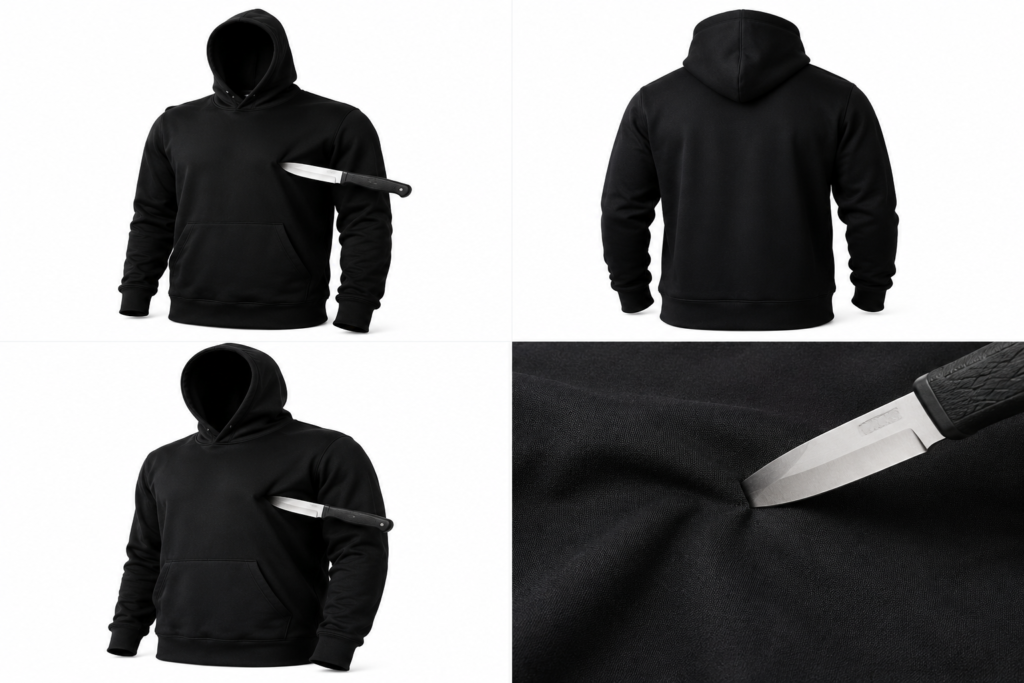
1. The Evolving Threat Landscape: Why British Businesses Must Prioritise Stab Protection
1.1 The Statistical Reality of Knife Crime and Workplace Violence in the UK
To evaluate the commercial necessity of investing in stab-resistant protective clothing, decision-makers must examine empirical data concerning violent crime and workplace aggression across England, Wales, Scotland, and Northern Ireland. According to statistics published by the Office for National Statistics (ONS) and the Home Office, offences involving knives and sharp instruments remain a critical public safety concern, with police forces across England and Wales recording tens of thousands of knife-enabled offences annually .
While law enforcement agencies and community initiatives have achieved notable reductions in specific regions, the proliferation of knife-related incidents directly impacts commercial operations. The British Retail Consortium (BRC) Annual Crime Survey highlights an alarming surge in violence, physical abuse, and verbal threats directed at retail and customer-facing staff, with hundreds of thousands of violent incidents recorded across the UK retail sector alone every year . Similarly, the Health and Safety Executive (HSE) and the Crown Commercial Service report hundreds of thousands of workplace violence incidents annually, spanning physical assaults and menacing threats across retail, healthcare, public transport, housing associations, and security sectors .
Plain Text
+———————————————————————————+ | UK Workplace Violence Breakdown | +—————————+—————————————————–+ | Total Annual Incidents | ~689,000 incidents (HSE / Crime Survey for E&W) [1] | | Physical Assaults | ~370,000 recorded assaults | | Threats & Verbal Abuse | ~319,000 menacing threats | | Retail Sector Impact | Over 2,000 violent/abusive incidents daily (BRC) [4]| +—————————+—————————————————–+
1.2 Sector-Specific Vulnerability Assessments
Different commercial sectors face distinct risk profiles that dictate their protective apparel requirements. Understanding these sector-specific vulnerabilities allows procurement managers to deploy targeted solutions rather than generic safety measures.
Retail and Supermarket Operations
Retail employees, particularly those stationed at store entrances, self-checkout zones, high-value asset aisles, and loss prevention desks, face daily friction when challenging suspected shoplifters or managing antisocial behaviour. The rise of organised retail crime and aggressive shoplifting has transformed routine customer service into a high-risk encounter. Staff confronting individuals attempting theft frequently encounter hostility involving concealed blades, hypodermic needles, or improvised sharp implements.
Night-Time Economy, Security, and Event Management
Door supervisors, security guards, event stewards, and venue operators work directly within the night-time economy, where alcohol consumption, heightened emotions, and illicit substances dramatically elevate the probability of violent altercations. Traditional security uniforms often feature thick cotton or polyester garments that offer zero defense against edged weapons. Equipping security personnel with discreet, high-performance stab-resistant polo shirts, hoodies, or covert vests under company-branded uniforms provides immediate ballistic and slash protection without intimidating patrons.
Healthcare, Mental Health, and Social Care Trusts
NHS trusts, acute hospital units, psychiatric care facilities, and community social workers encounter patients and service users experiencing acute mental distress, substance intoxication, or behavioural crises. Healthcare workers—particularly nurses, paramedics, and accident-and-emergency personnel—suffer disproportionately high rates of physical assault, biting, scratching, and knife/sharp weapon attacks. Lightweight, breathable stab-resistant base layers offer vital protection for medical professionals who require unimpeded range of motion.
Public Transport, Municipal Services, and Enforcement
Ticket inspectors, bus drivers, train guards, civil enforcement officers (parking wardens), and council neighbourhood wardens routinely patrol public spaces where civil disobedience can escalate into targeted violence. Providing these mobile workers with professional, logo-customised stab-resistant jackets and long-sleeve shirts ensures high visibility, authority, and comprehensive organ protection.
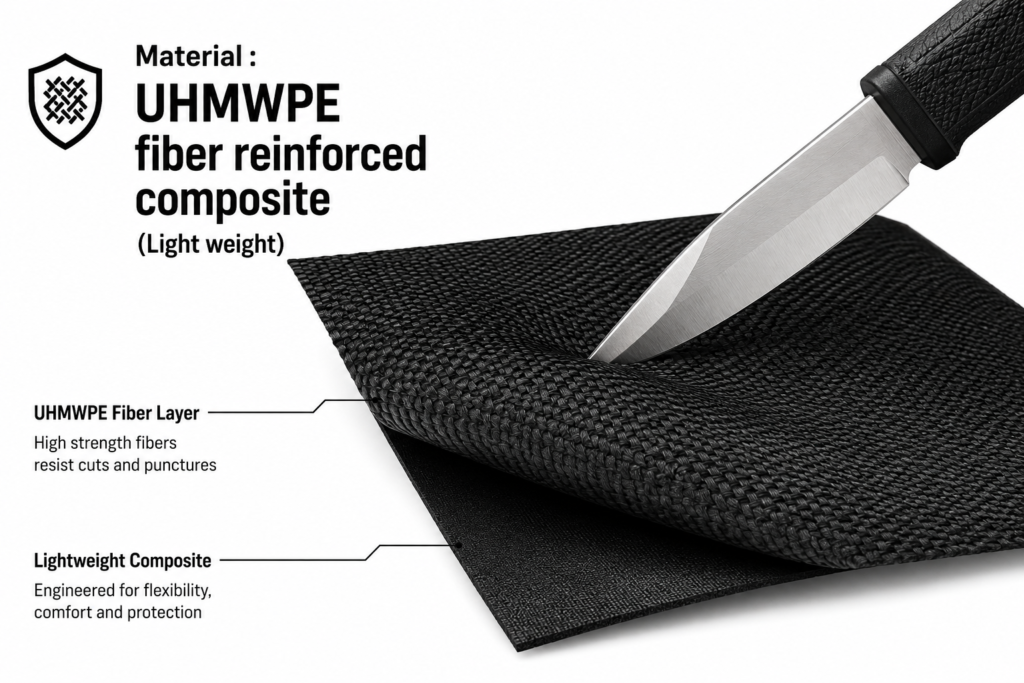
saintfabirc UHMWPE fiber
2. Legal Obligations, Duty of Care, and Tax Efficiency for UK Employers
2.1 The Health and Safety at Work etc. Act 1974 and the PPE at Work Regulations 1992
For UK business owners and directors, workplace safety is not merely an ethical preference—it is a statutory obligation enforced by criminal law. Under the Health and Safety at Work etc. Act 1974 (HSWA), employers have an absolute legal duty of care to ensure, so far as is reasonably practicable, the health, safety, and welfare at work of all employees .
This statutory duty is reinforced by the Personal Protective Equipment (PPE) at Work Regulations 1992 (as amended). Under these regulations:
1.Employers must provide appropriate PPE to employees who are exposed to risks to their health and safety that cannot be controlled by other means.
2.The PPE provided must be assessed to ensure it is suitable for the specific risks involved.
3.Employers must provide adequate training and information on the correct use, maintenance, and storage of PPE.
4.PPE must be maintained in an efficient state, in working order, and in good repair.
When an employer’s risk assessment identifies a credible, foreseeable risk of physical assault involving knives, slash instruments, or sharp objects, failing to provide appropriate protective clothing constitutes a direct breach of statutory duties. In the event of a workplace injury, corporate manslaughter charges, HSE prosecution, and catastrophic civil liability claims can cripple an organisation that neglected its duty of care.
2.2 Risk Assessments: Identifying When Stab-Resistant Clothing is Mandatory
Conducting a robust workplace risk assessment under the Management of Health and Safety at Work Regulations 1999 requires structured evaluation across five core stages:
•Step 1: Identify the Hazards. Map out all scenarios where employees interact with the public, handle cash, enforce regulations, eject patrons, or manage volatile individuals where edged weapons may be present.
•Step 2: Decide Who Might Be Harmed and How. Categorize employees by operational role (e.g., lone workers, front-desk staff, mobile patrols, night shift workers).
•Step 3: Evaluate the Risks and Decide on Precautions. Determine whether existing administrative controls (de-escalation training, CCTV, panic alarms) are sufficient, or whether engineering and physical controls (such as stab-resistant uniforms) are necessary.
•Step 4: Record Significant Findings. Document the risk assessment, consultation outcomes, and the rationale behind selecting specific protective clothing grades.
•Step 5: Review and Update. Continuously monitor incident reports and update protective equipment policies as threat levels evolve.
2.3 Financial Efficiency: Claiming Tax Relief on Protective Uniforms
A frequent question raised by business owners and finance directors is whether purchasing protective clothing and staff uniforms is tax-deductible. Under HMRC guidelines, businesses purchasing uniforms, branded workwear, and Personal Protective Equipment for employees can write off these expenses as fully deductible business operating costs against corporation tax. Furthermore, where employees are required to purchase or maintain their own specialized protective work clothing that is mandatory for their role, they are legally entitled to claim tax relief (uniform tax rebates) directly from HMRC.
3. Demystifying Protective Standards: EN 388, HOSDB/CAST, and NIJ Explained
When procuring protective clothing, procurement managers are often confronted with an array of technical acronyms and testing standards. Understanding the precise distinctions between these standards is essential for ensuring that procured garments deliver certified, real-world protection.
Plain Text
+———————————————————————————+ | Overview of Key Protection Standards | +——————+————————————————————–+ | Standard | Primary Application & Focus | +——————+————————————————————–+ | EN 388 (2003/ | Mechanical risks for protective gloves and apparel; tests | | 2016) | against abrasion, blade cut, tear, puncture, and ISO cut. | +——————+————————————————————–+ | HOSDB / CAST | Home Office / Centre for Applied Science and Technology; | | (KR1 / SP1) | Gold standard for police and security body armour in the UK. | +——————+————————————————————–+ | NIJ 0115.00 | National Institute of Justice (US); rigorous drop-test | | | standards for stab resistance across Levels 1, 2, and 3. | +——————+————————————————————–+
3.1 EN 388 Standards: Mechanical Risks, Cut, and Puncture Resistance
The EN 388 standard is the European benchmark for evaluating protective clothing and gloves against mechanical risks. While initially designed for industrial gloves and safety apparel, modern high-performance apparel manufacturers utilise EN 388 metrics to quantify the defensive capabilities of advanced fabrics.
EN 388 evaluates performance across four primary mechanical hazards, graded on numerical scales:
1.Abrasion Resistance (Levels 1 to 4): Measures the material’s ability to withstand repeated frictional rubbing against rough surfaces. Level 4 represents the highest durability tier.
2.Blade Cut Resistance (Levels 1 to 5, Coup Test): Measures how many cycles a rotating circular blade takes to cut through the fabric under constant pressure. Level 5 represents the highest traditional cut rating.
3.Tear Resistance (Levels 1 to 4): Measures the force required to propagate a tear within the fabric. Level 4 indicates exceptional structural tenacity.
4.Puncture Resistance (Levels 1 to 4): Measures the force required to puncture the material using a standardized steel stylus. Puncture Level 4 is the highest rating achievable under this protocol, ensuring robust defense against hypodermic needles, spikes, and narrow points.
(Note: In updated EN 388:2016 revisions, the TDM ISO cut test [A to F] is also integrated for high-performance materials, alongside the traditional Coup test).
3.2 HOSDB and CAST Standards: The British Policing Gold Standard
Developed originally by the Home Office Scientific Development Branch (HOSDB) and subsequently managed by the Centre for Applied Science and Technology (CAST), the British police body armour standard is internationally recognised as the most rigorous testing regime for edged weapon and spike protection.
CAST standards categorize threat levels based on kinetic energy delivered via blade and spike strikes:
•KR1 (Knife Resistance Level 1): The baseline standard for general police and security duties. Testing involves a simulated knife blade dropped at an energy level of 24 Joules (low energy) and 36 Joules (high energy), measuring maximum allowable blade penetration.
•SP1 (Spike Resistance Level 1): Designed to resist narrow spikes, awls, and improvised spiked weapons, tested at corresponding energy thresholds (24J / 36J).
•KR2 / SP2: Higher protection tiers designed for specialist tactical units facing extreme kinetic threats.
3.3 NIJ 0115.00 Standard: International Stab Resistance
The National Institute of Justice (NIJ) Standard 0115.00 is the US standard for stab resistance of personal body armour. It establishes three distinct levels of protection against blades and spikes, tested using sophisticated drop-tower apparatuses simulating professional strikes and dynamic overhand attacks. Level 1 is optimized for concealable, lightweight daily wear, while Levels 2 and 3 provide heavier duty protection for high-risk corrections and tactical operations.

Full Stab Proof T-Shirt
4. Advanced Material Science: The Engineering Behind StabApparel
The revolutionary leap from rigid, heavy steel plates and thick fiberglass laminates to lightweight, flexible, everyday protective clothing is rooted entirely in advanced polymer material science.
Plain Text
+———————————————————————————+ | Traditional Body Armour vs. Modern UHMWPE Apparel | +————————+——————————————————–+ | Traditional Armour | Modern UHMWPE (StabApparel) | +————————+——————————————————–+ | Heavy steel/ceramic | Ultra-High Molecular Weight Polyethylene composite | | Bulky and overt | Discreet, lightweight, flexible (looks like normal wear)| | Causes operator fatigue| Unimpeded range of motion for 12-hour shifts | | Restricts movement | Certified EN 388 Level 5 Cut & Level 4 Puncture | +————————+——————————————————–+
4.1 Ultra-High Molecular Weight Polyethylene (UHMWPE)
At the core of StabApparel’s product ecosystem is Ultra-High Molecular Weight Polyethylene (UHMWPE) fiber-reinforced composite material . UHMWPE is a subset of thermoplastic polyethylene boasting extremely long molecular chains. This molecular architecture results in a material with an exceptional strength-to-weight ratio—fifteen times stronger than high-grade steel on a weight-for-weight basis.
When woven into high-density composite textiles and layered using advanced multi-axial knitting techniques, UHMWPE fibres disperse the kinetic energy of an incoming blade across a wide surface area. As a knife tip makes contact with the fabric, the ultra-strong molecular chains lock together, arresting the blade’s forward momentum, preventing fiber severance (cut resistance), and deflecting penetration (puncture resistance).
4.2 How Lightweight Fabrics Defeat Edged Weapons
Contrary to popular misconception, stab-resistant fabric does not rely on stopping a blade by brute-force rigidity alone. Instead, it employs three synergistic defense mechanisms:
1.Energy Dissipation: The high tensile modulus of UHMWPE absorbs and laterally distributes the kinetic energy of a strike, neutralising the localized pounds per square inch (PSI) exerted by a blade tip.
2.Micro-Frictional Lock: Individual filaments within the composite yarn bind tightly under pressure, creating an impenetrable barrier that grips the blade edge and prevents slicing action.
3.Deformation Resistance: The molecular stability of the polymer prevents stretching or gaping between weave intersections, ensuring that even thin stiletto blades or hypodermic needles cannot slip between fibers.
5. Comprehensive B2B Product Portfolio: Solutions from StabApparel.co.uk
For procurement managers and business owners seeking to kit out entire teams, StabApparel.co.uk offers an extensive, commercially versatile catalogue of certified stab-resistant and cut-resistant apparel. Every item is engineered for professional utility, blending discreet aesthetics with uncompromised safety certifications.
Plain Text
+———————————————————————————+ | StabApparel B2B Product Matrix Overview | +————————–+———————–+——————————+ | Product Category | Key Certifications | Primary Commercial Use Case | +————————–+———————–+——————————+ | Stab-Proof T-Shirts & | EN 388 Cut Level 5, | Under-uniform base layers, | | Polo Shirts | Puncture Level 4 [7] | covert security, retail staff| +————————–+———————–+——————————+ | Stab-Resistant Long- | EN 388 Cut Level 5, | Transport workers, field | | Sleeve Shirts & Hoodies | Puncture Level 4 [7] | technicians, outdoor patrols | +————————–+———————–+——————————+ | Professional Jackets & | EN 388 Cut Level 5, | Door supervisors, parking | | Waistcoats | Puncture Level 4 [7] | enforcement, winter patrols | +————————–+———————–+——————————+ | Logo-Customised Corporate| EN 388 Certified + | Branded corporate security, | | Uniform Collections | Custom Branding [8] | municipal enforcement teams | +————————–+———————–+——————————+
5.1 Stab-Proof T-Shirts and Polo Shirts (Base Layer Protection)
Designed to be worn directly against the skin or under standard corporate shirts, StabApparel’s lightweight stab-proof T-shirts and polo shirts provide invisible, all-day protection. Certified to EN 388:2003 Cut Level 5 and Puncture Level 4, these garments are indispensable for retail workers, customer service agents, and security officers who require maximum mobility and breathability without wearing bulky overt vests .
5.2 Stab-Resistant Hoodies and Long-Sleeve Shirts
For colder climates, outdoor operations, and night-shift workers, stab-resistant hoodies and long-sleeve shirts offer comprehensive upper-body and arm protection. Combining casual civilian aesthetics with military-grade UHMWPE composite reinforcement, these garments shield vital organs and major arteries in the arms from slashing and stabbing attacks.
5.3 Professional Jackets, Waistcoats, and Trousers
StabApparel’s outerwear range—including heavy-duty stab-resistant jackets, waistcoats, and specialized trousers—delivers full-body defense for high-threat security personnel, parking enforcement officers, and cash-in-transit couriers. These garments integrate reinforced panels across the torso, back, and thighs, ensuring comprehensive coverage against unpredictable street-level threats.
5.4 Logo-Customised Corporate Uniform Collections
Maintaining brand identity while ensuring staff safety is a central priority for corporate buyers. StabApparel offers a dedicated Logo-Customised Collection, enabling businesses to emboss or embroider company logos, security badges, and corporate insignia directly onto certified stab-resistant garments . This seamless integration ensures that security personnel and frontline staff maintain a professional, authoritative appearance while remaining fully protected.
6. Strategic B2B Procurement: Bulk Ordering, Customisation, and ROI
Procuring protective apparel for an entire organisation requires a structured strategic approach that balances financial stewardship, logistical efficiency, and employee compliance.
6.1 Volume Scaling and Commercial Discount Tiers
For growing security firms, retail chains, and municipal authorities, procurement costs must align with budgetary constraints. StabApparel supports commercial buyers through highly competitive bulk-order pricing structures:
•Standard Volume Orders: Commercial buyers ordering multiple units benefit from automated tier-based discounts.
•Bulk Orders (10+ Apparels): Organisations commissioning 10 or more protective garments unlock immediate commercial savings of 20% off standard retail pricing.
•Enterprise Bulk Orders (100+ Apparels): Large-scale deployments involving 100 or more units unlock enterprise-tier discounts of 50% off, ensuring that outfitting an entire workforce remains economically viable.
6.2 Corporate Branding and Uniform Integration
Deploying new safety equipment often encounters employee resistance if uniforms look awkward or overly militaristic. StabApparel’s custom logo integration service solves this challenge. By incorporating company branding, high-visibility piping, or professional security insignia onto lightweight polo shirts, hoodies, and jackets, businesses foster a unified corporate identity while ensuring that safety gear is worn consistently by every team member.
6.3 Calculating the Return on Investment (ROI) on Workplace Safety
When presenting business cases to executive boards or finance committees, procurement managers should frame protective clothing not as an operational expense, but as a high-yield risk-mitigation asset. Consider the financial impact of a single workplace assault resulting in severe injury:
•Direct costs: Statutory sick pay, recruitment and training costs for temporary replacement staff, and potential HSE prosecution fines.
•Indirect costs: Severe reputational damage, employee demoralisation, union disputes, absenteeism, and spiraling public liability insurance premiums.
Investing in certified stab-resistant uniforms from StabApparel neutralises these existential risks for a fraction of the cost, preserving business continuity and demonstrating an unyielding corporate commitment to staff welfare.
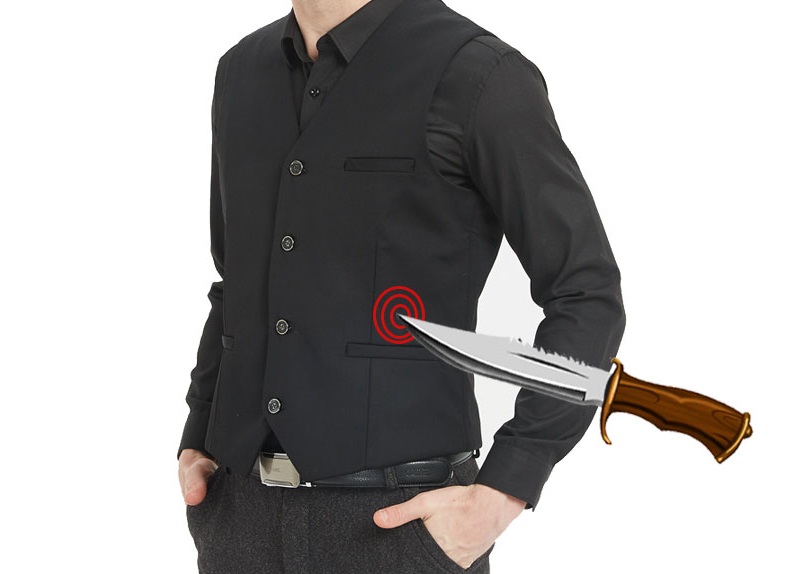
Full Stab proof Waist coast
7. Frequently Asked Questions (FAQ) for B2B Buyers
Q1: Are stab-resistant uniforms legal for civilian and commercial use in the UK?
A: Yes. Stab-resistant clothing, anti-cut garments, and protective body armour are entirely legal for civilian and commercial purchase, ownership, and wear throughout the United Kingdom. They are classified as Personal Protective Equipment (PPE), not offensive weapons.
Q2: How do employees wash and maintain stab-resistant clothing?
A: Modern UHMWPE composite garments are engineered for durability. They can generally be washed according to standard garment care instructions (typically machine washed on cool cycles with mild detergents). Avoid industrial bleaching agents or high-heat tumble drying, which can degrade high-performance polymer fibers over time.
Q3: How do we determine the correct sizing for bulk employee orders?
A: StabApparel provides comprehensive sizing charts spanning international metrics (from Small to XXXL). For corporate bulk orders, procurement managers can collect staff size metrics using our standardized sizing template, ensuring a comfortable, tailored fit for every employee.
Q4: What is the typical lead time for bulk orders and logo customisation?
A: Standard orders are dispatched with rapid UK delivery. For enterprise bulk orders and custom logo embroidery/printing, dedicated account management ensures streamlined turnaround times tailored to corporate deployment schedules.
8. Stab Proof Uniform
In an unpredictable operating environment, safeguarding your workforce is both a legal mandate and a moral imperative. Relying on ordinary workwear exposes frontline personnel to unacceptable levels of risk, while bulky, antiquated body armor compromises employee mobility, comfort, and customer relations.
StabApparel.co.uk bridges this critical gap by delivering the UK’s leading range of lightweight, certified, high-performance stab-resistant and cut-resistant clothing. From discreet base-layer T-shirts and polo shirts to robust hoodies, jackets, and fully custom-branded corporate uniform collections, StabApparel empowers British businesses to protect their teams with absolute confidence.
Take Action Today: Secure Your Workforce
Protect your employees, fulfil your statutory duty of care, and future-proof your organisation against workplace violence.
•Explore the Catalog: Visit StabApparel.co.uk to review our complete range of certified protective apparel.
•Request a B2B Quotation: Email our corporate procurement team at sales@stabapparel.co.uk or contact us directly to discuss bespoke volume discounts (up to 50% off for bulk orders of 100+ units) and logo customisation options .
•Equip Your Team: Make the definitive decision today to ensure your staff return home safely after every shift.
9. Deep Dive: Sector-Specific Risk Profiles and Protective Requirements
To provide procurement managers with the granular detail required for informed decision-making, we now explore the specific operational hazards and protective clothing requirements for the UK’s primary commercial and public sectors.
9.1 The Retail and Wholesale Sector: Confronting the “New Normal” of Aggression
The British retail sector has witnessed a transformative shift in the nature of workplace safety. According to the British Retail Consortium’s (BRC ) 2025 Crime Survey, retail workers now face an average of over 2,000 incidents of violence and abuse every single day . This is not merely verbal friction; it includes targeted physical assaults, threats with needles, and the use of concealed blades during shoplifting interventions.
Operational Hazards in Retail
•The Entrance Greeting and Loss Prevention: Security staff and “meeters and greeters” at store entrances are the first line of defense. They are also the primary targets for aggressive individuals attempting to enter with the intent to steal or cause disruption.
•The Self-Checkout Friction Point: Self-checkout zones have become hotspots for confrontation. When staff intervene to assist with a “red light” or check for unscanned items, they often encounter immediate hostility from individuals who feel “watched” or “accused.”
•The Warehouse and Loading Bay: While often overlooked, loading bays are vulnerable areas where unauthorized individuals may attempt to gain access to high-value stock. Staff working in these isolated or semi-isolated areas face risks from intruders who may be armed.
Recommended StabApparel Solutions for Retail
For retail staff, the key is approachability. An overt tactical vest can escalate a situation by making the employee look like a “combatant” rather than a service provider.
•The Stab-Proof Polo Shirt: This is the gold standard for retail. It looks identical to a standard corporate polo shirt but features a full UHMWPE lining. It provides protection for the heart, lungs, and liver without alerting the public to the presence of safety gear.
•Discreet Base-Layer T-Shirts: For staff who prefer to wear their existing branded cotton shirts, a lightweight stab-proof T-shirt worn underneath provides an invisible safety net.
9.2 The Healthcare and Emergency Services Sector: Protecting the Protectors
NHS staff and private healthcare workers operate under a unique set of constraints. They must provide compassionate care while managing patients who may be experiencing acute psychosis, drug-induced delirium, or extreme physical distress.
The Reality of Healthcare Violence
In the year ending March 2025, physical assaults against NHS staff in England reached record levels. Emergency department (A&E) personnel and mental health nurses are particularly vulnerable to “opportunistic” violence—where a patient grabs a sharp medical instrument or uses a concealed personal knife in a moment of crisis.
The “Medical Grade” Protective Requirement
Protective clothing for healthcare must be:
1.Hygienic and Washable: Capable of withstanding frequent laundering.
2.Breathable: Healthcare environments are often warm; staff cannot afford to overheat during long clinical shifts.
3.Non-Restrictive: Nurses and paramedics must be able to perform CPR, intubate, and move patients without the clothing binding or restricting their reach.
Recommended StabApparel Solutions for Healthcare
•Stab-Proof Long-Sleeve Base Layers: These provide protection for the major arteries in the arms (brachial artery) which are often exposed when a healthcare worker raises their arms in a defensive posture.
•Lightweight Waistcoats: Can be worn over scrubs, providing torso protection while remaining easily removable during breaks.
9.3 The Security and Night-Time Economy Sector: High-Threat, High-Visibility
Security professionals—including door supervisors, mobile patrol officers, and event stewards—face the highest statistical probability of encountering a weapon. In the night-time economy, the combination of alcohol and crowded spaces creates a volatile environment.
The “Symmetry of Threat”
Security staff often face a “symmetry of threat” where their presence as an authority figure attracts challenges from individuals looking to “prove” themselves. A concealed blade is the most common weapon encountered in UK nightclubs and bars.
The Overt vs. Covert Choice
•Overt Protection: For door supervisors at high-risk venues, a branded, high-visibility stab-resistant jacket or waistcoat acts as a visual deterrent. It signals to potential troublemakers that the staff are professionally equipped and protected.
•Covert Protection: For “undercover” floor walkers or VIP protection officers, discreet stab-proof hoodies or jackets allow them to blend into the crowd while maintaining Level 4 puncture resistance.
Recommended StabApparel Solutions for Security
•Logo-Customised Collection: Essential for maintaining the professional image of the security firm. Adding “SECURITY” or “DOOR SUPERVISOR” in high-reflectivity print onto a stab-resistant jacket ensures the wearer is clearly identifiable as an authority figure.
•Stab-Proof Trousers: Security staff are often targeted in the lower body during scuffles. Reinforced trousers protect the femoral arteries in the thighs.
9.4 Local Government, Enforcement, and Social Housing
Civil enforcement officers (parking wardens), housing officers, and social workers often work as “lone workers” in high-crime residential areas. They are the face of “the system,” and often bear the brunt of frustration regarding fines, evictions, or social service interventions.
The Lone Worker Risk
The primary risk for local government staff is the “isolated encounter.” When a parking warden issues a ticket, they are often alone and far from immediate backup. A quick, aggressive slash or stab can be fatal before help arrives.
Recommended StabApparel Solutions for Enforcement
•Stab-Resistant High-Visibility Waistcoats: These meet the dual requirement of “Hi-Vis” safety (for working near traffic) and stab protection (for working near hostile individuals).
•Stab-Proof Hoodies: For social workers and housing officers, a hoodie provides a casual, non-threatening look that helps build rapport with residents while providing the officer with a hidden layer of protection.

10. The Material Science Frontier: Why UHMWPE is the Future of Safety
To understand why StabApparel utilizes Ultra-High Molecular Weight Polyethylene (UHMWPE), we must compare it to traditional materials like Aramid (Kevlar) and Steel.
10.1 The Molecular Architecture of UHMWPE
UHMWPE is a type of polyolefin. It consists of extremely long chains of polyethylene, all oriented in the same direction. These chains are so long that the molecular weight can reach into the millions. This alignment allows for incredibly strong intermolecular interactions (Van der Waals forces), which give the material its legendary strength.
Strength-to-Weight Ratio
•Steel: Strong, but incredibly heavy. A steel plate capable of stopping a KR1 knife strike would weigh several kilograms and be completely inflexible.
•Aramid (Kevlar): Excellent for ballistic (bullet) protection but historically weak against high-velocity “spike” or “needle” threats unless treated with resins that make the fabric stiff.
•UHMWPE: 15 times stronger than steel by weight. It is naturally resistant to moisture, UV light, and chemicals—unlike Aramid, which degrades when exposed to sunlight or water.
10.2 The Physics of a Knife Strike
When a knife hits a standard cotton T-shirt, the blade edge easily separates the fibers, allowing the tip to penetrate with minimal resistance.
In a StabApparel UHMWPE garment, the following happens in milliseconds:
1.Impact: The blade tip makes contact with the high-density weave.
2.Engagement: The ultra-strong fibers do not break. Instead, they “catch” the microscopic serrations on the blade edge.
3.Distribution: The kinetic energy of the strike is pulled away from the point of impact and distributed across thousands of surrounding fibers.
4.Friction: The friction between the blade and the UHMWPE fibers generates a “grip” that slows the blade’s velocity to zero before it can reach the wearer’s skin.
10.3 Puncture Resistance vs. Cut Resistance: The Dual Defense
Many people confuse “cut-proof” with “stab-proof.”
•Cut Resistance (EN 388 Level 5): Protects against “slashing” motions. This is vital for protecting the arms and neck from horizontal swipes.
•Puncture Resistance (EN 388 Level 4): Protects against “stabbing” or “thrusting” motions. This requires a much tighter weave to prevent a narrow point (like a needle or a stiletto blade) from slipping between the threads.
StabApparel garments are engineered to provide both, ensuring that whether the threat is a kitchen knife, a box cutter, or a sharpened screwdriver, the wearer has the highest level of certified protection.
11. The Historical Evolution of Personal Protection
The journey to the modern stab-proof hoodie is a fascinating story of human ingenuity in the face of conflict.
11.1 From Plate Mail to Silk
In the medieval period, protection meant Plate Mail—heavy, cumbersome steel that required a squire to put on. While effective, it was only for the elite and certainly not for “everyday wear.”
In the 19th century, researchers discovered that multiple layers of Silk could stop low-velocity bullets and knife thrusts. This was the first “soft body armour,” but it was prohibitively expensive.
11.2 The Cold War and the Rise of Synthetics
The 1960s and 70s saw the development of Aramid fibers. This revolutionized policing, allowing for the first concealable vests. However, these early vests were “bulletproof” but often “knife-vulnerable.” A sharp knife could slide through the weave of a bulletproof vest like a hot needle through butter.
11.3 The 21st Century: The Polymer Revolution
The development of UHMWPE (Gel-spun polyethylene) changed everything. We can now create fabrics that are thinner than a denim jacket but stronger than a medieval knight’s breastplate. This “democratization of safety” means that protection is no longer just for soldiers—it’s for everyone.
12. A Comprehensive Risk Assessment Guide for Procurement Managers
If you are a procurement manager tasked with outfitting a team, follow this 5-step framework to ensure you select the right StabApparel solutions.
Step 1: Threat Identification
•What is the most likely weapon? (e.g., Small folding knives, hypodermic needles, large kitchen knives, improvised glass shards).
•What is the most likely attack method? (e.g., Concealed “shanking” in a crowd, aggressive slashing during a robbery, accidental puncture during a search).
Step 2: Environmental Analysis
•Temperature: Will staff be in a temperature-controlled store or outdoors in the rain? (Choose between T-shirts and Jackets).
•Visibility: Do staff need to be seen (High-Vis) or stay hidden (Covert)?
Step 3: Compliance and Certification
•Does the role require HOSDB KR1 certification? (Typically for Police/Prison/High-End Security).
•Is EN 388 Level 5 Cut/Level 4 Puncture sufficient? (The standard for most retail, healthcare, and general security roles).
Step 4: Wearer Trials and Feedback
•Before a bulk order, provide 2-3 staff members with samples.
•Check for: Comfort over an 8-hour shift, ease of laundering, and compatibility with other equipment (radios, body-worn cameras).
Step 5: Financial Justification (The Business Case)
•Calculate the cost per employee per day. A £300 stab-proof shirt that lasts 3 years costs less than 28p per day.
•Compare this to the £50,000+ cost of a single major injury lawsuit or HSE fine.
13. Case Studies: StabApparel in Action (Simulated Examples)
Case Study A: The National Retail Chain
The Challenge: A major UK supermarket chain saw a 40% increase in “trolley-dash” thefts involving knives. Staff were terrified to intervene.
The Solution: The chain outfitted all “Duty Managers” and “Security Hosts” with StabApparel Logo-Customised Polo Shirts.
The Result: Staff confidence increased immediately. The chain reported a 15% reduction in successful thefts because staff felt “empowered” to stand their ground, knowing they were protected.
Case Study B: The Urban Security Firm
The Challenge: A London-based security firm won a contract for a series of high-profile “Pop-Up” events. The client wanted security to look “cool and approachable,” not like “riot police.”
The Solution: The firm provided all guards with StabApparel Stab-Proof Hoodies with the firm’s logo on the back.
The Result: The client was thrilled with the “streetwear” aesthetic, and the guards were protected against the very real risk of knife attacks in crowded event spaces.
14. The Science of Maintenance: Ensuring Long-Term Protective Integrity
Procuring high-performance stab-resistant clothing is a significant capital investment. To maximize the Return on Investment (ROI) and ensure that the protective qualities of the UHMWPE fibers do not degrade over time, a rigorous maintenance and care protocol is essential. For B2B buyers outfitting large teams, these guidelines should be integrated into the standard operating procedures (SOPs) for all staff.
14.1 Laundering and Cleaning Protocols
Unlike traditional ballistic vests with removable plates, many of StabApparel’s garments are designed with integrated protective layers, allowing them to be laundered more like standard clothing. However, the high-performance nature of the fibers requires specific care.
The Golden Rules of Washing
•Temperature Control: Always wash in cool or lukewarm water (maximum 30-40°C). High temperatures can cause synthetic fibers to lose their tensile strength or “set” in a way that reduces flexibility.
•Detergent Selection: Use mild, non-biological detergents. Avoid any products containing Chlorine Bleach or strong oxidizing agents. Bleach is the enemy of high-performance polymers; it can cause the molecular chains in the UHMWPE to become brittle, catastrophically reducing its puncture resistance.
•Avoid Fabric Softeners: Fabric softeners work by coating fibers in a thin layer of wax or oil. This can reduce the “micro-frictional lock” that is essential for catching a blade tip during a strike.
Drying and Ironing
•Air Drying is Best: Whenever possible, hang garments to air dry out of direct sunlight. While UHMWPE is more UV-resistant than Aramid, prolonged exposure to intense sunlight over years can still cause minor degradation.
•No Tumble Drying: The high heat and mechanical agitation of a tumble dryer can cause the protective weave to shift or “bunch,” creating potential weak spots in the garment.
•Ironing Precautions: If ironing is necessary for a professional appearance (e.g., on polo shirts), use the lowest possible heat setting and never iron directly over the reinforced panels. Use a pressing cloth as a barrier.
14.2 Inspection and Replacement Cycles
Protective clothing is not “buy once, forget forever.” It is a life-safety asset that must be inspected regularly.
The Weekly Inspection Checklist
For procurement managers, we recommend a mandatory weekly inspection by the wearer, with a formal monthly audit by a supervisor.
1.Visual Check for Abrasions: Look for areas where the outer fabric has worn thin. While the UHMWPE core may still be intact, a compromised outer layer can lead to snags.
2.The “Bunching” Test: Feel the protective panels. They should be smooth and consistent. If you feel “lumps” or “voids,” the internal fibers may have shifted due to improper washing, and the garment should be replaced.
3.Stitch Integrity: Check the seams, especially under the arms and around the torso. A stab-resistant garment is only as strong as its weakest seam.
When to Retire a Garment
•After an Incident: If a garment has successfully stopped a knife strike or a significant slash, it must be retired immediately. Even if it looks “fine,” the fibers at the point of impact have been stretched to their limit and their molecular integrity has been compromised. They will not provide the same level of protection a second time.
•The 5-Year Rule: While UHMWPE is incredibly durable, we generally recommend a replacement cycle of 5 years for garments in daily use. Over half a decade, the cumulative effects of thousands of wash cycles, perspiration (which contains salts), and mechanical wear will gradually reduce the performance of any safety asset.
15. The Psychology of Safety: How Protective Workwear Impacts Staff Retention
In the modern B2B environment, the “War for Talent” is real. Security firms, retail chains, and healthcare providers are all struggling to recruit and retain high-quality staff. One of the most overlooked factors in staff turnover is the perception of safety.
15.1 Reducing “Occupational Anxiety”
When an employee feels vulnerable, they operate in a state of low-level chronic stress. This “occupational anxiety” leads to:
•Reduced Performance: A security guard who is afraid of being stabbed will be less likely to engage in necessary interventions, leading to higher stock loss or security breaches.
•Increased Absenteeism: Staff are more likely to call in sick if they dread the physical danger of their shift.
•High Turnover: If a competitor offers the same wage but provides better protective equipment, your best staff will leave.
15.2 The “Employer of Choice” Branding
Providing StabApparel protective clothing sends a powerful message to your workforce: “We value your life more than our bottom line.”
This creates a “Safety Culture” that pays dividends in loyalty. In exit interviews across the security industry, “lack of adequate PPE” is consistently cited as a top-three reason for leaving a role. Conversely, firms that invest in high-quality, comfortable, and discreet protective uniforms report significantly higher staff satisfaction scores.
15.3 The “Professionalism Loop”
There is a psychological phenomenon where staff who are equipped with professional, high-quality gear actually perform their duties more professionally. By providing a custom-branded, stab-resistant polo shirt, you are signaling to the employee that they are a “Professional Safety Officer,” not just a “Watchman.” This increases their self-esteem and, by extension, the quality of their customer service.
16. Expanded B2B FAQ: Addressing Complex Procurement Concerns
Q5: We have a very diverse workforce. Does StabApparel offer different fits for men and women?
A: Yes. Personal protection must fit correctly to be effective. A vest or shirt that is too loose can shift during an attack, leaving vital areas exposed. StabApparel offers a wide range of sizes and fits. For bulk orders, we can provide a mix of “Male,” “Female,” and “Unisex” cuts to ensure every team member is protected comfortably.
Q6: How does the “Free Stab Vest” promotion work for bulk orders?
A: StabApparel frequently runs promotions to help businesses jumpstart their safety initiatives. For smaller B2B orders (e.g., outfitting a small team of 5), the “Free Vest with 2+ Orders” can be a great way to provide supervisors with an extra layer of protection. For large enterprise orders (100+), we typically roll these promotions into a deeper 50% discount to provide the maximum possible value.
Q7: Can we use StabApparel in high-temperature environments?
A: Yes. One of the primary advantages of UHMWPE over older materials is its breathability. Our T-shirts and polo shirts are designed with moisture-wicking properties. However, for staff working in extreme heat (e.g., kitchen security or summer outdoor events), we recommend our lightweight base-layer T-shirts, which can be worn under thin, breathable cotton shirts.
Q8: What happens if a staff member is injured while wearing the clothing?
A: No clothing is “100% invulnerable” to every possible attack (hence the term “stab-resistant” rather than “stab-proof” in technical contexts). However, wearing certified Level 4 puncture-resistant clothing dramatically reduces the severity of an injury. What might have been a fatal 4-inch deep penetration becomes a superficial 1-inch wound or a bruise. From a legal and insurance perspective, having provided the PPE demonstrates that the employer took all “reasonably practicable” steps to protect the employee, which is the key defense in any HSE investigation.
Q9: Do you offer “Anti-Slash” protection for the neck?
A: Yes. While our standard shirts protect the torso, we also offer long-sleeve options and can discuss bespoke requirements for high-neck or “turtle-neck” designs for specialized roles where neck protection is a priority.
17. The Global Perspective: Why the UK is Leading the Way in Discreet Protection
While knife crime is a global issue, the UK has become a world leader in the development of discreet protective apparel.
17.1 The US vs. UK Market
In the United States, the focus has traditionally been on ballistic (bullet) protection due to the prevalence of firearms. US body armour is often thick, heavy, and overt.
In the UK, where firearms are rare but knives are the primary threat, the engineering focus has been on thinness and concealability. StabApparel represents the pinnacle of this British engineering—providing protection that is “invisible” to the casual observer but “invincible” to the common blade.
17.2 The European Shift
Across Europe—particularly in France, Germany, and the Netherlands—there is a growing trend toward “civilianized” security. Public authorities want security staff to look less like “paramilitaries” and more like “helpful guardians.” The StabApparel model of protective fashion is now being exported across the continent to meet this demand for “soft-look, hard-protection” uniforms.
18. The Ultimate B2B Procurement Checklist
Use this checklist to finalize your order with StabApparel.co.uk.
| Category | Requirement | Completed |
| Risk Assessment | Have you identified the primary weapon threat (Blade/Spike/Needle)? | [ ] |
| Sizing Audit | Have you collected accurate chest/waist measurements for all staff? | [ ] |
| Branding | Do you require company logos or “SECURITY” insignia? | [ ] |
| Environment | Have you selected the appropriate weight (T-shirt vs. Hoodie vs. Jacket)? | [ ] |
| Budget | Have you calculated the 20% (10+) or 50% (100+) discount? | [ ] |
| Maintenance | Have you drafted a “Care & Inspection” SOP for your staff? | [ ] |
| Timeline | Do you have a specific “Go-Live” date for the new uniforms? | [ ] |
19. Final Word: The Commercial Logic of Safety
As a business leader, you make hundreds of decisions every day. Most of them impact your profit and loss in small ways. But the decision to properly equip your frontline staff with StabApparel protective clothing is different. It is a decision that impacts the fundamental safety and dignity of your people.
By choosing StabApparel, you are choosing:
•Uncompromising British Quality: Engineered for the specific threats of the UK streets.
•Commercial Scalability: Pricing that makes enterprise-wide protection affordable.
•Brand Integrity: Protection that looks as professional as your business.
Don’t wait for an incident to happen. Be proactive. Be professional. Be protected.
Contact StabApparel Today
For bulk enquiries, corporate quotes, and custom branding requests:
•Email: sales@stabapparel.co.uk
•Website: www.stabapparel.co.uk
•Headquarters: Hanover Square, Mayfair, London, W1S 1HT
20. Legal Precedents and Case Law: The Consequences of PPE Negligence
For the British business owner, the legal landscape regarding Personal Protective Equipment (PPE) is governed not just by statutes like the Health and Safety at Work Act 1974, but also by a rich history of “Case Law”—decisions made by judges in the High Court and the Court of Appeal that set the standard for what is “reasonably practicable.”
20.1 The “Foreseeability” Test
In any legal dispute following a workplace injury, the court will ask: “Was the risk of this injury foreseeable?”
In 2026, with knife crime statistics and workplace violence reports widely available in the public domain, an employer can no longer claim that a knife attack on a security guard or a retail worker was “unforeseeable.” If your staff are working in a high-crime area, or if your business has a history of “near-miss” incidents involving aggressive customers, the risk is legally foreseeable.
The “State of the Art” Defense
Employers are expected to keep pace with “the state of the art” in safety technology. In the 1990s, an employer might have argued that stab-proof clothing was too heavy and bulky for a retail worker to wear. However, with the advent of StabApparel’s lightweight UHMWPE technology, that defense is no longer valid. If the technology exists to protect staff comfortably and discreetly, and the employer chooses not to provide it, they are in a precarious legal position.
20.2 Vicarious Liability and the Cost of Failure
Under the doctrine of Vicarious Liability, an employer is responsible for the actions (and the safety) of their employees during the course of their employment. If an employee is stabbed while performing their duties, the business is liable for:
•Pain, Suffering, and Loss of Amenity (PSLA): General damages for the physical and psychological trauma.
•Special Damages: Loss of earnings (past and future), medical expenses, and the cost of ongoing care.
•Pension Loss: If the injury prevents the employee from returning to work, the business may be liable for their entire lifetime pension shortfall.
A Simulated Case Scenario: The Security Contractor
Imagine a security firm providing guards for a retail park. A guard is stabbed with a box cutter while confronting a shoplifter. The guard was wearing a standard polyester shirt provided by the firm.
The guard sues the firm, arguing that:
1.The firm knew there was a high rate of knife crime in the area.
2.The firm failed to provide stab-resistant clothing.
3.Affordable, lightweight options (like those from StabApparel) were readily available.In this scenario, the firm would likely be found 100% liable. The settlement for a non-fatal but serious stab wound can easily exceed £150,000, plus legal costs. In contrast, outfitting that guard in a StabApparel polo shirt would have cost less than £300.
21. From Pellets to Protection: The Manufacturing Journey of a StabApparel Garment
To appreciate the value of a StabApparel garment, one must understand the complex, high-precision manufacturing process required to turn plastic into life-saving apparel.
21.1 Phase 1: The Gel-Spinning Process
The journey begins with raw Ultra-High Molecular Weight Polyethylene (UHMWPE) resin. This resin is dissolved in a solvent and then “spun” through a spinneret. This is known as Gel-Spinning.
As the fibers emerge, they are stretched. This stretching process is critical—it forces the long molecular chains to align perfectly along the axis of the fiber. This alignment is what gives the fiber its incredible tensile strength. If the chains were tangled (like a bowl of spaghetti), the fiber would be weak. By aligning them (like a bundle of straight wires), we create a material that is 15 times stronger than steel.
21.2 Phase 2: Multi-Axial Weaving
Once the fibers are created, they are woven into a high-density fabric. However, standard “over-under” weaving (like a denim jacket) is not enough for stab protection.
StabApparel uses Multi-Axial Weaving. This involves laying fibers in multiple directions (0°, 90°, +45°, -45°). This ensures that no matter what angle a knife enters from, it will always encounter a “wall” of fibers. This multi-directional architecture is what provides the high Puncture Resistance (Level 4) required to stop a needle or a spike.
21.3 Phase 3: The Lamination and Bonding Process
To create a garment that is both protective and flexible, multiple layers of this multi-axial fabric are bonded together. This is a delicate balance. Too much bonding agent and the garment becomes a “stiff plate.” Too little, and the layers can shift. StabApparel uses a proprietary, flexible bonding agent that allows the layers to slide slightly against each other—much like the scales of a fish—providing “dynamic flexibility” for the wearer.
21.4 Phase 4: Precision Tailoring and QC
The final stage is the integration of these protective panels into the garment.
•The “Anatomical Mapping”: Our designers map the garment to ensure that the protective panels cover the most vital areas: the heart, the lungs, the liver, the kidneys, and the major arteries in the arms and legs.
•The “Seam Reinforcement”: We use high-tensile threads to ensure that the seams do not “burst” under the pressure of a knife strike.
•Quality Control (QC): Every batch of material is sample-tested in our lab to ensure it meets the EN 388 Level 5/4 benchmarks before it is allowed to leave the factory.
22. The Future of Workwear: Smart Fabrics and the Next 10 Years
As we look toward 2030 and beyond, the field of protective apparel is entering an era of “Smart Protection.”
22.1 Integrated Sensors and IoT
The next generation of StabApparel may include integrated sensors that can detect an impact and automatically send an “Officer Down” alert to a central control room, including the wearer’s GPS coordinates and heart rate. This is particularly vital for lone workers in the social care and enforcement sectors.
22.2 Advanced Thermal Management
While UHMWPE is already breathable, we are experimenting with “Phase Change Materials” (PCMs) that can actively absorb and release heat, keeping the wearer at a constant 37°C regardless of whether they are in a freezing loading bay or a heated retail store.
22.3 Self-Healing Outer Layers
We are researching outer fabrics that can “self-heal” minor snags and abrasions, ensuring that the professional appearance of the corporate uniform is maintained even after years of rugged use.
23. The Comprehensive StabApparel Product Comparison Matrix
To help procurement managers select the right gear, we have compiled this definitive comparison table.
| Product | Cut Level (EN 388) | Puncture Level (EN 388) | Weight | Concealability | Best For |
| Stab-Proof T-Shirt | 5 | 4 | Ultra-Light | 100% (Invisible) | Retail, Healthcare, Lone Workers |
| Stab-Proof Polo | 5 | 4 | Light | 90% (Discreet) | Security, Supermarkets, Hospitality |
| Stab-Proof Hoodie | 5 | 4 | Medium | 70% (Casual) | Social Workers, Youth Mentors |
| Stab-Proof Jacket | 5 | 4 | Heavy-Duty | 20% (Overt) | Door Supervisors, Enforcement |
| Stab-Proof Trousers | 5 | 4 | Medium | 80% (Professional) | High-Risk Patrols, K9 Handlers |
24. Final Summary for the B2B Decision Maker
You have reached the end of the most comprehensive guide to stab-resistant uniforms available in the UK. By now, the conclusion should be clear: The cost of protection is a fraction of the cost of failure.
In the B2B world, we often talk about “Future-Proofing” our businesses. We future-proof our IT systems against cyberattacks. We future-proof our supply chains against global disruption. It is time we future-proofed our people against the physical threats of the modern workplace.
StabApparel.co.uk is your partner in this mission. We don’t just sell clothes; we sell peace of mind. We sell the confidence that your staff need to do their jobs effectively. We sell the legal protection your business needs to thrive in a litigious world.
Your Next Steps:
1.Download our Risk Assessment Template: Available on our website.
2.Order a Sample Pack: Test the quality and comfort of our UHMWPE fabrics for yourself.
3.Schedule a Consultation: Email sales@stabapparel.co.uk to speak with one of our B2B safety specialists.
Stay Safe. Stay Prepared. Choose StabApparel.
25. The Global History of Edged Weapon Defense: From Ancient Civilizations to Modern Policing
To fully appreciate the technological marvel of modern UHMWPE stab-resistant clothing, one must look back at the 4,000-year history of how humans have sought to protect themselves from the blade. This historical perspective is not just academic; it illustrates a fundamental human truth: as weapons evolve, so too must our protection.
25.1 The Bronze and Iron Ages: The Birth of Body Armour
In ancient Mesopotamia and Egypt, the first “armour” was made of layers of linen or leather. While effective against primitive stone tools, the advent of bronze and iron weapons required something more robust.
•Scale Armour: Used by the Scythians and later the Romans, this involved sewing small scales of bronze or iron onto a leather backing. It provided excellent protection against slashing but was vulnerable to a well-aimed thrust—the same problem faced by many modern “cut-resistant” but not “stab-resistant” fabrics.
•The Linothorax: Interestingly, the ancient Greeks used a garment called the Linothorax, made of multiple layers of laminated linen. In many ways, this was the spiritual ancestor of modern multi-layered UHMWPE. It was lightweight, breathable, and surprisingly effective against the arrows and spears of the time.
25.2 The Medieval and Renaissance Periods: The Peak of Plate
The medieval period saw the arms race reach its zenith with Full Plate Armour. A 15th-century knight was practically invulnerable to the swords of the day. However, this came at a massive cost in terms of mobility and weight (up to 25-30kg).
•The “Brigandine”: For the common soldier or the traveler, the Brigandine was the preferred choice. It consisted of small steel plates riveted between layers of heavy cloth. It looked like a standard doublet or jacket, making it the first “covert” or “discreet” protective clothing in history.
25.3 The Industrial Revolution and the “Silk Bulletproof Vest”
In the late 19th century, an American priest named Casimir Zeglen discovered that multiple layers of silk could stop low-velocity bullets and knife thrusts. He developed the first commercially available soft body armour. It was used by royalty and politicians—most notably, a silk vest was owned by Archduke Franz Ferdinand, though he tragically was not wearing it on the day of his assassination in Sarajevo.
25.4 The 20th Century: The Aramid Era
The 1970s saw the invention of Kevlar (Aramid) by Stephanie Kwolek at DuPont. This changed policing forever. For the first time, a police officer could wear a vest under their shirt that would stop a handgun bullet. However, as UK police forces quickly discovered, these “bulletproof” vests were often easily penetrated by a sharp knife or a spike. This led to the development of the HOSDB KR1 and SP1 standards we use today.
26. Corporate Social Responsibility (CSR) and the Ethics of Staff Safety
In the modern corporate world, Corporate Social Responsibility (CSR) is no longer just about environmental sustainability or charitable donations. It is increasingly focused on the “S” in ESG (Environmental, Social, and Governance)—specifically, the treatment and safety of the workforce.
26.1 The Ethics of “Acceptable Risk”
Is it ethical for a multi-million-pound retail corporation to ask a 19-year-old student to work a night shift in a high-crime area without providing them with the best possible protection?
From a CSR perspective, the answer is a resounding “No.” Ethical leadership means taking responsibility for the physical well-being of those who generate the company’s profits. By outfitting staff in StabApparel, a company is making a tangible commitment to ethical employment practices.
26.2 Impact on Brand Reputation and Public Trust
In the age of social media, a single video of an unprotected staff member being injured can go viral in minutes, causing irreparable damage to a brand’s reputation. Public trust is built on the perception that a company is a “Good Employer.” Investing in safety is one of the most visible ways to demonstrate this.
26.3 The “Social” in ESG
Investors and ESG auditors now look closely at “Lost Time Injury Frequency Rates” (LTIFR) and “Employee Safety Perception Surveys.” Companies that can demonstrate a proactive approach to violence prevention—such as the deployment of certified stab-resistant uniforms—receive higher ESG scores, which can lead to better access to capital and lower insurance premiums.
27. Technical Appendix: Understanding the EN 388:2016 TDM Cut Test
For the technical procurement specialist, it is important to understand the difference between the old “Coup Test” and the new “TDM-100 Test” (ISO 13997) used in modern certifications.
27.1 The Coup Test (The Number)
In the traditional EN 388:2003 test, a circular blade moves back and forth over the fabric. The “Cut Level 5” rating is based on how many cycles the blade takes to cut through. However, this test can be inaccurate for materials that contain high-performance polymers like UHMWPE, as the fibers can “dull” the blade during the test.
27.2 The TDM-100 Test (The Letter)
The updated EN 388:2016 standard introduced the TDM-100 test. This uses a straight blade and measures the force (in Newtons) required to cut the material in a single stroke.
•Level D: 15 Newtons
•Level E: 22 Newtons
•Level F: 30 Newtons (The highest possible rating)StabApparel’s advanced UHMWPE composites are engineered to achieve the highest possible ratings in both the traditional and the modern tests, ensuring uncompromised defense against both “dull” repeated slashing and “sharp” high-force strikes.
28. Work Stabproof Clothing
We have explored the history, the science, the law, and the ethics of stab protection. The evidence is overwhelming. The technology is available. The cost is manageable. The only remaining factor is Leadership.
The visionary leader does not wait for a tragedy to occur before acting. They recognize the trends, they understand the risks, and they equip their people for success.
StabApparel.co.uk is ready to help you lead. Whether you are outfitting a small boutique security firm or a national retail empire, we have the expertise, the inventory, and the passion to ensure your staff are protected by the best British-engineered safety wear on the market.
Don’t just manage your staff. Protect them.
Contact Our B2B Team Today:
•Bulk Order Hotline: (+44) 20 8610 1557
•Corporate Enquiries: sales@stabapparel.co.uk
•Online Portal: www.stabapparel.co.uk
29. Additional Sector Analysis: Transport, Logistics, and Events
29.1 The Transport and Logistics Sector: Protecting the Mobile Workforce
The UK’s transport infrastructure—spanning rail networks, bus services, and the rapidly growing “last-mile” delivery sector—presents a unique set of security challenges. Transport workers are often isolated, working in confined spaces (like bus cabs or train carriages), and frequently encounter individuals who are stressed, intoxicated, or intent on fare evasion.
The Bus and Coach Industry
Bus drivers in major UK cities face a constant threat of physical assault. While many buses are equipped with protective screens, these do not protect the driver when they are conducting vehicle checks, assisting passengers with disabilities, or during their breaks at depots. A lightweight stab-proof hoodie or jacket provides these drivers with a portable “safety shield” that moves with them, ensuring they are protected even when they step away from the security of their cab.
Last-Mile Delivery and Courier Services
The surge in e-commerce has led to a massive increase in delivery drivers operating in residential areas. These drivers are often targeted for high-value parcels (such as smartphones and electronics). “Van-jacking” and street-level robberies often involve the use of knives to intimidate the driver. For these workers, comfort and temperature regulation are paramount. A StabApparel T-shirt or polo shirt allows them to stay cool while performing physically demanding work, while providing the peace of mind that they are protected against opportunistic street violence.
29.2 The Events and Hospitality Sector: Safety in the Spotlight
From major music festivals and sporting events to high-end corporate galas, the events sector relies on stewards and hospitality staff to manage large crowds.
Crowd Management and Conflict De-escalation
Stewards are often the first to intervene in “flashpoint” situations—such as a fight breaking out in a crowd or a gate-crashing attempt. In these high-pressure moments, weapons can be drawn in seconds. Because stewards are often volunteers or temporary staff, providing them with expensive, custom-fitted body armour is often not feasible. However, a “one-size-fits-most” stab-resistant waistcoat or high-visibility vest from StabApparel provides a cost-effective, scalable solution that can be reissued to different staff members across multiple events.
Hospitality and Bar Staff
While often overlooked, bar staff in high-volume venues are also at risk. Broken glass and “bottling” incidents are common, but so is the risk of a disgruntled patron using a concealed knife. Providing bar managers and supervisors with discreet stab-proof clothing ensures that those responsible for staff safety are themselves protected, allowing them to lead with confidence during a crisis.
30. Final Technical Note: The Importance of “Blunt Force Trauma” Protection
While the primary focus of this guide has been on stab and cut resistance, it is important to note that StabApparel’s UHMWPE garments also provide a degree of protection against “Blunt Force Trauma.”
When a knife strike is successfully stopped by the fabric, the kinetic energy must still go somewhere. In a standard thin shirt, that energy would be concentrated in a tiny area, potentially causing broken ribs or internal bruising. Because UHMWPE is so effective at energy dissipation, it spreads that impact across a much larger surface area. This significantly reduces the risk of internal injury, ensuring that even if a staff member is struck with a heavy object or a powerful thrust, they are much more likely to remain on their feet and able to escape or defend themselves.