Personal Safety and Winter Preparation
Stab-Resistant Clothing
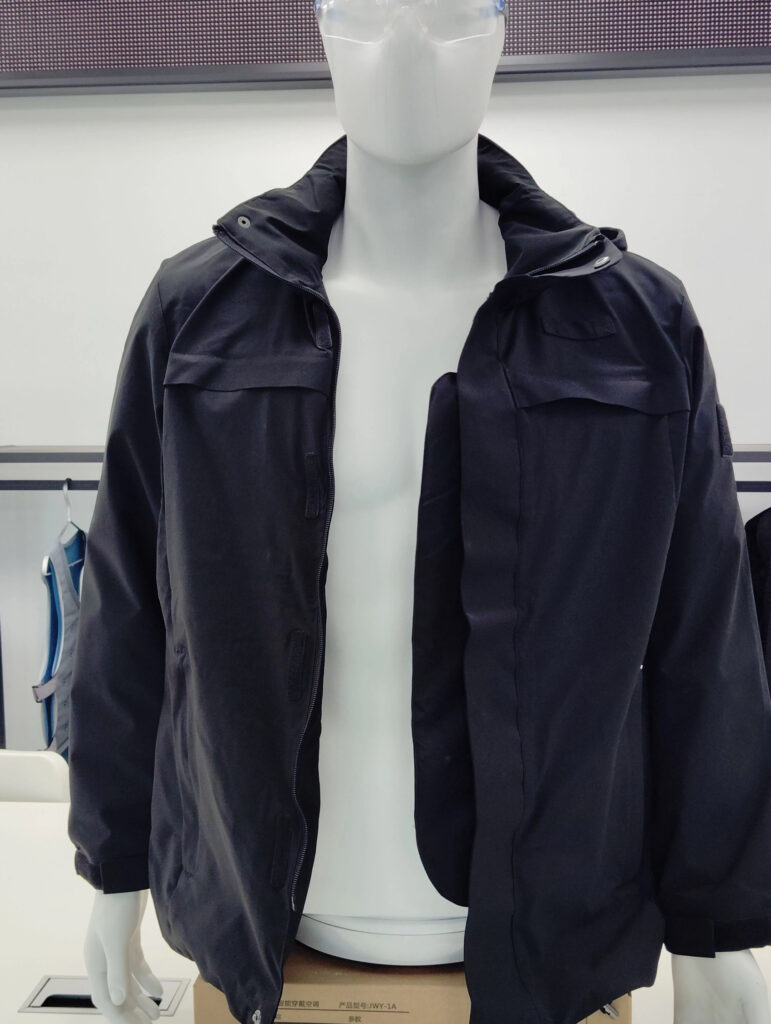
Water proof and StabProof jacket
Winter in the UK is rarely dramatic. It is dark by half past four, the pavements are greasy with rain, the Underground is a wall of damp coats, and everyone is trying to get somewhere slightly too fast. Most winters pass without incident. But most winters also come with a familiar list of small, preventable problems: people who get cold because they layered wrong, people who slip because they wore the wrong shoes, people who get caught out by a delayed train with a dead phone battery, and people who simply feel less safe walking home once it’s dark by teatime.
This guide is about preparing properly for that ordinary but demanding version of winter — the one most people in the UK, and especially in London, actually live through. It covers what to wear, how to layer, how to get your home and car ready, how to commute sensibly through the coldest and darkest months, and how to think about personal safety without becoming anxious about it. Towards the end, it also covers a specific and increasingly searched-for topic: stab-resistant clothing, what it can and can’t do, and where it fits — realistically — into a winter wardrobe.
Nothing here is designed to alarm you. Preparation is not the same as fear. The aim is that by the end of this guide you understand your clothing options, your commuting options, and your protective clothing options well enough to make your own calm, informed decisions.
Why Winter Preparation Matters in the UK
The UK’s winter risk isn’t usually extreme cold in the way that, say, a Scandinavian or Canadian winter is. It’s persistent, damp, changeable cold combined with short daylight hours and a lot of time spent outdoors getting from A to B. The UK Health Security Agency and the Met Office both frame their winter advice around this reality: <cite index=”19-1″>people are advised to keep the rooms they use most heated to at least 18°C, keep windows closed at night to reduce draughts, and wear several layers of thinner clothing rather than one thick layer.</cite>
That last point — layering rather than relying on one heavy item — is the single most useful piece of official winter advice, and it applies as much to what you wear outdoors as to how you heat your home.
Cold weather alerts are issued in England through the UK Health Security Agency and the Met Office when temperatures are forecast to drop significantly. During a Level 3 alert, <cite index=”26-1″>the official advice is to dress warmly, wear non-slip shoes, and tell someone where you’re going and when you’ll be back if you have to go out.</cite> That combination — appropriate clothing, appropriate footwear, and someone knowing your plans — is a good one-line summary of sensible winter preparation, and it’s a theme we’ll come back to throughout this guide, including in the personal safety sections.
Winter preparation matters because most winter problems are avoidable with a small amount of forethought: the right layers, checked heating, a car that’s ready for ice, a route planned before it gets dark, a phone that’s charged. None of it is complicated. Most of it is just easy to forget until the first properly cold week arrives.
What Makes Winter in London Different?
London’s winter isn’t colder than most of England’s — it’s usually milder than the rest of the country, in fact, thanks to the urban heat island effect. What makes it different is the sheer amount of time Londoners spend outdoors or in transit, and the density of people doing it at the same time.
A typical winter commute in London might include: a walk to the station in the rain, a wait on an open platform, a hot and crowded Underground carriage, another walk between platforms at an interchange, a wait for a bus in the cold, and a final walk home in the dark. Compare that to a commute that’s mostly spent in one warm car, and you can see why Londoners need a different approach to winter clothing — one built around layering and adaptability rather than a single very warm coat.
The other defining feature of a London winter is how early it gets dark. By early December, sunset in London is around 3:53pm, and it stays that way for several weeks either side of the shortest day. Anyone leaving an office at 5 or 6pm is walking home in full darkness, often along streets that are busy with traffic and pedestrians but poorly lit in places. This affects everything from footwear choice (grip matters more when you can’t see the wet patch on the pavement) to visibility (a dark coat is genuinely harder for drivers and cyclists to see) to how people think about their route home.
None of this makes London an unusually dangerous place to spend winter. It’s simply a city where a lot of your winter is spent outdoors, in transit, and after dark — and that’s exactly the combination this guide is built around.
The Complete UK Winter Preparation Checklist
Before going section by section, here’s a practical overview. Treat this as a checklist to work through in October or November, well before the first cold snap.
Clothing
- A genuine waterproof outer layer (not just “water-resistant”)
- At least one warm mid-layer that isn’t your only jumper
- Thermal or moisture-wicking base layers for very cold days
- Gloves, a hat, and a scarf that actually get used, not just owned
- Footwear with real grip, not just style
- A spare pair of dry socks in your bag on wet days
Commuting
- A coat and layering system that won’t leave you overheating indoors
- A portable phone charger
- Comfortable shoes for the parts of your journey you walk
- A realistic buffer of extra time for delays
Home
- Heating system checked before the cold arrives
- Draught-proofing on doors and windows
- Knowledge of where your stopcock is, in case of a frozen or burst pipe
- A basic emergency kit: torch, batteries, candles, blankets
Car
- Tyres checked for tread and pressure
- Screen wash topped up with a proper winter-strength fluid
- An ice scraper and de-icer kept in the car, not the house
- A basic winter kit: blanket, torch, phone charger, water
Personal safety
- A charged phone before you leave, and a portable charger if journeys are long
- A rough idea of your route, especially at night
- Someone who knows roughly when to expect you, for late journeys
- A plan for what you’ll do if your usual route or transport is disrupted
We’ll expand on every one of these through the rest of the guide.
What Should You Wear in London in Winter?
Short answer: the most effective approach is layering — a moisture-managing base layer, an insulating mid-layer, and a genuinely waterproof and windproof outer layer — combined with good footwear grip and small accessories (hat, gloves, scarf) that account for a disproportionate amount of heat loss. A single very thick coat is usually worse for London’s stop-start commuting pattern than three thinner, adjustable layers.
Base layers
A base layer’s job is to sit against your skin and manage moisture, not just add warmth. Cotton is a poor choice here because it holds moisture once you sweat (which you will, if you’re walking briskly to catch a train), and wet cotton against skin cools you down fast. Merino wool or synthetic thermal base layers are better because they wick moisture away and still insulate when slightly damp.
Mid layers
This is your main insulation: a jumper, a fleece, or a lighter puffer-style layer. The key idea for London winters specifically is that your mid-layer should be something you can remove. Offices, shops, and the Underground are often warm — sometimes uncomfortably so — and being able to take off a mid-layer without also removing your only warm layer makes a real difference across a long commuting day.
Outer layers
Your outer layer needs to do two jobs: block wind, and keep rain out. These aren’t the same thing, and “water-resistant” is not the same as “waterproof” — resistant fabrics will cope with light drizzle but will soak through in sustained rain, which the UK produces regularly through winter. Look for a genuinely waterproof rating and taped seams if you’re regularly outdoors for more than a few minutes at a time.
Footwear
Footwear is where most winter injuries in the UK actually happen — slips on wet or icy pavements are a leading cause of minor injury every winter, which is why official cold-weather advice consistently mentions grip. <cite index=”21-1″>Simple steps like wearing sturdy footwear and allowing more time for journeys can help prevent slips and falls,</cite> as the Met Office puts it. A shoe or boot with a defined tread pattern will noticeably outperform smooth-soled fashion boots on wet tile, wet leaves, or black ice.
Accessories
Hats, gloves, and scarves matter more than their size suggests, because extremities lose heat fast and are the first thing to feel genuinely cold. A hat that covers your ears, gloves that let you still use a phone or an Oyster card, and a scarf you can adjust as you move between cold platforms and warm carriages will do a lot of work for very little bulk.
The Best Way to Layer Clothes for a London Winter
Layering isn’t just “wear more clothes” — it’s about building a system you can adjust throughout a day that swings between a freezing platform and an overheated train carriage.
A simple three-layer system:
- Base layer — thermal or moisture-wicking, close to the skin.
- Mid layer — a jumper or fleece for insulation, easily removed.
- Outer layer — waterproof and windproof, the layer that deals with actual weather.
Adjusting through the day: the trick most people miss is treating layers as modular. On the walk to the station, you might want all three layers plus gloves and a hat. On a crowded, warm Underground carriage, you might take your outer layer off and carry it. Walking from the station to the office, you’re back to two or three layers depending on the weather. This only works if your mid-layer and outer layer are genuinely separate, removable garments rather than one bulky all-in-one coat.
Mild winter day: base layer, one mid-layer, ordinary trousers, grippy shoes.
Cold, dry winter day: base layer, warmer mid-layer, insulated outer layer, hat and gloves.
Wet winter day: moisture-wicking base layer, a lighter mid-layer (you’ll generate heat from movement and from the waterproof trapping warmth), a genuinely waterproof outer shell, and footwear with good grip and, ideally, some water resistance.
Winter Commuting in London: What to Prepare For
London’s transport network handles enormous volumes of people every day, and winter adds friction to almost every stage of a typical journey.
Walking to and from stations. This is often the coldest, wettest part of the whole commute, and the part people under-dress for because they’re “only walking a few minutes.” A few minutes in driving rain without a proper outer layer is enough to arrive at work wet through.
The Underground. Platforms can be cold, especially on the sub-surface lines and in the open-air sections. Carriages, by contrast, are frequently very warm, particularly on deep lines in winter. This is the clearest argument for removable layers on any Tube-heavy commute.
National Rail. Above-ground platforms are exposed to wind and rain with limited shelter at many stations, and delays in winter weather are more common, which means more waiting time outdoors than you might plan for.
Buses. Waiting at a bus stop in winter rain, especially without a real-time display working, is one of the more exposed parts of a typical commute — worth budgeting extra time and a proper outer layer for.
Cycling. Cold hands and reduced grip are the two big winter cycling issues, alongside reduced visibility for both cyclist and traffic. Full-finger winter gloves, a strong front and rear light, and tyres checked for wear all matter more in winter.
Changing trains and crowded stations. Interchanges like King’s Cross St Pancras, Bank, or Victoria get significantly busier and slower in winter as people wear bulkier clothing and carry more bags and umbrellas. Building extra time into interchanges is a small thing that avoids a lot of stress.
Carrying extra items. Winter commuting often means carrying more: a change of shoes, an umbrella, work clothes if you cycle or run in, gloves and a hat you’re not currently wearing. A bag with enough capacity, and enough waterproofing, is a genuinely useful piece of winter kit that people often overlook.
Unexpected delays. Weather-related disruption is more common in winter. A portable phone charger and a rough Plan B for your route (a different line, a bus, a walk to a different station) reduce the stress of a delay considerably.
Walking Around London in Winter
Most winter walking risk in London comes down to a short list: slippery pavements, poor visibility, cold hands making it harder to use a phone, and simply being less alert because you’re cold, tired, or rushing.
Grip matters more than style. Wet leaves, wet tile outside stations, and the occasional patch of ice on a bridge or underpass are common causes of slips. Footwear with a proper tread pattern reduces this risk substantially.
Visibility works both ways. A dark coat in the dark, on a wet pavement, near traffic, is genuinely harder to see. It doesn’t need to be hi-vis, but something with even a small amount of reflective detail — a strip on a bag, reflective piping on a coat — measurably improves how visible you are to drivers and cyclists.
Plan your route before it gets dark, not once you’re already out. Knowing which roads are well-lit and busy, versus which are quiet shortcuts, is easier to think through calmly at home than on the move.
Keep your phone charged and accessible. A dead phone on a delayed, dark walk home removes your ability to check a map, call someone, or contact emergency services if needed.
Let someone know your route when it’s a longer or later journey. This isn’t about assuming the worst — it’s the same basic principle the Met Office gives for going out in severe cold: <cite index=”26-1″>tell someone where you are going and when you will get back.</cite> It costs nothing and it’s genuinely useful if something does go wrong, from a twisted ankle to a missed connection.
Staying Safe on Public Transport During Winter
Winter changes public transport in small but real ways: platforms are more crowded because more people are indoors than would otherwise be outside walking or cycling, visibility is reduced, and people are generally more distracted — checking phones, wearing hoods, listening to music, rushing between warm and cold environments.
A few practical habits make a difference here, none of which require being anxious:
- Stand back from the platform edge while waiting, particularly on crowded or delayed services.
- Keep valuables (phone, wallet) in a zipped or inside pocket rather than an open bag pocket, especially in crowded carriages — pickpocketing tends to rise in crowded conditions, and winter coats with more pockets can paradoxically make this easier if you’re not careful about which pocket you use.
- Sit or stand near other people in a busy carriage rather than in an empty one late at night, where practical.
- Know roughly where staff are at major stations — most large London stations have visible staff, help points, and British Transport Police presence, and it’s useful to know that before you need it, not while you’re worried.
- If a train or platform feels genuinely unsafe rather than just uncomfortable, it’s fine to wait for the next one, move carriages, or ask staff for help. Trusting that instinct costs you a few minutes at most.
Preparing for Late-Night Journeys in London
Late finishes are a normal part of life for a lot of Londoners — hospitality workers, students, people coming back from evening plans, security and healthcare staff working shifts. Preparing for a late winter journey isn’t about assuming danger; it’s the same logic as checking the weather before a long drive.
Before you leave:
- Make sure your phone is charged, and carry a portable charger if you’re out for a long evening.
- Check the last train or bus times for your route in advance — winter service changes and Christmas/New Year timetables catch people out every year.
- Have a rough idea of two ways home, in case your usual route is disrupted.
While travelling:
- Well-lit, busier routes are generally preferable to quiet shortcuts, even if they take a couple of minutes longer.
- Licensed taxis and pre-booked or app-based private hire are generally a safer choice than getting into an unlicensed or unbooked vehicle — Transport for London maintains guidance and a checking tool for licensed taxi and private hire vehicles, which is worth knowing about if you use them regularly.
- If you’re waiting for transport, well-lit stops and stations with other people around are preferable to isolated ones.
Telling someone your plans. For a late or unfamiliar journey, letting a friend, flatmate, or family member know roughly what time you expect to be back is a small, low-effort habit that costs nothing and helps in the rare case that something does go wrong — whether that’s a genuine emergency or something as mundane as a missed last train.
None of this is about assuming London is unsafe at night. It’s the same category of preparation as carrying an umbrella because it might rain — sensible, low-effort, and not something to be anxious about.
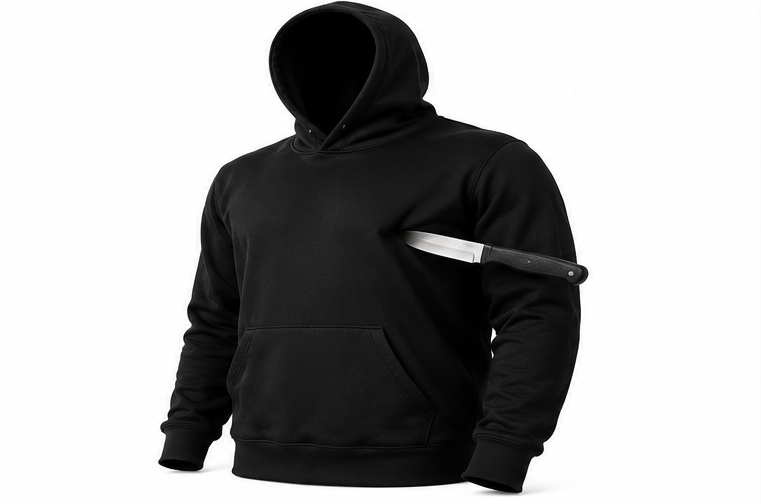
Stabproof Hoodie
Personal Safety and Winter Preparation
Personal safety in winter is mostly about reducing avoidable risk through ordinary habits, not about equipment. Clothing — including protective clothing, which we cover later in this guide — is one layer among several, not a substitute for the basics.
Situational awareness. Simply being present and paying attention — not buried in a phone with headphones in on a quiet street — remains one of the most effective and cost-free safety measures there is.
Avoiding unnecessary confrontation. If a situation feels tense — an argument nearby, someone behaving erratically, a group being aggressive — the sensible response is nearly always to create distance and move towards other people, not to get involved or challenge anyone.
Staying in populated, well-lit areas where a route allows for it, particularly late at night.
Route planning, done in advance rather than mid-journey, especially for unfamiliar areas or late finishes.
Phone battery and emergency contacts. A charged phone with emergency contacts easily accessible (many phones support an “emergency” or medical ID screen accessible even when locked) is a basic and effective precaution.
Travelling with others when practical, particularly late at night, though this obviously isn’t always possible.
Trusting your instincts. If a situation, person, or environment feels wrong, it’s reasonable to leave, cross the street, or ask for help — you don’t need a specific justification.
Knowing where help is available. In an emergency, dial 999. For situations that are concerning but not an emergency, 101 reaches the police non-emergency line. Most London Underground and rail stations have staff and help points, and British Transport Police patrol the network.
Emergency services. Knowing this before you need it — rather than looking it up in a moment of stress — is itself a form of preparation.
Protective clothing, discussed in detail below, sits alongside all of this as one additional, physical layer of preparation. It is never a reason to take more risks, approach a dangerous situation, or skip the basic habits above.
What Is Stab-Resistant Clothing?
Direct answer: Stab-resistant clothing is clothing built with reinforced materials — commonly high-strength fibres such as UHMWPE (Ultra-High Molecular Weight Polyethylene), aramid fibres, or metal or composite plates — designed to resist penetration from a blade or point. It reduces the risk of a weapon fully penetrating the covered area in some circumstances, but no civilian garment can guarantee complete protection against every kind of attack, and “resistant” is a more accurate word than “proof.”
Stab-resistant garments work by combining tightly woven, high-tenacity fibre layers that spread and absorb the force of an impact across a wider area rather than allowing a single point to concentrate through the fabric. Depending on the product, this might be built into a vest worn under clothing, or — as with the two garments discussed later in this guide — integrated into an everyday hoodie or jacket.
A few things genuinely affect how well any stab-resistant garment performs in practice:
- Coverage. A garment only protects the area it actually covers. A hoodie or jacket protects the torso and, depending on design, parts of the arms — not the neck, face, hands, or legs.
- Fit. A garment that’s too loose can shift out of position; one that’s too tight can restrict movement and reduce comfort enough that people stop wearing it consistently.
- Movement and comfort. Protective clothing that’s uncomfortable to wear all day is protective clothing that ends up left at home. This is one of the main reasons the market has shifted from rigid, bulky vests towards lighter, more flexible, everyday-wearable garments.
- Maintenance. Protective materials can degrade with poor care — over-washing, excessive heat, or mechanical damage can all reduce effectiveness over time, which is why manufacturer care instructions matter more for these garments than for ordinary clothing.
- Certification and testing. This is the area most in need of plain-English explanation, covered in detail in the next two sections.
Stab-Resistant vs Cut-Resistant vs Bullet-Resistant Clothing
These terms get used loosely in everyday conversation and in a lot of online marketing, but they describe genuinely different things, tested in different ways, against different threats.
| Term | What it’s designed to resist | Typical threat tested |
|---|---|---|
| Stab-resistant | A weapon point being driven into the garment with force (a thrusting or stabbing motion) | A knife or spike thrust with significant force behind it |
| Cut-resistant / slash-resistant | A blade being drawn across the surface of the fabric | A slashing or dragging motion, not a direct thrust |
| Puncture-resistant | A sharp point being pushed slowly through material | Nails, glass, sharp debris — not necessarily a weapon-speed attack |
| Bullet-resistant / ballistic | A projectile fired from a firearm | Ammunition at speed, tested to specific ballistic standards (e.g. NIJ, VPAM) |
A garment rated highly for one of these does not automatically perform the same way against the others. A fabric that resists a slashing motion well is not necessarily built to resist a direct stabbing thrust, and vice versa. A stab-resistant garment is not a bullet-resistant garment, and manufacturers of genuinely stab-tested products are careful never to claim otherwise. Anyone comparing products should check exactly which threat a given rating or standard actually tests, rather than assuming “protective clothing” is one single category.
How Stab-Resistant Clothing Works
Most modern stab-resistant garments rely on layers of very high-strength fibre — UHMWPE is one of the most common — woven or laminated together. UHMWPE is valued in protective clothing because of its exceptional strength-to-weight ratio: pound for pound, it’s significantly stronger than steel, while remaining lightweight and flexible enough to be worn as ordinary-looking clothing rather than rigid armour.
The basic principle is force distribution. A single layer of fabric, however strong, can still be pierced by a sharp point concentrating force into a tiny area. Multiple tightly bonded layers work together to spread that force across a wider surface, resist the fibres being forced apart, and reduce (though not necessarily eliminate) penetration.
This is why coverage, fit, and layer count all genuinely matter, and why a manufacturer’s specific construction — number of layers, fibre type, weave, backing material — is relevant information for anyone deciding what to buy, not just marketing detail.

Full Stabproof Long Sleeve Shirt
What Does EN388 Mean?
Direct answer: EN388 is a European standard for the mechanical performance of protective gloves and fabrics. <cite index=”10-1″>It’s designed to assess how well a fabric or layered material resists abrasion, cutting by a blade, tearing, and puncture by a pointed object,</cite> using controlled laboratory tests. It is not a stab-attack standard, and a high EN388 rating does not, by itself, prove that a garment will stop a weapon-level stabbing thrust.
It’s worth being precise here, because this is one of the most misunderstood terms in the entire protective-clothing category.
EN388 testing covers several separate measures, each given its own score:
- Abrasion resistance — <cite index=”6-1″>tested by rotating an abrasive paper against the material on a Martindale-type machine until it wears through</cite>, scored 1–4.
- Blade cut resistance — <cite index=”7-1″>tested with a rotating circular blade moving back and forth under a defined force until it cuts through the material</cite>, or, in the newer 2016 revision, a straight-blade test that <cite index=”8-1″>measures the average load required to cut through the material with a single pass over a 20mm distance</cite>, scored A–F.
- Tear resistance — how much force is needed to tear the material once a cut has started.
- Puncture resistance — tested with a standardised probe pushed slowly through the material, not a sharp knife tip driven at speed.
What this tells you: EN388 is a genuinely useful, internationally recognised measure of how a fabric holds up against everyday mechanical hazards — the kind faced by industrial and safety-glove users, which is what the standard was originally designed for. A material with a strong EN388 cut rating does have real, practical slash and cut resistance, and that has genuine value against knife-related injuries to exposed areas like forearms.
What it doesn’t tell you: EN388’s puncture test uses a blunt probe applied slowly, not a sharp knife tip driven with the force and speed of a real stabbing motion, and it has no dedicated test for a weapon-level thrust. A material can score well on every part of EN388 and still behave differently against a committed stabbing attack, because the physics of a slow, controlled puncture test are not the same as a fast, forceful knife thrust.
For garments specifically designed and tested against stabbing attacks — rather than general mechanical hazards — the relevant standards are different: in the UK context, that includes the Home Office’s body armour testing standards used for police stab vests, alongside international standards such as NIJ (US), CAST KR/SP, and VPAM. If a garment cites only EN388, that tells you about its cut and puncture resistance under industrial test conditions — a real and useful property — but it is not, by itself, evidence of a dedicated stab-attack certification.
Any responsible article, including this one, should be explicit about this distinction rather than letting “EN388 Level 5” imply more than it actually proves.
Does a Stab-Resistant Jacket Make You Completely Safe?
Direct answer: No. No stab-resistant garment — however well made — can guarantee complete protection against every possible attack, weapon, or angle. Protective clothing reduces certain risks to covered areas of the body; it does not eliminate risk, and it does not cover the whole body.
This is a genuinely important point, not a legal disclaimer added out of caution. A hoodie or jacket, however good, typically leaves the neck, face, head, hands, and legs uncovered. Even within covered areas, extremely high-force or repeated attacks, certain weapon types, or attacks to unprotected seams and edges can still cause injury. Manufacturers of genuinely tested protective equipment are consistently clear about this, because overstating protection is both dishonest and genuinely dangerous — a false sense of complete safety can lead someone to take more risks than they otherwise would.
Protective clothing is best understood as risk reduction, not risk elimination. It sits alongside the personal safety habits covered earlier in this guide — awareness, avoidance, route planning, staying in populated areas — as one additional layer, not a replacement for any of them. Nobody should treat wearing protective clothing as a reason to enter a situation they would otherwise avoid.
Are Stab-Resistant Jackets Legal in the UK?
Direct answer: Yes. There is no UK law that prohibits civilians from buying, owning, or wearing stab-resistant clothing, including jackets, hoodies, or vests, for personal protection. No licence or permit is required.
This is a well-established legal position. <cite index=”16-1″>There is no UK statute that restricts the purchase, ownership, or wearing of body armour by a civilian, and any adult in England, Wales, or Scotland may legally buy and wear a stab-resistant or ballistic vest without a licence, permit, or registration.</cite> Protective clothing is generally treated as a defensive item rather than a weapon, which is a meaningful legal distinction.
There is one specific legal wrinkle worth knowing about. <cite index=”16-1″>The Criminal Justice and Courts Act 2015 inserted a provision into the Crime and Security Act 2010 that creates a sentencing aggravation for wearing body armour during the commission of an offence.</cite> In plain terms: wearing protective clothing while committing a crime can make sentencing worse if convicted. It does not affect law-abiding use in the slightest — <cite index=”17-1″>for people wearing protective clothing for ordinary personal protection, for example during a commute, there are no legal consequences.</cite>
A few sensible caveats, in careful language rather than firm legal advice:
- Generally, wearing stab-resistant clothing for personal protection during everyday activities — commuting, work, travel — raises no legal issue.
- Employers in some regulated industries may have their own policies around protective equipment that go beyond what the law requires; it’s worth checking workplace policy if relevant.
- Readers should check the latest GOV.UK guidance directly for anything that affects a specific situation, since this article is general information, not legal advice, and law can change.
It’s also worth being precise about a separate point: wearing protective clothing does not change UK knife law, and it does not make it legal to carry a weapon. Carrying a knife or other offensive weapon in public without good reason remains a serious criminal offence regardless of what someone is wearing. Protective clothing and weapon possession are entirely separate legal categories, and nothing in this article should be read as blurring that line.
Why Winter Is a Practical Time to Consider Protective Outerwear
Winter creates a genuinely practical opening for protective clothing that doesn’t exist in summer, for one simple reason: everyone is already wearing a jacket or hoodie. A stab-resistant hoodie or jacket doesn’t stand out in November the way it might in June, because it looks — and largely functions — like ordinary winter outerwear. This is one of the main reasons the market has moved away from bulky, visible vests towards garments built into everyday clothing shapes.
This is also, practically, the season when most people are already shopping for a new coat or jumper anyway. If protective construction is something you’re considering, buying it as part of a winter wardrobe refresh — rather than as a separate, additional purchase later — is simply efficient.
Stab-Resistant Hoodie vs Stab-Resistant Jacket
This is one of the most searched comparisons in this category, and it deserves a genuinely useful answer rather than a vague “it depends.”
| Factor | Stab-Resistant Hoodie | Stab-Resistant Jacket |
|---|---|---|
| Best suited to | Casual everyday wear, layering under a coat, milder days | Standalone winter outerwear, colder and wetter conditions |
| Style | Casual, familiar hoodie shape | More conventional jacket/outerwear appearance |
| Warmth on its own | Moderate — often needs an outer layer in cold weather | Higher — designed to function as an outer layer |
| Weather protection | Limited — not designed as a waterproof shell | Better suited to wind and rain as an outer garment |
| Layering role | Works well as a protective mid-layer under a coat | Works well as the outer layer itself |
| Professional settings | More casual; better for students, casual commuters | More versatile for office or professional contexts |
| Coverage | Typically torso and upper arms | Typically torso and upper arms, in a jacket cut |
| Everyday practicality | Very high — doubles as a normal hoodie | High — doubles as a normal jacket |
Neither is objectively “better” — they suit different roles in a wardrobe and different weather. Many people who take protective clothing seriously end up owning both and choosing depending on the day, the weather, and what they’re doing.
StabApparel Stab-Resistant Hoodie
The StabApparel Stab-Resistant Hoodie is built from multiple layers of UHMWPE (Ultra-High Molecular Weight Polyethylene) fibre-reinforced composite — the same family of high-strength fibre used across StabApparel’s protective clothing range, chosen for its strength-to-weight ratio and cut resistance. According to the current product listing, it carries an EN388 rating (Level 5 cut resistance) alongside an ANSI reference, is built without metal plating, and is designed to look and wear like an ordinary casual hoodie rather than visible body armour.
As explained earlier in this guide, EN388 measures cut, abrasion, tear, and (blunt) puncture resistance under controlled laboratory conditions — genuinely useful properties, and the reason the garment is marketed under StabApparel’s “stab proof” product naming — but it is not, on its own, a dedicated weapon-thrust stab-attack certification. Treat the EN388 Level 5 rating as evidence of strong cut and puncture resistance under industrial test conditions, which is a real and meaningful property of the fabric, rather than as a guarantee against every kind of stabbing attack.
Who tends to prefer the hoodie:
- Students who wear hoodies as a normal part of their wardrobe anyway
- Casual commuters who want protective construction without a formal jacket look
- People who prefer layering a protective mid-layer under a coat on colder days
- Anyone who wants an additional protective layer that doesn’t visibly change how they dress
Practical use cases: commuting, walking around town, university, casual travel, everyday urban wear, and evening journeys where a familiar, unremarkable hoodie is preferable to anything more conspicuous.
For readers who prefer a hoodie for everyday wear, the StabApparel stab-resistant hoodie combines the familiar hoodie format with UHMWPE composite construction, and is available directly from StabApparel.
StabApparel Stab-Resistant Anti-Cut Jacket
The StabApparel Light Weight Knife Stab Proof Anti-Cut Jacket uses a UHMWPE fibre composite protective panel combined with a Coolmax outer fabric, built as a genuine outer layer rather than a mid-layer. According to the current product listing, it carries an EN388 Level 5 cut-resistance rating with a Level 4 tear-resistance rating, and is designed for a wide operating temperature range, making it suitable for the kind of conditions a UK winter actually produces.
As with the hoodie, the EN388 Level 5 rating reflects strong laboratory-tested cut, tear, and (blunt) puncture resistance — a genuinely useful property for a garment that will be worn through a British winter of wind, rain, and cold — but it should not be read as a dedicated certification against a weapon-level stabbing thrust, for the reasons explained in the EN388 section above.
Who tends to prefer the jacket:
- Winter commuters who want their protective layer to also be their main outer coat
- Professionals who want a more conventional jacket appearance for office or client-facing settings
- People spending significant time outdoors — walking, waiting for transport, working outside
- Anyone who wants a single garment that does double duty as protection and winter outerwear, rather than layering a protective piece underneath a separate coat
Practical use cases: winter commuting, London travel on foot and by public transport, outdoor use, cold-weather layering as the outer shell, and everyday professional wear through the coldest months.
Looking for a winter outer layer that incorporates protective construction? Explore the StabApparel lightweight stab-resistant anti-cut jacket, available directly from StabApparel.
Which Is Better for London Winter: Hoodie or Jacket?
For most people commuting through a full London winter, the jacket is the more natural single-item choice, because it’s designed to function as an outer layer against wind and rain in the way the hoodie isn’t. The hoodie comes into its own as a layering piece — worn under a coat on the coldest days, or on its own during milder autumn and spring weeks, or for casual situations where a full jacket feels like overkill.
A simple way to decide:
- If you want one garment that is your winter coat and your protective layer combined → the jacket.
- If you already have a winter coat and want an additional protective mid-layer, or want something casual for everyday wear beyond just the coldest months → the hoodie.
- If budget and wardrobe allow → many people who take this seriously use both: the hoodie for milder days, travel, and casual wear, the jacket as the main winter outer layer.
How to Layer a Stab-Resistant Hoodie in Winter
Mild day: base layer (or just a T-shirt) → hoodie → normal trousers → grippy everyday shoes. No outer coat needed on a dry, mild day.
Cold day: thermal base layer → hoodie → a normal winter coat over the top if the hoodie alone isn’t warm enough, particularly for long periods outdoors.
Wet day: moisture-wicking base layer → hoodie → a genuinely waterproof outer shell on top, since the hoodie itself isn’t designed as rainwear.
On the London commute specifically: the hoodie’s main advantage is that it can be worn under an existing coat without adding much bulk, then the coat removed indoors while the hoodie — and its protective layer — stays on. This avoids the overheating problem of a single very heavy coat worn all day.
How to Layer a Stab-Resistant Jacket in Winter
Mild day: base layer or T-shirt, jacket worn as the sole outer layer.
Cold day: thermal base layer, a lighter mid-layer if needed, jacket as the outer shell — this is the jacket’s core use case, and generally the simplest layering system in this guide.
Wet day: moisture-wicking base layer, jacket as the outer shell — check the manufacturer’s current guidance on water resistance for the specific conditions you’re expecting, since “wind and cold resistant” and “fully waterproof in sustained rain” are not automatically the same claim.
On the London commute specifically: because the jacket functions as the outer layer, the main adjustment through the day is temperature management indoors — many people find it useful to briefly unzip or loosen the jacket in warm indoor environments (offices, packed Tube carriages) rather than fully removing it, given its role as both coat and protective layer.
A general principle worth repeating: don’t assume a protective garment always needs to be worn underneath another heavy coat. Depending on the specific garment, the weather, and your own tolerance for cold, either the hoodie or the jacket may work perfectly well as your only layer on milder days — check the specific product’s guidance and your own comfort rather than defaulting to maximum layering out of caution.
Winter Clothing Mistakes to Avoid
- Relying on one thick layer instead of adjustable layers. This is the single most common mistake, and directly contradicts official winter advice to <cite index=”19-1″>wear several layers of thinner clothing rather than one thick layer.</cite>
- Choosing style over grip in footwear. Smooth-soled boots look fine until the first wet or icy pavement.
- Underestimating short walks. Five minutes in driving rain without a waterproof layer is enough to arrive somewhere properly wet.
- Forgetting accessories. Hats and gloves are small items that disproportionately affect how cold you feel.
- Not accounting for indoor heat. Overheating on public transport is as much a real winter problem as being cold outdoors, and it’s solved by removable layers, not by wearing less overall.
- Buying waterproof gear too late. Waterproof and winter kit tends to sell out or go up in price during the first cold, wet week of the year — buying before the weather turns avoids both problems.
Common Mistakes People Make When Buying Protective Clothing
- Assuming any “stab proof” label means the same level and type of protection. As covered above, terms like stab-resistant, cut-resistant, and puncture-resistant describe different things, and certifications vary between manufacturers.
- Not checking exactly what a certification tests. A garment listing “EN388 Level 5” is telling you about cut, abrasion, tear, and blunt puncture performance — worth understanding rather than assuming it covers everything, including a weapon-level thrust.
- Buying based on bulk rather than fit. A bulkier garment isn’t automatically more protective, and a garment that’s uncomfortable enough to leave at home protects nobody.
- Ignoring coverage limits. No hoodie or jacket protects the neck, head, hands, or legs — useful to understand realistically rather than assuming full-body coverage.
- Skipping care instructions. Protective materials can lose effectiveness if washed or maintained incorrectly; always follow the manufacturer’s specific care guidance.
- Treating protective clothing as a replacement for sensible behaviour, rather than as one additional layer alongside the personal safety habits covered earlier in this guide.
How to Choose the Right Size
Protective clothing needs a closer, more considered fit than ordinary clothing, for a simple reason: coverage depends on the garment sitting where it’s designed to sit, not shifting during normal movement.
- Too loose and the protective panel can move out of position during activity, reducing the area that’s actually covered when it matters.
- Too tight and both comfort and freedom of movement suffer — and a garment people stop wearing because it’s uncomfortable protects nobody.
- Check the manufacturer’s specific size guide rather than assuming your usual size in ordinary clothing will translate directly, since protective layers add bulk that standard sizing doesn’t always account for.
- If you’re between sizes, sizing up is generally the safer default for a garment with an internal protective panel, to avoid restricting movement — but always check the specific manufacturer’s guidance, since construction varies between products.
How to Care for Protective Clothing
Always follow the manufacturer’s specific care instructions for a given garment over generic advice, since construction and materials vary. As general good practice for high-strength fibre composite garments:
- Avoid high heat in washing and drying, which can degrade synthetic high-strength fibres over time.
- Avoid unnecessary folding creases or compression over the protective panel where possible during storage.
- Check the garment periodically for visible damage, and don’t rely on a garment that’s been damaged, cut, or heavily worn to perform as it did when new.
- Store away from direct, prolonged sunlight and damp conditions.
How Long Does Protective Clothing Last?
This varies by manufacturer, materials, and how heavily the garment is used and washed, so check the specific manufacturer’s guidance for the product you own rather than assuming a universal figure. As a general principle across the protective clothing category, materials degrade gradually with wear, washing, and UV exposure rather than failing suddenly, which is why periodic inspection and following care instructions matters more for these garments than for ordinary clothing.
Winter Preparation for London Commuters
The core commuter kit: a layering system that survives both a cold platform and a warm carriage, footwear with grip, a charged phone with a portable charger for delay-prone days, and a bag with room for a spare layer or umbrella. Building 5–10 minutes of buffer time into a winter commute, particularly around interchanges, absorbs most of the stress that bad weather adds to public transport.
Winter Preparation for Students
Students are often walking or cycling more than driving, keeping unpredictable hours around lectures, socialising, and part-time work, and managing a tighter budget for winter kit. Priorities: a genuinely waterproof coat over a merely stylish one, decent footwear, and a hoodie-style layering piece that works for both daytime study and evening socialising — which is part of why a hoodie-format protective garment appeals particularly to this group.
Winter Preparation for Office Workers
Office workers typically deal with the sharpest indoor/outdoor temperature contrast — a cold commute followed by a heated office — which makes removable layers and a jacket that can be comfortably worn or carried through the day especially useful. A jacket that works for both the commute and looks acceptable in a professional setting solves two problems with one purchase.
Winter Preparation for Hospitality Workers
Hospitality shifts often run late, involve standing outdoors briefly (smoking breaks, deliveries, taking out rubbish) in uniform rather than full winter kit, and frequently end with a late, sometimes solo journey home. A warm, quick layer for those brief outdoor moments, plus the late-journey preparation covered earlier in this guide (charged phone, known route, someone aware of your plans), matters more for this group than for most.
Winter Preparation for Outdoor Workers
For delivery drivers, security staff, and anyone spending long stretches outdoors, layering that survives hours of exposure — not just a short commute — is the priority, along with genuinely waterproof and windproof outerwear rather than showerproof alternatives, and grip-focused footwear given the amount of walking involved.
Winter Preparation for Night-Time Travellers
Night-shift workers and anyone regularly travelling home late in winter benefit most from the personal safety and late-journey preparation covered earlier in this guide: knowing last transport times in advance, having a charged phone and backup route, and choosing licensed transport options where relevant.
Winter Preparation for Parents and Families
Family winter preparation adds a few extra considerations: checking children’s coats and shoes still fit before the cold arrives (a surprisingly common source of a miserable school run), keeping a spare set of dry gloves and socks for younger children, and applying the same route-planning and lighting principles to school runs and after-school activities as to adult commutes, particularly once it’s dark by pick-up time.
Winter and Home Preparation
Heating. Get your boiler or heating system checked before the cold arrives rather than during the first cold snap, when engineers are busiest. <cite index=”24-1″>Having heating and cooking appliances checked by a Gas Safe registered engineer, and having a carbon monoxide alarm fitted, are both specifically recommended as part of UK winter safety guidance.</cite>
Insulation and draughts. <cite index=”19-1″>Keeping windows closed, particularly at night, and reducing draughts wherever possible</cite> is straightforward, low-cost, and genuinely effective advice from official winter guidance.
Condensation and damp. Ventilating rooms briefly even in cold weather (rather than sealing a home completely) helps prevent condensation building up, particularly in kitchens and bathrooms, which can lead to damp and mould over a long winter.
Frozen and burst pipes. Knowing the location of your home’s stopcock before you need it, and keeping your heating on low rather than off entirely during very cold spells if you’re away, both reduce the risk of frozen or burst pipes.
Power cuts. Keep a torch, spare batteries, and a few candles accessible — not necessarily in a drawer you’d struggle to find in the dark. <cite index=”22-1″>If the power does go out, switching off electrical appliances that shouldn’t be left unattended, leaving a light switched on so you know when power is restored, and checking on neighbours are all part of official guidance.</cite>
Vulnerable household members. <cite index=”20-1″>Older relatives and neighbours, and those with heart and lung conditions, along with very young children, are described as being at particular risk from cold weather,</cite> and it’s worth specifically checking that anyone in this category in your household or your wider family is warm, stocked with food and medication, and not struggling to heat their home during a cold spell.
Pets. Shorter-haired or smaller breeds may need a coat for walks in genuinely cold weather, and outdoor pets or hutches need extra insulation and checking during freezing spells.
Winter Car Preparation
Tyres. Check tread depth and pressure before winter arrives — reduced grip is one of the most common causes of minor winter accidents, and correctly inflated tyres with adequate tread make a measurable difference.
Windscreen and visibility. <cite index=”22-1″>Check your wipers, tyres, and screen wash before winter weather sets in.</cite> Use a proper winter-strength screen wash that won’t freeze in the reservoir or on the glass.
Lights. Check all exterior lights are working — with shorter daylight hours, you’re using them for a much larger proportion of every journey.
Emergency kit. <cite index=”22-1″>Pack essentials such as warm clothing, food, drink, a blanket, and a torch, and always take a fully charged mobile phone and an in-car charger.</cite>
Journey planning. <cite index=”22-1″>If possible, avoid driving in icy conditions; if you must drive, look well ahead for hazards, keep speed down, and accelerate, brake, and steer as smoothly as possible to reduce the risk of skidding.</cite> Checking the forecast before setting out, rather than during the drive, avoids being caught out by conditions you could have planned around.
Winter Health Considerations
This section covers general public information only; it isn’t medical advice, and anyone with a specific health concern should speak to a GP, pharmacist, or NHS 111.
Cold weather genuinely affects health, which is why the UK runs a formal Cold Weather Alert system. <cite index=”27-1″>Alerts advise dressing appropriately when going outside, and keeping indoor heating at an appropriate level, since heating a home to at least 18°C in winter poses minimal risk to health when combined with suitable clothing.</cite> <cite index=”20-1″>People with long-term health conditions, older adults, and pregnant people are noted as being more at risk from cold weather,</cite> and it’s worth checking in on anyone in these groups during a cold spell.
Staying active indoors, eating warm food, and keeping the rooms you use most at a reasonable temperature are all part of consistent official advice through winter. If you or someone you know has a specific medical condition affected by cold weather, that’s a conversation for a healthcare professional, not a winter guide — but knowing the general official advice above is a reasonable starting point.
London Winter Safety FAQ
Is it safe to walk around London in winter? Millions of people do so every day without incident. Ordinary precautions — well-lit routes, staying aware, letting someone know your plans for later journeys — reduce risk further, in the same way carrying an umbrella reduces the risk of getting soaked, without implying the city is unusually dangerous.
What should I wear for a London winter commute? A three-part layering system: a moisture-wicking base layer, a removable insulating mid-layer, and a genuinely waterproof, windproof outer layer, combined with grippy footwear and accessories (hat, gloves, scarf).
Is stab-resistant clothing legal to wear in the UK? Yes. There’s no UK law preventing civilians from owning or wearing stab-resistant clothing for personal protection, and no licence is required. See the legal section above for detail.
Does a stab-resistant jacket actually work? Stab-resistant materials, properly constructed and fitted, provide genuine risk reduction to covered areas of the body against certain types of attack. No garment can guarantee complete protection, and coverage is limited to the area the garment actually covers.
Is a stab-resistant jacket bulletproof? No. Stab resistance and ballistic (bullet) resistance are different properties, tested to different standards. A stab-resistant garment should never be assumed to offer ballistic protection.
What is EN388 Level 5? A rating within the EN388 standard for mechanical hazards, covering abrasion, cut, tear, and blunt puncture resistance, tested under laboratory conditions. It is not a dedicated stab-attack certification. See the dedicated EN388 section above.
Can I wear a stab-resistant hoodie every day? Yes, if it’s comfortable and correctly fitted — many are specifically designed for everyday wear rather than occasional use, though always follow the specific manufacturer’s guidance on wear and care.
Can I wear a stab-resistant hoodie under a coat? Yes, this is one of the more common and practical layering approaches for colder days, keeping the hoodie’s protective layer on while adding warmth on top.
Is a stab-resistant hoodie comfortable? Comfort varies by construction and fit; modern designs generally aim to feel close to an ordinary hoodie. Correct sizing (see the sizing section above) affects comfort significantly.
What’s the difference between stab-resistant and cut-resistant clothing? Stab resistance concerns a weapon point being driven into the fabric; cut resistance concerns a blade being drawn across the surface. They’re related but tested differently, and a garment strong in one isn’t automatically strong in the other.
What should I carry when travelling around London at night? A charged phone (with a portable charger for longer nights out), some idea of your route and last transport times, and, where relevant, contact details for whoever you might need to reach.
How can I prepare for winter commuting in general? Layer your clothing rather than relying on one heavy coat, choose footwear with grip, build extra time into your journey for weather-related delays, and keep a phone charger with you.
Do stab-resistant hoodies look different from normal hoodies? Modern designs are built specifically to look like ordinary casual clothing rather than visible protective gear — this is one of the main reasons the category has grown.
What temperature should I heat my home to in winter? <cite index=”19-1″>Official guidance recommends heating the rooms you spend the most time in to at least 18°C.</cite>
How do I stop my pipes freezing in winter? Know where your stopcock is, keep heating on low rather than fully off during very cold spells if you’re away from home, and insulate exposed pipework where practical.
Is London more dangerous than other UK cities in winter? This varies by measure and changes year to year; readers wanting current, specific figures should consult the Metropolitan Police and Office for National Statistics directly rather than relying on generalised claims, which this guide deliberately avoids making.
What should I do if I feel unsafe on public transport? Move towards other people or staff, use a help point if available, and contact British Transport Police (or 999 in an emergency) if needed. Trusting your own instinct to move or leave a situation is reasonable without needing further justification.
Do I need a licence to own a stab-resistant vest or jacket in the UK? No. <cite index=”16-1″>No licence, permit, or registration is required for a civilian to buy, own, or wear stab-resistant clothing in the UK.</cite>
Does wearing a stab-resistant jacket mean I can legally carry a knife? No. These are entirely separate legal categories. Wearing protective clothing does not change UK knife law, and carrying a knife or offensive weapon in public without good reason remains a serious criminal offence.
What’s the best fabric for stab-resistant clothing? There’s no single universally “best” fabric — UHMWPE, aramid fibres, and various composite constructions each have different strength, weight, and flexibility trade-offs. What matters most for any specific product is checking exactly what’s been tested and to what standard.
How should I layer clothes in cold, wet weather? Moisture-wicking base layer, a lighter insulating mid-layer (since movement and a waterproof shell both add warmth), and a genuinely waterproof, breathable outer shell.
What’s the earliest it gets dark in London in winter? Around mid-afternoon at the darkest point of the year (late November to mid-January), which is why visibility and route planning matter more in this period than in autumn or spring.
Should I carry an umbrella or wear a hood in London? Both have their place; a genuinely waterproof hood avoids the practical issue of an umbrella in crowded, windy streets or on public transport, though many people carry a compact umbrella as backup.
What footwear is best for London winter walking? Footwear with a defined tread pattern and genuine grip, rather than smooth-soled fashion footwear, meaningfully reduces the risk of slipping on wet or icy pavements.
How often should I wash a stab-resistant hoodie or jacket? Always follow the specific manufacturer’s care instructions, since high-strength fibre composites can be more sensitive to heat and harsh washing than ordinary fabric.
Can children wear stab-resistant clothing? This is a personal family decision; if considering it, checking sizing carefully and choosing a garment specifically designed and sized for the wearer matters more than for adult sizing, given the importance of correct fit and coverage.
Is a stab-resistant jacket warm enough for a UK winter on its own? Depends on the specific product’s insulation and the conditions; check the manufacturer’s guidance and consider adding a base or mid-layer underneath on the coldest days.
What’s the difference between “stab-resistant” and “stab proof” as terms? “Stab proof” is common in everyday and commercial language, but “stab-resistant” is the more technically accurate term, since no garment can be guaranteed to stop every possible attack. This guide uses “stab-resistant” for that reason.
How do I know if a protective garment fits correctly? It should sit close enough that the protective panel stays in place during normal movement, without restricting movement or being uncomfortable enough to avoid wearing regularly. Check the specific manufacturer’s size guide.
Does StabApparel offer UK delivery? Check the current delivery information on StabApparel’s website at checkout, since specific delivery terms and offers can change.
What’s the difference between a stab vest and a stab-resistant hoodie or jacket? A vest is typically a separate item worn under or over clothing, often more rigid; a hoodie or jacket integrates the protective layer into an everyday garment shape, generally prioritising discretion and everyday wearability over maximum coverage.
Ready to Prepare for Winter?
Preparation beats panic, every year, for the simple reason that most winter problems — getting cold, getting wet, slipping on a pavement, missing a delayed train with a dead phone, feeling uneasy on a dark walk home — are the kind of thing a bit of forethought genuinely solves. None of it requires anxiety. It requires a decent layering system, footwear with grip, a charged phone, a rough plan for your route home, and clothing that actually fits how you live and commute.
Where protective clothing fits into that picture is a personal decision, not a universal one. If you already wear a hoodie as part of your everyday wardrobe, a hoodie built with UHMWPE composite construction lets you keep that habit while adding a protective layer that doesn’t change how you dress. If you’re looking for a genuine winter outer layer — something built to handle cold, wind, and rain as your main coat — a jacket with the same underlying construction does that job while also serving as your outerwear.
Whichever you choose, remember what this guide has covered throughout: protective clothing is one layer of preparation among several, not a substitute for the basics — good layering, good footwear, a charged phone, a sensible route, and the everyday awareness that gets most people through winter, in London and everywhere else in the UK, without incident.
Shop the Stab-Resistant Hoodie: https://www.stabapparel.co.uk/product/stab-proof-hoodie-comfortable-light-weight/
Shop the Stab-Resistant Jacket: https://www.stabapparel.co.uk/product/stab-proof-anti-cut-jacket/
Check current pricing, sizing, and delivery information on the product pages before ordering, as these can change.
stab proof jacket UK, stab resistant jacket UK, stab proof hoodie UK, stab resistant hoodie, stab proof clothing UK, London winter safety, winter commuting London, what to wear in London winter, London winter clothing, personal safety London, is stab resistant clothing legal UK, EN388 explained, protective clothing London, winter preparation UK, London winter commuting tips