Stab Proof Balaclava UK | Stab-Resistant Face Protection
StabApparel black stab proof balaclava protective face covering
Protective balaclava made of HPPE and metal fibre for high cut resistance
Lightweight stab-resistant balaclava for security professionals and outdoor work
StabApparel Full Stab Proof Face Protection Balaclava tactical mesh mask
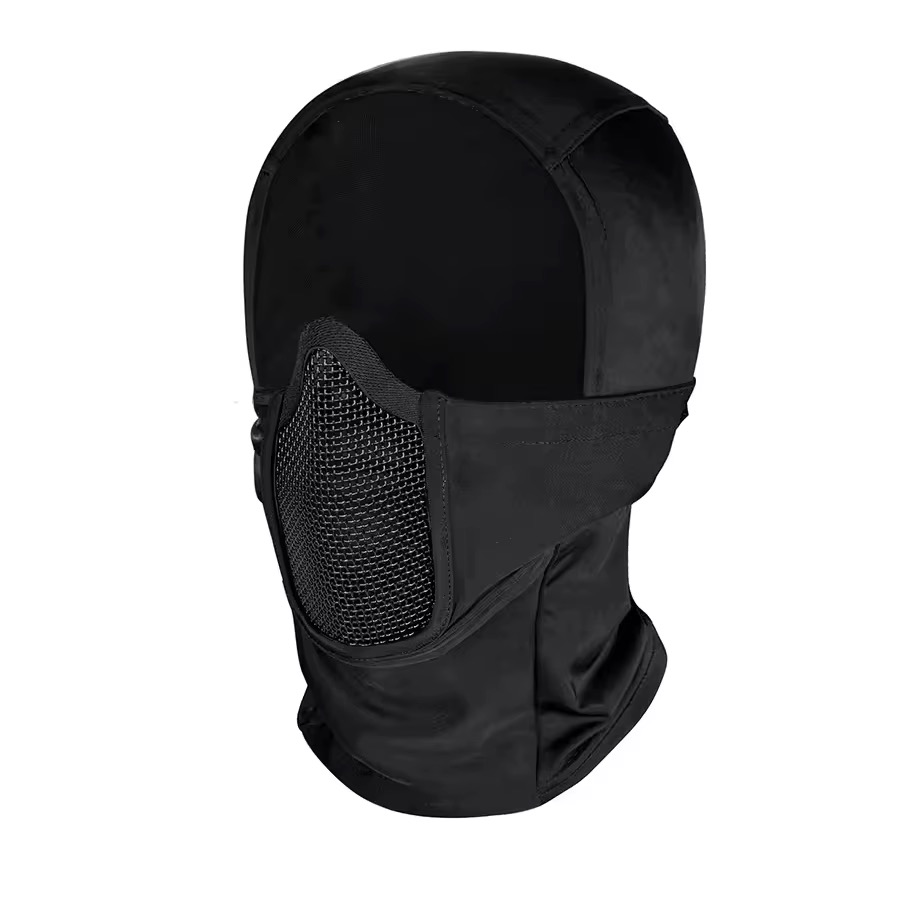
Stabproof Full face protection balaclava tactical mesh mask for outdoor safety clothing black
Your face is one of your most vulnerable areas, yet it is often overlooked when considering protective equipment.
Whether you work in security, operate in high-risk environments, or simply take personal safety seriously, the prospect of facial injury is a legitimate concern. The challenge? Finding protection that actually works. An ordinary balaclava will keep you warm, but it won’t stop a blade. What you need is a stab proof balaclava—a piece of personal protective equipment (PPE) specifically engineered to provide a barrier against cuts and stabs.
This comprehensive guide will explain everything you need to know about stab-resistant face protection. We’ll explore the critical differences between cut resistance and stab resistance, demystify high-performance materials like HPPE, and provide you with the knowledge to make an informed purchasing decision. Our goal is to help you understand why a dedicated protective balaclava is a crucial piece of safety equipment for those who need it.
What is a Stab Proof Balaclava?
A stab proof balaclava is a form of protective headwear designed to cover the head, neck, and most of the face, constructed from materials that offer resistance to cutting and stabbing implements. Unlike a standard balaclava, which is typically made from acrylic or polyester for warmth, a protective balaclava incorporates high-strength technical fibres to create a physical barrier against sharp objects .
The term “stab-proof” is often used as a marketing and search term; however, in the technical world of PPE, the more accurate description is “stab-resistant.” No garment can guarantee 100% protection against every type of attack, blade, or level of force. Instead, these products are designed to reduce the risk of injury by resisting penetration from blades and sharp objects.
How Does it Differ from an Ordinary Balaclava?
To understand the value of a protective balaclava, it’s useful to compare it with a standard model :
| Feature | Ordinary Balaclava | Protective Balaclava |
|---|---|---|
| Purpose | Warmth, comfort, and protection from cold weather. | Protection from cuts, abrasions, and stabs. |
| Material | Acrylic, polyester, wool, or cotton. | HPPE, metal fibres, nylon, and high-strength composites. |
| Construction | Simple knit or weave for comfort and insulation. | Tight, specialised knit or composite structure for strength. |
| Protection | None against blades. | Designed to provide resistance to blades, cuts, and tears. |
| Intended Environment | Skiing, outdoor work in cold conditions, or everyday wear. | Security, high-risk occupations, and environments with potential for blade threats. |
As this comparison shows, the differences are profound. A winter balaclava might keep your face warm, but it offers no defence against a knife. A knife-resistant balaclava, on the other hand, is designed with safety as its primary function.
Cut Resistance vs Stab Resistance Balaclava
This is arguably the most important section of this guide. Understanding the distinction between cut, slash, and stab resistance is vital for making the right choice. The terms are not interchangeable . A product can have a high cut-resistance rating but offer poor stab protection, and vice versa.
What is Cut Resistance?
Cut resistance refers to a material’s ability to withstand a slicing motion from a sharp edge. Think of a knife being drawn across a surface.
- Mechanism: The material is subjected to a lateral, sliding force. The blade attempts to shear the fibres apart.
- Testing: Standards like ISO 13997 use a straight blade that moves across the material under a specific load. The force required to cut through the material determines the cut resistance level (e.g., Levels A to F) .
- Relevance: This is crucial for protecting against slashing attacks or accidental contact with sharp edges.
What is Slash Resistance?
Slash resistance is very similar to cut resistance. The term “slash” is often used to describe a more forceful, sweeping cut. A slash-resistant material will resist the momentum of a blade or sharp object being swung at the wearer.
What is Stab Resistance?
Stab resistance is the ability to withstand a thrusting or stabbing motion. This involves a pointed object, such as a knife tip or spike, being driven directly into the material.
- Mechanism: The material must resist the concentration of force on a single point. Instead of a shearing action, it’s a penetrating force. The fibres must either deflect the point or absorb the energy to prevent it from piercing through.
- Testing: Stab resistance is tested using a drop-weight or a pendulum that drives a knife blade or spike into the material. Standards like ISO 13998 and ISO 13999-3 measure penetration depth and resistance at different energy levels (e.g., 2.45 J, 4.9 J) .
- Relevance: This is crucial for protection against a direct, thrusting knife attack.
Can a Material Be Both?
Yes, but it requires careful engineering. A material that is highly cut-resistant might be vulnerable to a stabbing force because the point can force its way between the fibres. This is why a dedicated stab-resistant balaclava needs a construction that addresses both threats. The combination of HPPE and metal fibre, as used in the StabApparel balaclava, is designed to provide a more holistic defence against both cutting and stabbing forces .
What is HPPE?
HPPE stands for High-Performance Polyethylene. It is a synthetic fibre with an exceptionally high strength-to-weight ratio. It is a key material in many modern protective textiles, offering excellent protection without the bulk of traditional materials.
Key Properties of HPPE
- Lightweight: HPPE is lighter than most other high-strength fibres, making it ideal for protective clothing that needs to be worn for extended periods .
- High Strength: It is incredibly strong, ounce for ounce, stronger than steel. This strength is crucial for resisting cutting forces.
- Comfort: HPPE is flexible and can be knitted into fabrics that allow for freedom of movement.
- Durability: It is resistant to moisture, chemicals, and abrasion, ensuring the garment’s longevity.
When you see HPPE listed in a product’s materials, it is a strong indicator that the manufacturer is using a high-quality, performance-driven fibre for protection.
Why Metal Fibre Matters in Protective Textiles
The integration of metal fibres into protective textiles like the StabApparel balaclava is a sophisticated approach to enhancing safety. Metal fibres, such as stainless steel or tungsten wire, are woven into the fabric to create a composite material that is more than the sum of its parts .
Reinforcement Against Cutting and Penetration
Metal fibres provide a significant boost in resistance to cutting and penetration.
- Deflecting Blades: The inherent hardness of the metal makes it difficult for a blade to slice through the fabric. Tungsten, for example, is known for its exceptional hardness and wear resistance .
- Reinforcing the Fibre Matrix: The metal fibres work in tandem with the HPPE. While the HPPE provides a strong, flexible base, the metal fibres act as a barrier, further resisting the progression of a blade or pointed object. This composite construction is a proven method for improving protection .
Durability and Wearability
A key challenge in protective clothing is balancing protection with comfort. Metal fibres, when engineered correctly, can enhance the textile’s durability and abrasion resistance without making it excessively heavy or uncomfortable. The goal is to create a “lightweight soft body armor” that provides a high level of protection while remaining practical for everyday use .
StabApparel Full Stab Proof Face Protection Balaclava Tactical Mesh Mask
Now that we’ve laid the groundwork, let’s examine the StabApparel Full Stab Proof Face Protection Balaclava in detail. This product is a prime example of a modern, lightweight, and comfortable solution designed for personal protection in higher-risk environments.
Product Specifications
| Feature | StabApparel Balaclava Specification |
|---|---|
| Product Name | Full Stab Proof Face Protection Balaclava Tactical Mesh Mask |
| Brand | StabApparel |
| Material | HPPE with Metal Fibre |
| Colour | Black |
| Size | One Size / Free Size |
| Listed Weight | Approximately 130 g |
| Protection Features | Abrasion, Blade-Cut and Tear Resistance |
| Listed Cut Level | Level 5 (indicative of high cut resistance) |
| Application | Outdoor Safety |
| Listed Price | £100 (formerly £120) |
A Breakdown of Its Features
HPPE with Metal Fibre Construction
The core of the StabApparel balaclava’s protective capability lies in its material composition. It uses a combination of HPPE and metal fibre. As we’ve discussed, this pairing is engineered to provide a high level of cut and tear resistance, making it a serious piece of personal protective equipment.
Lightweight Design
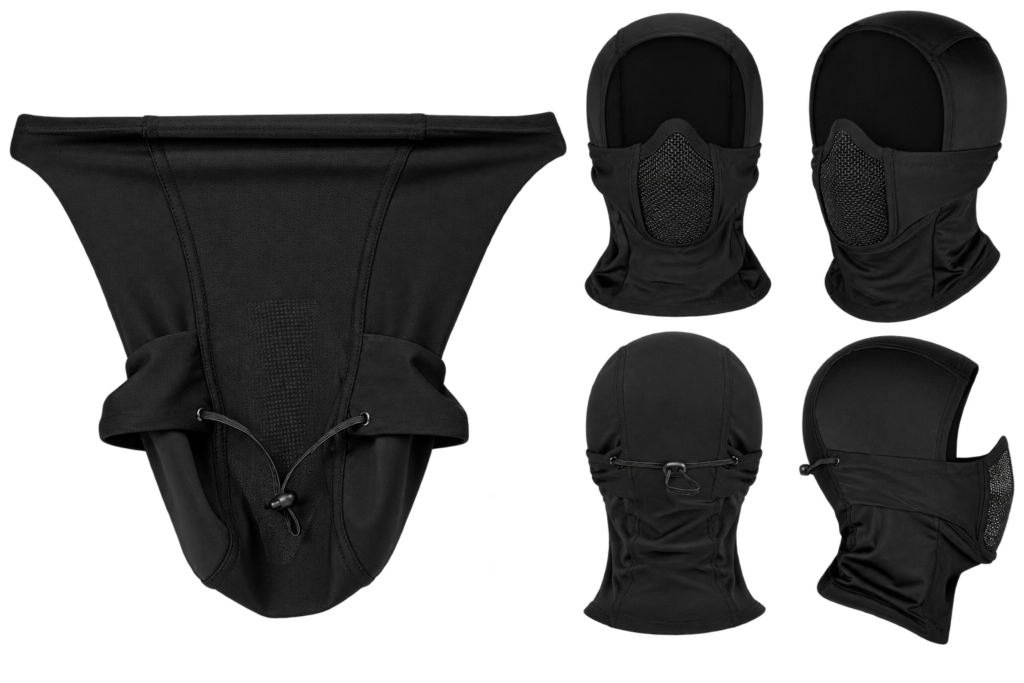
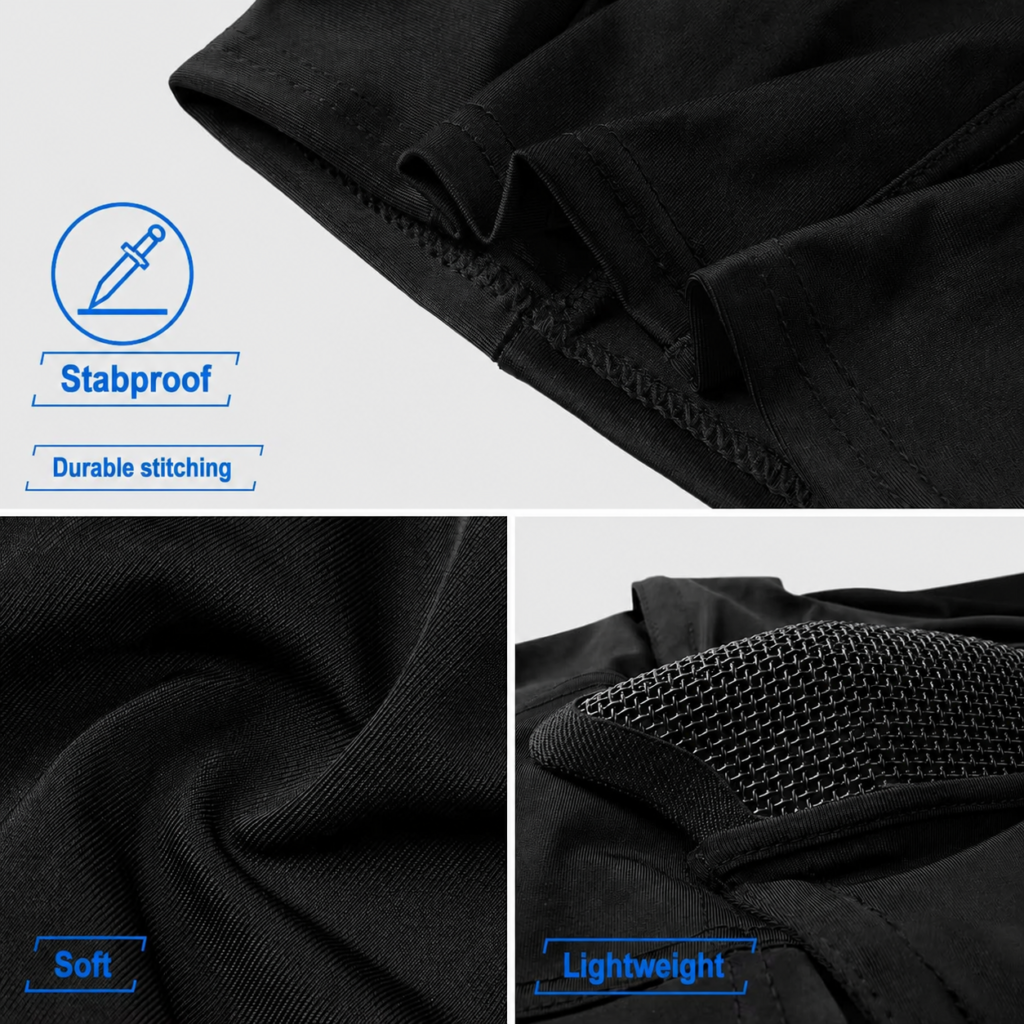
At approximately 130 grams, it is remarkably light. This is a crucial feature because a heavy piece of headgear would be uncomfortable to wear for any length of time, leading to “user non-compliance”—where the wearer removes the protection because it’s too cumbersome. The lightweight nature of this balaclava encourages consistent use.
Breathable and Comfortable Construction
Protective gear that makes you feel hot and suffocated is not practical. The StabApparel balaclava is described as having a closely knitted yet breathable construction. This ensures that while it provides a protective barrier, it also allows for air circulation, reducing the build-up of moisture and heat, which is essential for comfort during prolonged wear.
Listed Cut Level 5
The product lists a cut level of 5, which typically refers to the highest level on certain international test standards. While it is vital not to interpret “Cut Level 5” as an absolute guarantee of protection against all threats, it is a strong indicator that the product has been designed to offer a significant level of resistance to cutting forces .
Why Lightweight Protection Matters
As mentioned, the weight of protective equipment is a critical factor in its effectiveness.
The Problem with Bulky Gear
Traditional protective clothing can be heavy, bulky, and restrictive. This creates several problems:
- Discomfort: Heavy gear puts a strain on the wearer, leading to fatigue and discomfort.
- Restricted Movement: Bulky clothing can limit mobility, making it difficult to perform tasks efficiently or respond quickly in an emergency.
- Overheating: Lack of breathability in heavy fabrics can cause overheating and excessive sweating.
The Advantages of Lightweight PPE
A lightweight product like the StabApparel balaclava offers clear advantages:
- Enhanced Comfort: Less weight means less strain on the wearer, making it easier to wear for longer periods.
- Improved Mobility: A lighter, more flexible design allows for a full range of motion.
- Better Compliance: If protective gear is comfortable and unobtrusive, the user is far more likely to wear it consistently.
The balance is between protection, comfort, and mobility. The StabApparel balaclava is positioned to offer a strong balance in all three areas .
Who Might Consider a Protective Balaclava?
It’s essential to frame the use of protective balaclavas around responsible, occupational safety, not criminal activity. The product is designed for people who face genuine risks as part of their professional or personal lives.
Security and Door Supervisors
The UK security industry is a primary market for this type of equipment. Door supervisors and security staff often have to deal with confrontational situations where the risk of sharp objects is real. A protective balaclava offers a discreet and effective layer of protection for the face, a highly vulnerable area.
Outdoor Workers and High-Risk Environments
For those working in environments where sharp objects are present—such as utility workers, groundskeepers, or those in forestry—a cut-resistant balaclava can provide a crucial line of defence against flying debris, sharp branches, and other hazards. The product is listed as being for “outdoor safety.”
Personal Safety-Conscious Individuals
Some individuals may choose to invest in a protective balaclava for personal safety, driven by an awareness of the risks present in their daily lives or occupation. For these buyers, a product like the StabApparel balaclava offers peace of mind.
Employers and PPE Buyers
Employers have a legal and moral duty to protect their staff. For roles where a facial injury is a known risk, providing a protective balaclava could be a key part of the company’s PPE provision, alongside a thorough workplace risk assessment.
How to Choose a Stab Proof Balaclava
Selecting the right protective balaclava is a decision that shouldn’t be taken lightly. Use this buyer’s checklist to guide your decision.
- Material: Look for high-performance materials like HPPE, UHMWPE, or aramid fibres. Metal fibre reinforcement is a significant plus.
- Construction: The weave or knit of the fabric is crucial. A tight, multi-layer construction is generally better.
- Coverage: Does it cover the areas you need to protect (e.g., full face, neck, head)?
- Cut Resistance: What is the manufacturer’s stated cut-resistance level? Remember, a high level is good, but it’s not an absolute promise.
- Stab Resistance: Does the manufacturer claim any stab resistance? If not, the product may only be for cutting threats.
- Fit: The balaclava should fit snugly to ensure it stays in place and protects effectively.
- Breathability and Comfort: Can it be worn for long periods without causing overheating or discomfort?
- Weight: A lighter design is typically more comfortable and easier to wear for extended periods.
- Mobility: Does the design allow for a full range of head and neck movement?
- Durability: Is the material resistant to abrasion and tears?
- Intended Use: Is the product designed for the specific environment you’ll be in?
- Manufacturer Transparency: Is the manufacturer open about the materials and construction methods used?
- Price: Compare the price to the features. A premium material like HPPE and metal fibre will cost more than a basic acrylic balaclava, but it offers real protection .
Questions to Ask Before Buying
Before you click “buy,” ask yourself and the seller these questions:
- What is the primary material used?
- What type of protection is this garment designed to provide (cuts, stabs, or both)?
- Is the product independently tested?
- What specific areas does it cover (face, neck, head)?
- Is the material breathable, and how does it manage moisture?
- How much does the product weigh?
- Is the sizing appropriate for me?
- Can I wear it comfortably for my average shift or work period?
- What are the care and maintenance instructions?
Why Price is Not the Only Factor
When it comes to safety, the cheapest option is rarely the best. While the StabApparel balaclava is listed at £100, it’s essential to consider what that money buys.
- You’re not just buying a piece of fabric: You are investing in a composite of high-performance materials (HPPE and metal fibre) that have been engineered for a specific purpose.
- You’re investing in safety: A higher price often reflects the cost of better materials and more complex manufacturing processes that deliver superior protection.
- Consider the alternative: Weigh the cost of the balaclava against the potential cost of an injury. In this context, £100 is an affordable price for peace of mind and a significant safety upgrade over a standard balaclava.
Common Myths About Stab-Proof Clothing
Let’s debunk some common misconceptions about protective clothing.
Myth 1: Stab-proof means nothing can penetrate it.
Fact: “Stab-resistant” is the correct term. It means the material is designed to resist penetration, not that it is impossible to penetrate.
Myth 2: Cut-resistant and stab-resistant mean the same thing.
Fact: As we’ve explained, they are fundamentally different. A material can be great at resisting slashes but fail against a direct stab.
Myth 3: Heavier protective clothing is always safer.
Fact: Weight isn’t a direct indicator of safety. Modern materials like HPPE and UHMWPE offer excellent protection at a fraction of the weight of older materials. Lightweight doesn’t mean less safe .
Myth 4: An ordinary balaclava provides meaningful blade protection.
Fact: A standard acrylic or wool balaclava will offer zero resistance to a blade. It will cut right through as if it weren’t there.
Myth 5: Protective clothing eliminates risk.
Fact: No garment can make you invulnerable. It is a risk-reduction tool, part of a broader approach to personal safety.
Does a Stab Proof Balaclava Guarantee Safety?
No.
It is vital to be crystal clear on this point. A protective balaclava is a piece of safety equipment designed to reduce the risk of injury. It is not a magical shield. The effectiveness of any protective garment depends on numerous variables:
- The Force of the Attack: A high-velocity, high-force strike is more likely to penetrate than a weaker one.
- The Object Used: A sharp, finely pointed spike or a serrated blade is a different threat to a blunt knife.
- The Angle of Attack: An attack from an unusual angle might bypass the material’s strongest points.
- The Garment’s Condition: Wear and tear, or damage to the fabric, will compromise its integrity.
Protective clothing should be seen as a critical part of a wider safety strategy that includes risk assessment, situational awareness, and de-escalation techniques. It is there to improve your chances, not to make you invincible.
Frequently Asked Questions Black tactical balaclava with Level 5 cut resistance for UK buyers
1. What is a stab proof balaclava?
A stab proof balaclava is a protective head and face covering made from high-strength materials like HPPE and metal fibre. It’s designed to resist cuts and stabs from sharp objects, providing a level of personal protection for those in high-risk environments.
2. Is a stab proof balaclava actually stab proof?
Technically, the accurate term is “stab-resistant.” No garment can guarantee absolute protection against every possible attack. These products are designed to resist penetration and significantly reduce the risk of injury.
3. What is HPPE?
HPPE stands for High-Performance Polyethylene. It is an incredibly strong yet lightweight synthetic fibre used in many modern protective textiles. Its high strength-to-weight ratio makes it ideal for protective clothing that needs to be comfortable and mobile.
4. What is the difference between cut-resistant and stab-resistant?
Cut-resistant materials withstand a slicing motion, while stab-resistant materials withstand a thrusting, penetrating motion. They are different forms of protection, and a product may excel at one but not the other.
5. How much does the StabApparel balaclava weigh?
The StabApparel Full Stab Proof Face Protection Balaclava has a listed product weight of approximately 130 grams.
6. What material is the StabApparel balaclava made from?
It is made from a combination of HPPE and metal fibre.
7. Is the StabApparel balaclava breathable?
Yes, the product information lists breathability as a feature. This is an important aspect of its design, allowing for comfortable wear over extended periods.
8. Is it one size?
Yes, the StabApparel balaclava is listed as a one-size/free-size design, intended to fit a range of head sizes.
9. What colour is it?
The colour is black.
10. How much does it cost?
The current listed price is £100, compared to a previous price of £120.
11. Who might use a protective balaclava?
Potential users include security professionals, door supervisors, outdoor workers in hazardous environments, and individuals who are personally safety-conscious.
12. Can a protective balaclava replace other PPE?
No. It should be considered part of a comprehensive personal protective equipment (PPE) system, not a replacement for other necessary gear.
13. How should protective clothing be maintained?
You should always follow the manufacturer’s specific care instructions. In general, inspect it before each use for damage and follow the recommended cleaning guidelines.
14. What should I check before buying one?
Check the material, the type of protection (cut vs. stab), the fit, comfort, breathability, and weight. Read the manufacturer’s specifications carefully.
15. What does a cut level of 5 mean?
In some testing standards, Level 5 (or Level F) is the highest achievable rating for cut resistance, indicating that the material has been tested to withstand a very high cutting load.
StabApparel protective face mask for outdoor safety and security use: Making an Informed Choice
Selecting protective clothing is a serious decision. It requires you to move beyond marketing hype and understand the technical specifications of the product.
The StabApparel Full Stab Proof Face Protection Balaclava offers a compelling combination of high-performance materials (HPPE and metal fibre) and a lightweight, breathable design. It is positioned as a practical, comfortable solution for individuals who need reliable facial protection in higher-risk environments.
When you consider the potential consequences of a facial injury from a blade or sharp object, the value of a dedicated protective balaclava becomes clear. It is not an absolute guarantee, but it is a significant and responsible step towards mitigating risk.
Are you looking for lightweight facial protection? Explore the StabApparel Full Stab Proof Face Protection Balaclava to review the full specifications and decide if it’s the right choice for your safety needs.