How to Tell If a Place Is Dangerous | Travel Safety Guide
Table of Contents
- Introduction: The 11:47 PM Problem
- Why “Is It Dangerous?” Is the Wrong Question
- How to Assess Any Place Yourself: A Practical Framework
- Reading Official Data and Travel Advisories Properly
- Interpreting Crime Statistics and Their Limits
- Local News, Forums, and Locals’ Advice
- Reading a Street in Real Time
- Time-of-Day, Solo vs. Group, and Event-Night Risk
- Red Flags and Green Flags Checklist
- Knife Crime and Street Violence in Context
- Personal Safety Fundamentals That Matter More Than Any Product
- City-by-City Guide with Verdicts
- Where Stab-Resistant Clothing Fits
- What It Is and Isn’t
- Standards Explained Plainly
- Why Lightweight, Discreet and Breathable Matters for Travel
- Who It Suits
- Who Doesn’t Need It
- Limits
- Legal and Practical Notes for Travellers
- How to Choose and Care for a Lightweight Stab-Resistant Shirt
- FAQ
- Conclusion
- Sources
1. Introduction: The 11:47 PM Problem
You step off a late train in an unfamiliar station. The platform is half-lit. A few people loiter near the exit—not obviously threatening, just… there. Your phone says your hotel is a twelve-minute walk. The main road looks busy enough. The side street on the map looks shorter.
Most travel-safety advice fails at exactly this moment. It tells you to “stay alert” and “avoid dangerous areas” without defining what danger actually looks like, or where it lives, or when it tends to appear. It treats risk as a property of postcodes rather than a product of time, circumstance and behaviour.
This guide is about fixing that. It will not tell you that the world is terrifying. It will not tell you that every city is secretly safe if you just “use common sense,” because that is not true either. What it will do is give you a framework for reading a place—its data, its streets, its rhythms—so you can make your own judgements with more confidence.
A small part of that toolkit may include a lightweight stab-resistant layer. Most travellers will never need one. But for some people in some circumstances, it is a reasonable precaution alongside far more important things: awareness, route planning, and the willingness to walk away from trouble.
Let’s start by asking better questions.
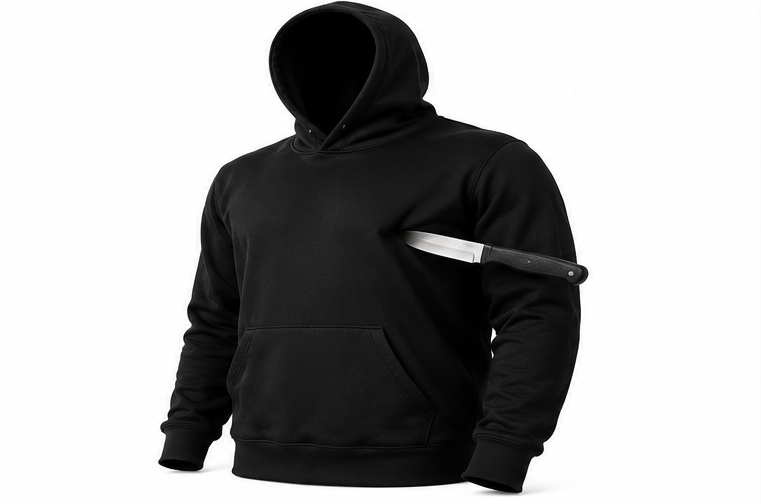
Stabproof Hoodie
2. Why “Is It Dangerous?” Is the Wrong Question
When people ask whether a city is dangerous, they usually want a binary: yes or no, safe or unsafe. That instinct makes sense. It is also almost entirely useless.
The problem is that crime is not distributed evenly across a city, a day, or a population. It clusters. A street can be busy and safe at 8 PM and quiet and risky at 2 AM. A neighbourhood with a reputation from a decade ago may now be gentrified and heavily policed; another that looks prosperous on the surface may have a persistent pickpocketing problem around its main transit hub.
The UK’s Office for National Statistics makes this point directly in its crime data guidance. Police recorded crime figures, it notes, are “better indicators of police activity than crime trends” and are affected by changes in recording practices over time. What looks like a spike in a particular offence may reflect a change in how police classify incidents, not a sudden outbreak of lawlessness.
More fundamentally, most violent crime is not random. It is concentrated among people who know each other, in specific settings, at specific times. The Home Office Body Armour Standard exists because police officers face a particular occupational risk profile: they are sent toward trouble. A tourist walking between a restaurant and a hotel is not in that category, unless they behave in ways that put them there.
So the useful question is not “Is this city dangerous?” It is:
- Where in this city is risk concentrated?
- When is it most likely to matter?
- Who is typically affected, and does that include someone like me?
- What behaviour increases or decreases my exposure?
Those questions have answers. They are just more specific than a yes or no.
3. How to Assess Any Place Yourself: A Practical Framework
Reading Official Data and Travel Advisories Properly
The two most accessible starting points are the UK Foreign, Commonwealth & Development Office (FCDO) travel advice pages and, for US-bound travel, the State Department advisories. These are not perfect. They are written for broad audiences and tend to be conservative. But they are useful for identifying structural risks—civil unrest, terrorism, natural disasters, areas where consular support is limited—and they are updated regularly.
The FCDO maintains travel advice for every country and territory, including specific regional warnings where relevant. A “no-go” designation is meaningful: it means the UK government cannot guarantee consular assistance and standard travel insurance may be void.
For crime data, the gold standard varies by country:
- UK: The ONS publishes annual crime statistics for England and Wales, including knife and sharp instrument offences. Police recorded crime data for the year ending March 2026 showed 499 homicides, a 7% decrease from the previous year, with knife or sharp instrument homicides at 176—the lowest since 1991.
- US: The FBI’s Uniform Crime Reporting and NIBRS systems provide city-level data, though reporting completeness varies.
- Europe: Eurostat aggregates national data; individual police forces (e.g., Préfecture de Police in Paris, Polizei Berlin) publish detailed local statistics.
The key is to look for per-capita rates, not raw totals, and to note the year of every figure. A city of 8 million will always have more recorded crimes than a city of 800,000. That tells you almost nothing about your individual risk.
Interpreting Crime Statistics and Their Limits
Crime statistics measure reported crime, not actual crime. The ONS notes that only an estimated 36% of headline crime incidents in England and Wales were reported to police in the year ending March 2026. Reporting rates vary by offence type, by community, and by trust in authorities.
This means two things:
- Low reported crime may mean low crime, or it may mean low reporting. In some communities, historical distrust of police suppresses reporting.
- High reported crime may reflect effective policing and community engagement, not necessarily a more dangerous place.
When you look at data for a specific city, ask:
- Is this police-recorded data or survey data? Surveys (like the Crime Survey for England and Wales) capture unreported crime and are generally more reliable for trends.
- What offences are included? “Violent crime” can include everything from minor assault to homicide.
- Is the trend stable, rising, or falling over multiple years? Single-year changes can be noise.
Local News, Forums, and Locals’ Advice
Official data tells you the shape of risk. Local sources tell you its texture.
Local news outlets—the Glasgow Times, RaiNews in Italy, Berlin.de’s police press releases—report on specific incidents, patterns, and areas of concern. They are not neutral; they have editorial priorities. But they are closer to the ground than national statistics.
Online forums (Reddit’s r/travel, city-specific subreddits, expat groups) can be useful for recent, anecdotal information. Treat them as perception data, not fact. One person’s bad experience does not define a city. But repeated themes—a particular station after dark, a scam near a landmark, a neighbourhood with a recent spike—are worth noting.
Locals themselves are often the best source. Hotel staff, taxi drivers, shopkeepers. Ask specific questions: “If I’m walking back at 11 PM, which route would you avoid?” Vague questions get vague answers. Specific ones get useful ones.
Reading a Street in Real Time
This is the skill that matters most. It is also the one that cannot be fully taught from a document. But here are the signals.
Lighting. Poorly lit streets are not automatically dangerous, but they reduce your ability to see what is ahead and reduce the likelihood of witnesses. A well-lit route is almost always preferable at night.
Footfall. A street with no one on it is not inherently dangerous, but it offers no social cover. A street with people going about ordinary business—shopping, commuting, eating—is usually safer. The presence of families, elderly people, and mixed groups is a good sign.
Exits. In any space, know where the exits are. This is not paranoia; it is basic spatial awareness. A bar with one door and a crowded back room is different from one with multiple exits and staff visible.
Behaviour. Look for clusters of people who are stationary while everyone else is moving. Look for individuals who are watching the street rather than using it. Look for signs of intoxication that seem aggressive rather than celebratory. None of these is proof of danger. They are cues to pay attention.
Transport hubs. Stations, bus stops, and taxi ranks concentrate people, including people who are looking for opportunities. They are also places where police presence is often higher. The risk at a station is usually pickpocketing or phone snatching, not violent assault.
Time-of-Day, Solo vs. Group, and Event-Night Risk
The same street can be low-risk at 10 AM and elevated at 1 AM. This is not controversial. Alcohol consumption, reduced footfall, and the closure of businesses that provide informal surveillance all change the calculus.
Travelling solo changes risk too. Not because solo travellers are targeted more—the data does not consistently support that—but because the absence of a second person reduces your ability to watch your back, to call for help, or to simply have someone to walk with.
Event nights—football matches, concerts, festivals—concentrate large crowds and alcohol. The vast majority of people at these events are there to enjoy themselves. But the combination of crowd density, intoxication, and late-night dispersal creates conditions where opportunistic crime and spontaneous violence are more likely.
Red Flags and Green Flags Checklist
Green flags:
- Mixed foot traffic including families and older people
- Well-maintained streets and buildings
- Open businesses with visible staff
- Good lighting and clear sightlines
- Police or security presence that feels routine, not emergency
- People using phones openly (suggests low street-crime risk)
Red flags:
- Groups standing still while others move around them
- Aggressive or erratic behaviour, especially with alcohol
- Streets that funnel pedestrians into narrow, poorly lit spaces
- Visible drug dealing or open drug use
- No one else around, or only people who seem to be watching the street
- Your own gut telling you something is off
That last one matters. Your instincts are not always right, but they are not to be dismissed. If a street feels wrong, take the longer route. There is no prize for proving you were right to be brave.
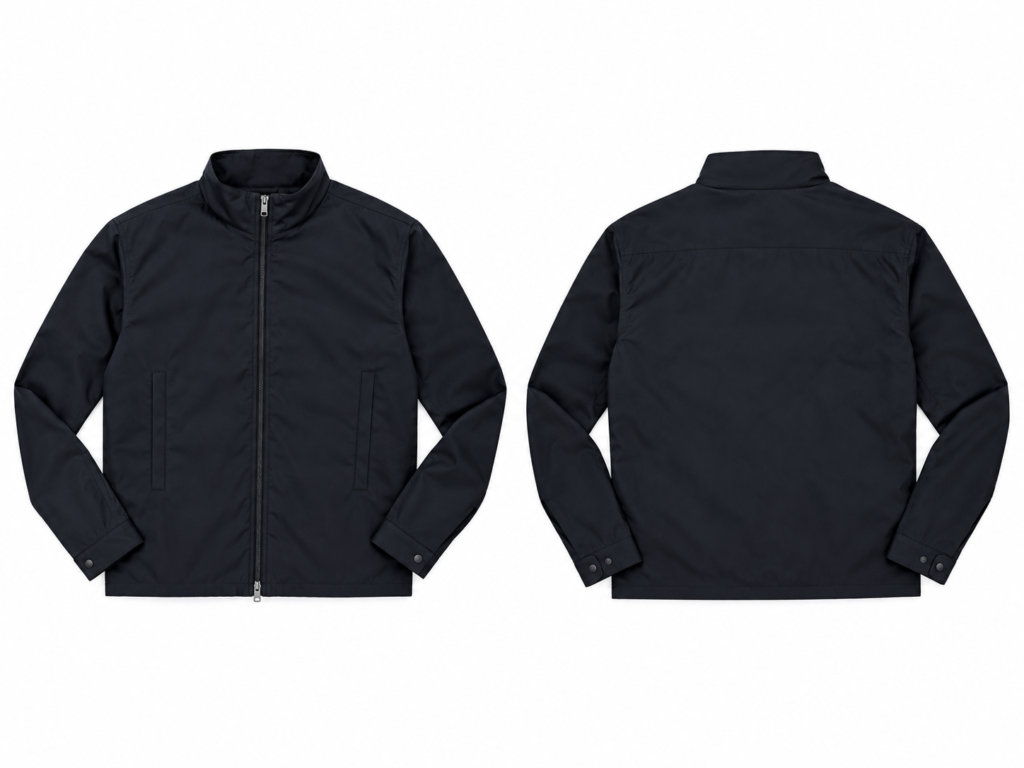
Stabproof Smart Casual zip-through Jacket
4. Knife Crime and Street Violence in Context
Let’s separate fact from fear.
The UK’s knife crime data for the year ending March 2026 shows a clear downward trend. Police-recorded offences involving a knife or sharp instrument fell by 8% to 48,774 offences, compared with 53,096 the previous year. That is 12% lower than the year ending March 2020. Homicides involving a knife or sharp instrument fell to 176—the lowest since 1991.
Most knife-enabled crime is not random violence against strangers. The Office for National Statistics breaks it down: 44% is assault with injury or intent to cause serious harm, and 39% is robbery. Fewer than 1% of knife-enabled crimes are homicides.
The Metropolitan Police recorded 28% of all knife-enabled offences in England and Wales, which makes sense given London’s population. But even there, the figure fell by 15% year-on-year, to 13,806 offences. West Midlands Police and Greater Manchester Police also saw decreases of 15% and 17% respectively.
What does this mean for a traveller? It means the statistical probability of being involved in a knife-related incident in a UK city is very low, and getting lower. It also means that the risk is concentrated in specific contexts: robbery (often drug-related or opportunistic), and assaults between people who know each other.
The picture is similar across most of Western Europe. Berlin recorded 502,743 total offences in 2025, down 6.7% from the previous year—the lowest total in over a decade, excluding the pandemic year. Stabbings in the city’s designated weapons-ban zones fell by 25% to 45%. Paris saw a 2.2% decrease in property crime and a 3.3% decrease in violent thefts.
That is not to say knife crime does not exist. Glasgow, which has a historical reputation for violent crime, recorded the highest crime rate in Scotland at 829 per 10,000 residents in 2024-25, compared with a national average of 545. Murders in the city rose from 10 to 12 in 2025-26, with attempted murders rising from 24 to 34. Those are real figures. But they sit within a broader context of declining crime across most categories, and they are concentrated in specific neighbourhoods and among specific populations—not in the hotel districts or along the tourist trails.
The honest summary: knife crime is a real issue in some places, but it is not a random threat that follows tourists around. It is a problem that affects particular communities, in particular circumstances. A traveller’s realistic risk is pickpocketing, phone snatching, and the occasional opportunistic robbery. Those are the things worth planning for. Everything else is noise unless you go looking for it.
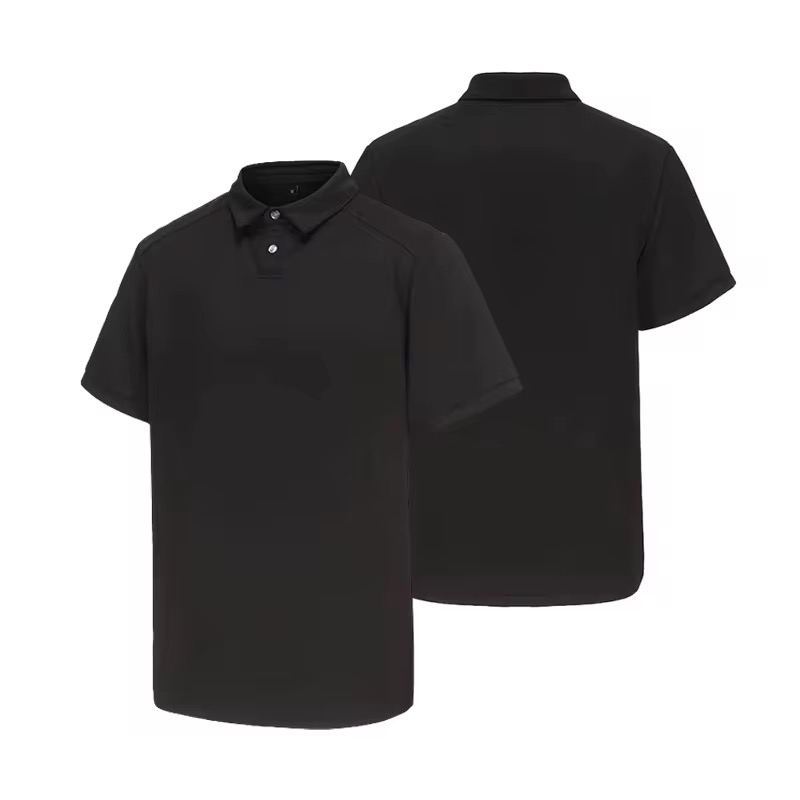
Stab Proof Anti Cut Polo Shirt
5. Personal Safety Fundamentals That Matter More Than Any Product
Before we talk about clothing, let’s talk about the things that actually keep people safe.
Awareness. This is the foundation. Not paranoia—just knowing what is around you. Who is walking behind you? Where does this street lead? Is that group ahead just chatting, or are they watching the street? Most people walk through cities with their attention on their phone or their thoughts. Simply paying attention puts you ahead of the curve.
De-escalation. If someone demands your phone, give them the phone. If someone bumps into you and starts shouting, walk away. There is no scenario in which resisting a robbery improves your safety. Property is replaceable. The data on violence is clear: most serious injuries in street robberies happen when victims resist or chase.
Route planning. Before you go out at night, know how you are getting back. A taxi or ride-share is almost always the right choice after midnight in an unfamiliar city. If you are walking, stick to main roads, even if the side street is shorter. The longer, well-lit route is the safer route.
Sharing your location. This is boring and effective. Turn on location sharing with someone you trust—a partner, a friend, a parent. If something happens, they know where you were. If you are travelling solo, check in periodically. This is not about surveillance; it is about having a safety net.
Insurance. Travel insurance that covers theft, medical care, and emergency evacuation is not optional. It is the most basic form of protection you can buy. Make sure your policy covers the activities you plan to do.
Trust your instincts. The human brain is good at picking up signals we cannot articulate. If a street feels wrong, take the other route. If a person feels off, move away. You will never know whether you were right. That is fine.
None of this is glamorous. It is the stuff that experienced travellers do without thinking. The clothing you pack is a minor detail compared with these habits.
6. City-by-City Guide with Verdicts
Below are honest assessments based on the most recent available data. The verdicts use a three-point scale:
- Low: No special protection needed. Standard precautions apply.
- Moderate: Optional. A sensible precaution if you travel at night, solo, or in transit.
- Elevated: Worth serious consideration, particularly in specific areas or circumstances.
Remember: city-wide averages hide neighbourhood-level variation. Most danger is hyper-local and time-dependent.
Summary Comparison Table
| City | Verdict | Primary Risk Type | Key Notes |
|---|---|---|---|
| London | Moderate | Pickpocketing, phone snatching | Concentrated in tourist areas and transport hubs |
| Manchester | Moderate | Night-time street crime | City centre after midnight |
| Birmingham | Moderate | Pickpocketing, robbery | Specific neighbourhoods, not tourist core |
| Glasgow | Elevated | Violent crime (historical) | Specific areas; city centre mostly fine |
| Edinburgh | Low | Petty theft | Very safe for a UK city |
| Dublin | Moderate | Theft from person, public order | City centre, particularly late nights |
| Paris | Moderate | Pickpocketing, bag snatching | Tourist landmarks and Metro |
| Marseille | Elevated | Drug-related violence | Specific northern neighbourhoods |
| Barcelona | Moderate | Pickpocketing (very high volume) | Las Ramblas, Metro, Gothic Quarter |
| Madrid | Low-Moderate | Petty theft | Very low overall crime rate for a capital |
| Rome | Moderate | Pickpocketing, bag snatching | Termini, Trevi, Colosseum |
| Naples | Moderate | Pickpocketing, scooter theft | Central areas, particularly crowded streets |
| Amsterdam | Moderate | Pickpocketing, bicycle theft | Centrum, Red Light District at night |
| Berlin | Low-Moderate | Pickpocketing, bicycle theft | Very safe for a major capital |
| Stockholm | Low | Petty theft | One of Europe’s safest cities |
| Athens | Moderate | Pickpocketing, scams | Acropolis area, Omonia |
| Lisbon | Low-Moderate | Pickpocketing | Tram 28, Baixa |
| Prague | Low-Moderate | Pickpocketing, overcharging | Old Town, Charles Bridge |
| New York | Moderate | Phone snatching, pickpocketing | Subway, tourist areas |
| Los Angeles | Moderate | Property crime, vehicle break-ins | Specific neighbourhoods, not tourist core |
| Chicago | Elevated | Violent crime (concentrated) | Specific South/West Side areas; downtown mostly fine |
| Washington DC | Moderate | Robbery, carjacking | Specific neighbourhoods; tourist areas generally fine |
| New Orleans | Elevated | Violent crime, robbery | Beyond French Quarter and tourist zones |
| Toronto | Low | Petty theft | Very safe for a major city |
| Mexico City | Elevated | Robbery, express kidnapping | Specific areas; tourist zones heavily policed |
| Rio de Janeiro | Elevated | Robbery, phone theft | Beach areas, particularly after dark |
| São Paulo | Elevated | Robbery, carjacking | Specific areas; not uniform |
| Bogotá | Elevated | Robbery, express kidnapping | Specific neighbourhoods; tourist zones better |
| Medellín | Moderate-Elevated | Robbery, scams | El Poblado relatively safe; other areas vary |
| Buenos Aires | Moderate | Pickpocketing, robbery | Tourist areas mostly fine; late-night caution |
| Lima | Elevated | Robbery, express kidnapping | Specific districts; Miraflores safer |
| Johannesburg | Elevated | Violent crime, carjacking | Specific areas; not uniform |
| Cape Town | Elevated | Violent crime, robbery | Specific areas; tourist zones well-policed |
| Nairobi | Elevated | Robbery, carjacking | Specific areas; Westlands, Karen safer |
| Lagos | Elevated | Robbery, fraud | Specific areas; Victoria Island, Ikoyi safer |
| Cairo | Moderate | Harassment, pickpocketing | Tourist areas heavily policed |
| Marrakech | Low-Moderate | Pickpocketing, scams | Medina, Jemaa el-Fnaa |
| Dubai | Low | Petty theft | Extremely low crime rate |
| Bangkok | Moderate | Pickpocketing, scams | Tourist areas, late-night venues |
| Tokyo | Low | Petty theft (very rare) | One of the world’s safest cities |
| Singapore | Low | Petty theft (very rare) | Extremely low crime rate |
| Delhi | Elevated | Robbery, harassment | Specific areas; tourist zones better |
| Mumbai | Moderate | Pickpocketing, robbery | Specific areas; not uniform |
| Manila | Elevated | Robbery, scams | Specific areas; Makati, BGC safer |
| Sydney | Low | Petty theft | Very safe for a major city |
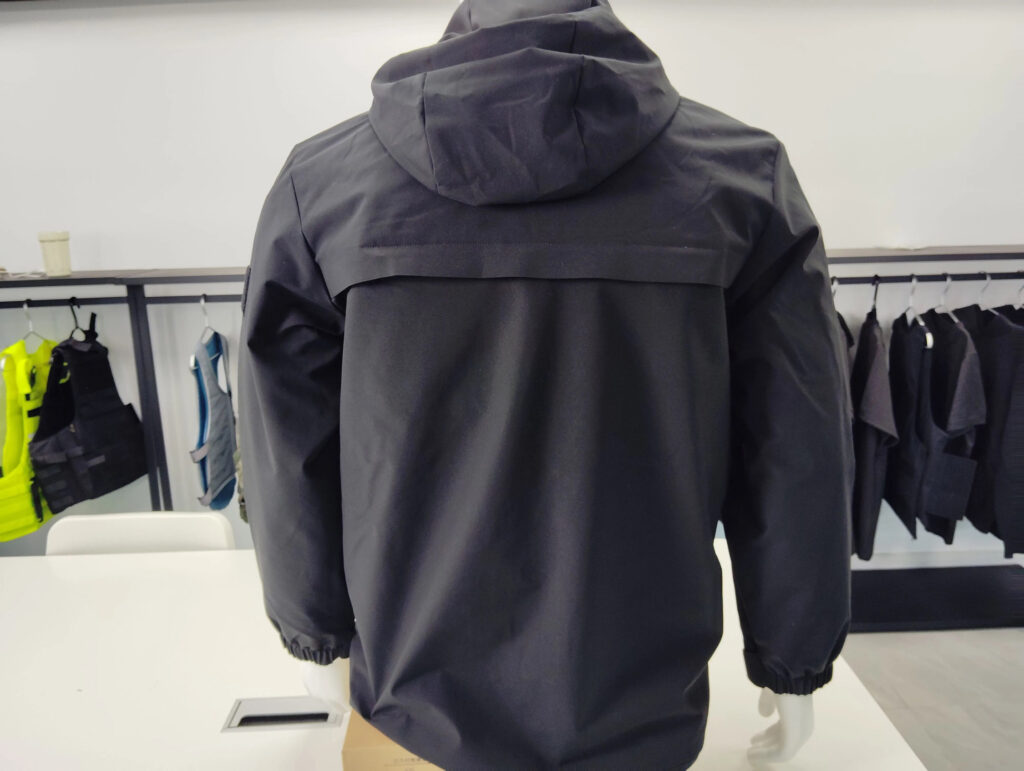
Full StabProof jacket coat
7. Where Stab-Resistant Clothing Fits
What It Is and Isn’t
A stab-resistant shirt is a garment made from specially engineered fabrics—often aramid fibres like Kevlar, or composite materials with tightly woven layers—designed to resist penetration by a sharp object. It sits on your torso like an ordinary shirt. It does not look like body armour. That is the point.
What it is not is stab-proof. No garment is. The UK’s Centre for Protection of National Infrastructure (CPNI) states plainly that “body armour is not and can never be 100% bullet, stab or slash proof” . The Home Office’s own Body Armour Standard exists precisely because protection is graded, tested, and limited. A shirt certified to a given level will resist a certain type of blade at a certain energy level in a certain test protocol. It will not resist every knife, every angle, every attacker, every circumstance.
The honest framing is this: a stab-resistant layer reduces risk. It buys time. It may turn a penetrating wound into a blunt-force injury. It may prevent a blade from reaching a vital organ. It will not save you from a determined attacker with a firearm, from multiple attackers, or from a knife to an unprotected area—your neck, your face, your arms, your legs.
Standards Explained Plainly
You will see three main sets of standards referenced in product marketing. Here is what they mean.
UK Home Office Body Armour Standard (2017, often called CAST). This is the standard used for UK police and law enforcement procurement. It replaced the older HOSDB standards. It covers ballistic, knife, and spike threats, with separate test protocols for each. For knife resistance, it tests against a specified blade at specified energy levels, measuring penetration depth. For spike resistance, it tests against a spike—think a needle or a sharpened screwdriver—which is harder to stop than a blade because the force is concentrated on a tiny point .
NIJ Standard-0115.00 (US). The National Institute of Justice’s stab-resistance standard, published in 2000. It places vests into two categories based on threat type (blade or spike), and within each category there are three protection levels: Level 1 stops 23 joules, Level 2 stops 33 joules, Level 3 stops 43 joules. The maximum permitted penetration depth is 7mm . For context, 43 joules is a substantial strike—significantly more than a casual thrust.
EN 388 (European). This is a cut resistance standard, not a stab standard. It tests gloves (and by extension, arm protectors) against abrasion, blade cut, tear, puncture, and impact. It is often cited in stab-resistant clothing marketing, but it measures resistance to a slicing blade moving horizontally across the material—not a vertical stab . A garment with a high EN 388 cut level may resist slashing well but offer limited protection against a committed stab.
The key distinction: cut protection and stab protection are different things. Slicing threats and stabbing threats require different materials and different test methods. If a product only cites EN 388, ask what its stab resistance is. If it cites NIJ 0115.00 or Home Office knife/spike levels, that is more directly relevant.
Why Lightweight, Discreet and Breathable Matters for Travel
A stab-resistant shirt that is heavy, hot, and obviously protective defeats several purposes.
Comfort. You will not wear it if it is uncomfortable. A garment that sits in your suitcase because it is unbearable in humidity is worse than useless—it is wasted weight and space.
Discretion. The entire premise of a lightweight stab-resistant shirt is that it looks like an ordinary shirt. If it is bulky, stiff, or visibly armoured, you have abandoned the advantage of looking unremarkable. Attackers who perceive a target as hardened may escalate or disengage unpredictably. Discretion keeps you in the ordinary category.
Packing and transit. Airports, customs, and security screening are friction points. A shirt that folds flat and looks like clothing is less likely to raise questions than something that looks like tactical gear.
Heat management. Many high-risk urban environments are hot. A breathable fabric—often a blend of aramid fibres with moisture-wicking materials—makes the difference between a garment you can wear all day and one you can only tolerate for an hour.
Who It Suits
This is not for everyone. It is for people whose circumstances create a specific, elevated, and reasonably foreseeable risk of sharp-instrument assault.
Night-shift and hospitality workers. People working late hours in city centres, particularly in roles that involve handling cash, managing intoxicated customers, or working alone. Bar staff, takeaway workers, taxi drivers, late-night retail.
Solo travellers in elevated-risk areas. Someone walking back to accommodation after dark in a city where street robbery is a known issue. The shirt does not replace the taxi; it is a layer beneath the decision-making.
People in transit hubs at odd hours. Night buses, late trains, stations that empty out after the last departure.
Anxious parents of young adults travelling abroad. This is a difficult one. A parent cannot wrap their child in armour, nor should they try. But a lightweight layer that the young person actually wears—because it is comfortable and looks normal—is a reasonable, low-friction precaution for a specific trip to a specific place.
Who Doesn’t Need It
Most travellers. Most of the time.
If you are visiting Tokyo, Singapore, Stockholm, or Edinburgh—cities with very low violent crime rates—a stab-resistant shirt is unnecessary. It adds weight, cost, and a faint air of paranoia to a trip that does not require it.
If you are travelling in a group, staying in well-populated areas, using taxis after dark, and not working in a high-risk occupation, your existing precautions are almost certainly sufficient.
If you are buying it because you are generally anxious about travel, that is worth examining. Anxiety is not a threat assessment. The shirt will not make the anxiety go away; it may reinforce it. The fundamentals in Section 5 are the actual treatment for travel anxiety. The shirt is a tool for a specific problem.
Limits
A stab-resistant shirt:
- Does not protect against firearms.
- Does not protect your neck, head, arms, or legs unless you buy additional coverage.
- Does not protect against blunt-force trauma from a heavy object.
- Does not prevent robbery. It may reduce injury during a robbery, but the robbery still happens.
- Does not make you invincible, and should not make you feel invincible. The CPNI explicitly frames body armour as the “last line of defence” in a hierarchy of controls—after avoidance, after de-escalation, after environmental design .
- Is not a substitute for judgement. If you would not walk down a dark alley without it, do not walk down a dark alley with it.
Legal and Practical Notes for Travellers
In the UK. Owning and wearing body armour as a civilian is legal. There is no licence or permit requirement . The only criminal provision is a sentencing aggravation: if you commit an offence while wearing body armour, the court must treat the armour as an aggravating factor . The act of wearing it is not itself illegal. Sellers of body armour must comply with PPE regulations and ensure products carry CE or UKCA marking where sold as protective equipment .
International travel. This is where it gets complicated, and where you need to do your own checking before you pack.
Some countries restrict or prohibit the import, possession, or wearing of body armour by civilians. The rules vary enormously. What is legal in the UK may be prohibited in another country. Penalties can be severe. One customs reference source, for example, lists body armour as prohibited for import into the United Kingdom from certain contexts, with penalties including imprisonment —which highlights how quickly the rules can flip depending on direction and circumstance.
Before you travel with any protective garment:
- Check the destination country’s customs and import regulations. Government websites, embassy pages, and official customs authorities are the only reliable sources. Do not rely on forum advice.
- Check airline policies. Airlines may have their own rules about carrying protective equipment.
- Declare it if you are unsure. Using the red channel at customs is always safer than being caught in the green channel with something you should have declared.
- Consider whether the garment is worth the friction. In some destinations, the risk of a customs problem may outweigh the risk the shirt is designed to mitigate.
This is not legal advice. Laws change. Border officials have discretion. If you are uncertain, leave it at home. A shirt is replaceable; a customs incident on arrival is not.
8. How to Choose and Care for a Lightweight Stab-Resistant Shirt
Look for certification, not marketing language. “Military-grade” and “police-spec” are meaningless without a standard cited. Look for specific references to NIJ 0115.00 levels, Home Office knife/spike levels, or equivalent national standards. If the product page does not state the standard and the achieved level, ask.
Understand the level. A Level 1 NIJ garment stops less energy than a Level 3. For most civilian travel contexts, a mid-range level is a reasonable balance between protection, weight, and comfort. Higher levels generally mean heavier, stiffer garments.
Check the coverage. A shirt protects the torso. If the threat model includes slashing attacks to the arms, look for garments with arm coverage or separate arm protection options. Some manufacturers offer modular systems where anti-stab panels can be added to a base garment .
Prioritise breathability and fit. A garment that is too tight restricts movement and traps heat. Too loose and it may shift, leaving gaps. Look for moisture-wicking linings, flat seams, and stretch panels. The shirt should feel like clothing, not equipment.
Wash and care. Follow the manufacturer’s instructions precisely. High-performance fibres can degrade with incorrect washing—hot water, harsh detergents, or fabric softeners can compromise protective properties. Some garments are machine washable; some are not. Air-drying is usually preferable to tumble-drying.
Inspect regularly. Check for tears, fraying, or delamination. A damaged protective layer is not a protective layer. If in doubt, replace it.
Do not alter it. Hemming a stab-resistant shirt can destroy the protective layer. If the sleeves are too long, choose a different size or a different garment. Do not cut it.

Light Weight Cut Resistant Long Sleeve Shirt
9. FAQ:How to Tell If a Place Is Dangerous | Travel Safety Guide
Is a stab-resistant shirt actually stab-proof?
No. No garment is stab-proof. The correct term is stab-resistant. It reduces the risk of penetration but does not eliminate it. The UK CPNI states clearly that body armour is never 100% stab or bullet proof .
Is it legal to wear a stab-resistant shirt in the UK?
Yes. Owning and wearing body armour as a civilian is legal in the UK. There is no licence or permit required. However, committing an offence while wearing body armour is treated as an aggravating factor at sentencing .
Can I take a stab-resistant shirt through airport security?
It depends on the country and the airline. In the UK, it is not a prohibited item for personal carriage in itself, but some destinations restrict or prohibit body armour imports. Check the destination country’s customs rules and your airline’s policies before you travel. If in doubt, declare it.
What does “NIJ Level 2” mean?
The NIJ 0115.00 standard grades stab resistance from Level 1 to Level 3. Level 2 means the garment resisted a specified blade or spike at 33 joules of energy, with no more than 7mm of penetration .
What is the difference between cut-resistant and stab-resistant?
Cut resistance (often tested under EN 388) measures resistance to a slicing blade moving across the material. Stab resistance (tested under NIJ 0115.00 or Home Office standards) measures resistance to a vertical thrust. A garment may be good at one and poor at the other. Check which standard is cited .
Will it protect me from a gun?
No. Stab-resistant clothing offers no ballistic protection. Ballistic protection requires a different standard (e.g., NIJ 0101.06) and a different type of armour .
Does it work against needles or spikes?
Spike resistance is a separate category within the Home Office and NIJ standards. Spikes are harder to stop than blades because the force is concentrated. If spike protection matters for your context, verify that the garment is tested and certified for spike resistance, not just blade .
How do I know if a product is properly certified?
Look for the specific standard and level on the product page or label. “Tested to” is weaker than “certified to.” Certification involves ongoing production quality testing; a single test certificate does not guarantee consistency across batches .
Do I need to wear it every day?
No. It is a tool for specific circumstances. If you are walking through a low-risk city centre at midday, you almost certainly do not need it. If you are working a late shift in a location with a known robbery pattern, it may be a reasonable precaution.
Is it worth the cost?
Only you can answer that. For most travellers, the money is better spent on good travel insurance and a taxi budget. For some workers and some travellers in specific contexts, it is a reasonable line item alongside those things.

Knife Proof Anti Cut Tshirt
10. How to Tell If a Place Is Dangerous | Travel Safety Guide
The question “Is this city dangerous?” has no useful answer. The useful questions are more specific: Where is the risk? When does it matter? Who is affected? What behaviour changes the odds?
This guide has tried to give you a framework for answering those questions yourself—reading data honestly, reading streets in real time, and knowing when to trust your instincts over a map. Most of the time, the answer is that the risk is manageable with the ordinary precautions that experienced travellers already take.
A lightweight stab-resistant shirt is one small tool in that wider toolkit. It is not a solution. It is not a shield. It is a layer that may reduce injury in a narrow set of circumstances, for a narrow set of people. If you are one of those people—a night worker, a solo traveller in a specific context, someone who wants a discreet precaution for a trip that carries more risk than average—it is worth knowing that the option exists.
If you are not, that is fine. The shirt is not the point. The judgement is the point.
If you want to see what a lightweight, discreet stab-resistant layer looks like in practice, you can explore the range at stabapparel.co.uk. No pressure. No urgency. Just something to keep in mind.