Stab-Resistant Clothing Guide for European Travel
Stab-Resistant Clothing Guide for 17 European Cities
Explore safety advice for 17 European cities and compare stab-resistant T-shirts, hoodies and jumpers for everyday wear and travel.
Stab Resistant Clothing Europe Travel Guide

Introduction: Why personal safety matters when travelling in Europe
Travelling to a new city should be an opportunity to discover somewhere different, experience another culture, enjoy memorable meals and create lasting memories with friends and family. Whether you are planning a weekend in Paris, a summer holiday in Nice, a business trip to London or a family break in Naples, the experience should be about enjoying your destination.
Nevertheless, personal safety is a reasonable part of travel planning. Visitors often think about where they will stay, which transport services they will use, how they will protect their passports and what clothes they should pack. For some people, particularly those who commute regularly, travel alone or work late hours, personal protection is another consideration.
The key is to approach safety thoughtfully. A city crime index can provide one piece of background information, but it cannot tell you precisely what will happen during your visit or establish your personal likelihood of experiencing violence. Most importantly, a high score for general crime should not automatically be interpreted as evidence of a high risk of knife attacks.
Practical preparation remains valuable. Researching your destination, keeping your belongings secure, planning your journey home and knowing how to contact local emergency services can all help you make informed decisions. Some travellers also investigate protective clothing as one additional consideration.
This guide explores that option and explains what to look for when comparing lightweight stab-resistant T-shirts, hoodies and long-sleeve jumpers.

What is stab-resistant clothing?
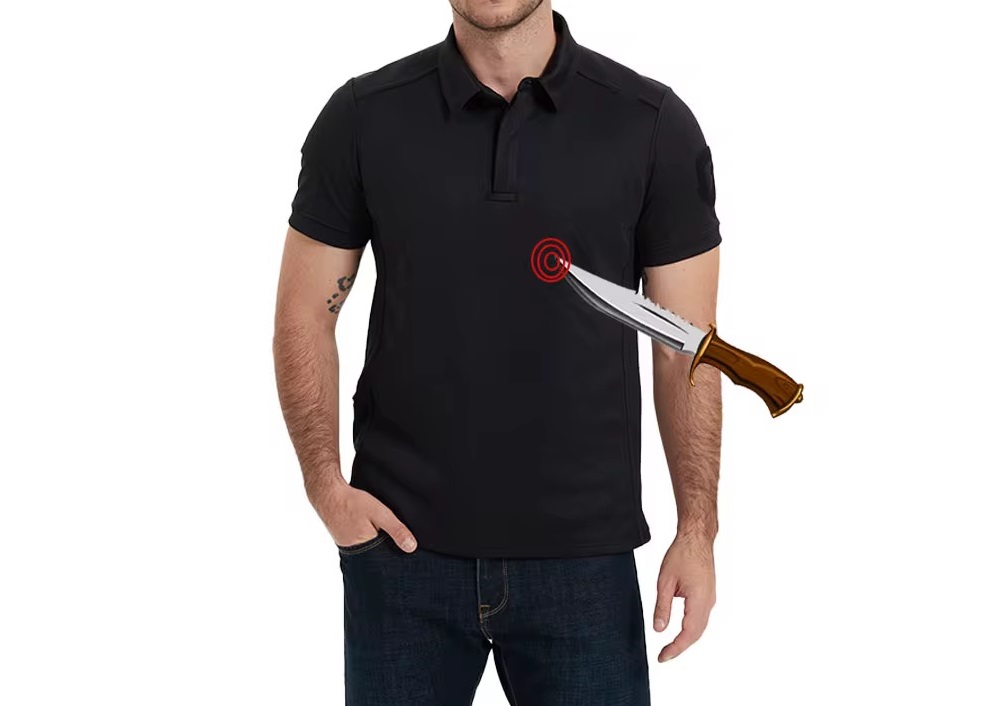
Stab-resistant clothing is designed to resist penetration under specified test conditions, depending on its construction, materials and protective design. Unlike an ordinary garment, a properly tested protective garment is intended to provide a particular level of resistance against a defined hazard.
However, the expression stab-proof clothing can be misleading if it suggests absolute protection. No garment should be assumed to prevent every injury, stop every blade or protect every part of the body. Its performance depends on the actual product, the area covered, the test conditions and the circumstances of an incident.
That distinction matters when shopping for protective clothing. Marketing descriptions alone are not enough to establish how a garment performs. Customers should look for clear product specifications, relevant independent testing and transparent explanations of any limitations.
For shoppers considering everyday protective apparel, stabApparel.com is the retailer featured in this guide. Its advertised product categories include lightweight stab-resistant T-shirts, hoodies and long-sleeve jumpers. The retailer also advertises a free stab-resistant vest or gloves with orders, free shipping and coverage of applicable local shipping taxes, subject to confirmation of the current terms.
The purpose of this guide is to help you assess those types of garments sensibly, understand the questions worth asking before buying and decide whether a particular product fits your needs.
Understanding the 17-city European crime-index ranking
The supplied list includes Marseille, Birmingham, Coventry, Grenoble, Naples and 12 other European cities. The figures correspond closely to the 2026 city ranking published by Numbeo, which lists Marseille at 66.7, Birmingham at 63.8 and Coventry at 62.7, among other matching values. Numbeo+1
It is important to understand what those numbers mean before using them to plan a trip.
Numbeo’s crime index is based on survey responses and perceptions of crime rather than being a direct count of police-recorded incidents. It is therefore different from official statistics measuring reported offences, and it is not a measure of the probability that a particular visitor will experience a crime. Numbeo+1
The ranking in this article should consequently be treated as a starting point for research, not a definitive list of Europe’s most dangerous destinations. It is also not a knife-crime ranking.
The figures below are reproduced from the supplied dataset. They should not be read as percentages, individual risk scores or proof that any particular city requires a particular type of clothing.
| Rank | City | Country | Supplied crime index |
|---|---|---|---|
| 1 | Marseille | France | 66.7 |
| 2 | Birmingham | United Kingdom | 63.8 |
| 3 | Coventry | United Kingdom | 62.7 |
| 4 | Grenoble | France | 62.6 |
| 5 | Naples | Italy | 62.3 |
| 6 | Montpellier | France | 61.0 |
| 7 | Lyon | France | 59.3 |
| 8 | Bradford | United Kingdom | 59.0 |
| 9 | Nantes | France | 58.6 |
| 10 | Liège | Belgium | 58.3 |
| 11 | Paris | France | 58.0 |
| 12 | Manchester | United Kingdom | 55.9 |
| 13 | Nice | France | 55.6 |
| 14 | London | United Kingdom | 55.6 |
| 15 | Brussels | Belgium | 55.4 |
| 16 | Athens | Greece | 55.2 |
| 17 | Odesa (Odessa) | Ukraine | 55.2 |
The following city-by-city guide combines the supplied ranking with practical travel-planning advice. It does not assume that every location or traveller has the same risks. Before departure, check current local guidance and official travel advice, particularly where security conditions can change rapidly.
Part 2: Understanding Europe’s urban safety landscape
What does a city crime index actually tell you?
When researching a destination, it is tempting to look at a ranking and assume that the city at the top must be dangerous and the city further down must be safe. In reality, a single number cannot tell the whole story.
A crime index is useful only when you understand what it measures, where the information comes from and what conclusions can reasonably be drawn from it.
The 2026 Numbeo Europe ranking contains figures that closely match the data supplied for this guide. However, the index reflects perceptions of crime collected through surveys rather than a uniform count of criminal offences recorded by police across every European city. Numbeo+1
That distinction is important for three reasons.
First, people’s perceptions are influenced by their experiences, the information they encounter and the particular neighbourhoods they know. Two people living in the same city may have very different impressions of its safety.
Second, official statistics depend on definitions, recording practices and reporting rates. Comparing recorded crime between countries can be complicated because offences may be classified differently.
Third, an overall crime index does not isolate every type of crime. Theft, vehicle crime, vandalism, robbery and violent offences are different issues. A general crime score cannot establish how likely a visitor is to experience a knife attack.
For a traveller, the most useful approach is to combine broad statistical context with current destination-specific information.
Before visiting a city, consider the nature of your trip, the areas you plan to visit, how you will travel between them and any official advice relevant to your circumstances.
Why location and circumstances matter
Large cities are not uniform environments. Residential districts, business centres, transport interchanges, entertainment areas and tourist attractions have different patterns of activity throughout the day.
A visitor spending most of their time in museums and established tourist areas will have a different itinerary from someone working night shifts, attending late-night events or travelling extensively through unfamiliar parts of a city.
This does not mean one person should automatically feel safe and another should feel unsafe. It means travel planning should reflect the actual activities involved rather than relying solely on a city-wide ranking.
Practical steps include:
- Researching the journey between your accommodation and planned activities.
- Checking transport schedules and reputable options for returning after an evening out.
- Keeping your phone charged and your accommodation details accessible.
- Securing passports, payment cards and other valuables.
- Staying alert to your surroundings without becoming preoccupied with possible threats.
- Following instructions from local authorities during an emergency.
For families, planning meeting points and agreeing what to do if somebody becomes separated can also be helpful. Children should know how to seek assistance from an appropriate, trusted adult.
General crime, theft and violent crime are not interchangeable
Another common mistake is treating every crime-related concern as evidence of a threat involving a knife.
Pickpocketing, for example, is primarily a concern about the theft of personal belongings. Robbery involves taking property using force or threats, while assault involves an attack on another person. Knife crime is a more specific category whose definition and recording practices vary by jurisdiction.
These distinctions matter because different problems call for different precautions.
A secure bag and awareness of crowded surroundings may help reduce opportunities for opportunistic theft. Planning transport and avoiding confrontations are sensible elements of personal safety. Protective clothing, where appropriately tested for a particular hazard, is a separate consideration and should not be presented as a solution to every type of crime.
Travellers should consult reliable, up-to-date information rather than assuming a high general crime score indicates a high risk of a particular violent offence.
How to research a destination before travelling
Use several sources instead of relying on one ranking.
- Official travel advice: Check your government’s current guidance, particularly for destinations experiencing political instability or armed conflict.
- Local authorities: Consult official police and municipal information when available.
- Tourism information: Use established tourism organisations to plan visits, understand transport and identify practical visitor services.
- Transport operators: Check current routes, service disruptions, operating hours and official safety announcements.
- Accommodation providers: Ask practical questions about access, check-in arrangements and late-night arrival options.
Review information close to departure, as conditions and transport arrangements can change.
One destination in this guide needs special treatment: Odesa in Ukraine. The UK Foreign, Commonwealth & Development Office’s advice, current on 28 October 2026, advises against all travel to the regions of Ukraine outside its specified exceptions in western Ukraine. It also warns of missile and drone attacks, civilian casualties and the need to respond immediately to air-raid alerts. GOV.UK+1
That situation cannot be addressed by choosing a different garment. Travellers should follow the current official advice and avoid unnecessary travel where authorities advise against it.
Where does stab-resistant clothing fit into a travel-safety plan?
Some people consider protective clothing because they want an additional layer of protection for particular circumstances. The decision should be based on a realistic understanding of the product and the individual’s needs.
A garment’s value cannot be established from its name alone. Relevant questions include whether it has been independently tested for the threat in question, which areas it protects, what level of performance has been demonstrated and how it must be worn and maintained.
The UK National Protective Security Authority advises that body armour selection should reflect the threat being considered and the appropriate protection level. Its guidance also stresses that body armour can never be considered completely stab-, slash- or bullet-proof. National Patient Safety Agency+1
For an everyday shopper, the principle is straightforward: understand the evidence before relying on a protective product.
A lightweight T-shirt, hoodie or jumper may fit into a person’s clothing preferences, but its actual protective performance must be assessed separately from its appearance, price or comfort.
Part 3: What is stab-resistant clothing?
Understanding the purpose of protective clothing
Ordinary clothing is primarily designed for comfort, appearance, weather protection and everyday use. Protective clothing has an additional purpose: to help reduce exposure to a particular hazard when the garment has been designed and tested for that use.
Stab-resistant clothing is intended to resist penetration under defined conditions. Depending on its design, a garment may incorporate specialised materials, reinforced panels or other protective components.
However, the word resist is important. Protection is not an absolute promise that a blade cannot penetrate the garment or that the wearer cannot be injured.
Performance may vary according to the garment’s construction, the specific threat, the impact conditions, the area covered and whether the product is being worn as intended.
This is why purchasing decisions should be based on verifiable evidence rather than assumptions.
Stab-resistant versus cut-resistant clothing
These terms are often used together in product descriptions, but they describe different hazards.
Cut-resistant clothing is intended to provide resistance to cutting or slicing forces. Depending on the product, it may be relevant to particular occupational tasks involving sharp edges.
Stab-resistant clothing is designed to resist penetration from a pointed object under specified test conditions. A garment’s performance depends on the design and the relevant testing method.
A material that performs well in a cutting test cannot automatically be assumed to provide equivalent protection against penetration. Equally, a product marketed as stab-resistant should not be assumed to provide the same protection against every slicing hazard.
The UK National Protective Security Authority distinguishes slash resistance, stab resistance and ballistic protection as separate protective functions. National Patient Safety Agency+1
For customers, this means checking the precise hazard addressed by the product documentation. A general statement that a garment is “cut and stab resistant” should be supported by evidence identifying the tests and performance claims applicable to that particular item.
How does stab-resistant clothing work?
The answer depends on the garment.
Protective clothing may use materials or construction techniques intended to resist a blade’s penetration. Some products may contain reinforced components, while others use different protective structures.
It is not appropriate to assume that all garments use the same materials or provide the same level of protection.
A shopper should look for answers to several questions:
- What protective materials and components are used?
- Has the finished garment been tested, or only an individual material?
- What test method and protection level apply?
- Which parts of the body are covered?
- Are there limitations on fit, movement or use?
- What care and maintenance instructions must be followed?
The distinction between a tested material and a tested finished garment is particularly important. A garment’s seams, openings, fit and coverage may affect how its overall design performs.
The most useful product information explains the evidence in terms a customer can understand, rather than relying on impressive-sounding terminology.
Stab-resistant clothing versus ballistic protection
Ballistic protection is intended to address projectile threats under specified conditions. Stab resistance concerns penetration by pointed weapons, while slash resistance concerns cutting actions.
These functions should not be treated as interchangeable.
A garment intended for one type of threat should not be assumed to provide protection against another unless the manufacturer supplies appropriate evidence for both.
This distinction is especially important when comparing clothing marketed for general personal protection. The appearance of a garment, its weight or the fact that it contains a protective component does not establish its performance against every hazard.
Nor should any stab-resistant garment be represented as protection against explosions, missiles or the other hazards associated with armed conflict.
What standards and testing should customers look for?
Customers should ask for the relevant testing documentation and verify that it applies to the exact product they intend to purchase.
In the UK, the Home Office’s Body Armour Standard 2017 sets out performance requirements and test methods for body armour addressing ballistic, knife and spike threats. The standard is a useful reference when assessing claims about appropriate body armour, but its existence does not mean that every item marketed as protective clothing has been tested or certified to it. GOV.UK+1
In the European Union, Regulation (EU) 2016/425 establishes requirements for personal protective equipment within its scope. The applicable requirements and conformity documentation depend on the product and its intended protective function. EUR-Lex+1
Before relying on a claimed standard, check:
- The exact standard and version cited.
- The identity of the product covered by the test.
- The testing or certification organisation.
- The protection level achieved, where applicable.
- The scope and limitations of the result.
- Whether the documentation relates to the finished garment.
- Instructions for fitting, care, inspection and replacement.
Do not assume that a generic reference to a standard proves that a garment meets every relevant requirement. Ask the seller to explain what the documentation actually establishes.
Coverage matters as much as the label
A garment can only provide its intended physical protection to the extent that its design and coverage allow.
A T-shirt, hoodie or jumper may cover part of the torso while leaving other areas exposed. Even within a covered area, performance depends on the garment’s tested design and the circumstances of an incident.
The phrase “full protection” should therefore be treated cautiously unless its precise meaning is clearly defined and supported by suitable evidence. No ordinary garment should be described as eliminating the risk of injury.
Fit is also important. Clothing that is too loose, too tight or worn contrary to the manufacturer’s instructions may not perform as intended. Customers should follow the product’s fitting guidance and ask the supplier about any uncertainty.
Why “stab-proof” can be a misleading promise
“Stab-proof T-shirt” and “stab-proof hoodie” are familiar search terms, and customers may use them when looking for protective clothing. But proof can imply that a product is invulnerable to a hazard.
That is not a responsible assumption.
The more precise term is generally stab-resistant, provided it accurately describes the product’s tested performance. Even then, the term should be accompanied by evidence and clear limitations.
For stabApparel.com, persuasive product information should explain what is known about each garment, what testing supports its claims and what the customer should not assume.
A transparent explanation can help a buyer compare options more confidently than an absolute promise that no responsible manufacturer or retailer should make.
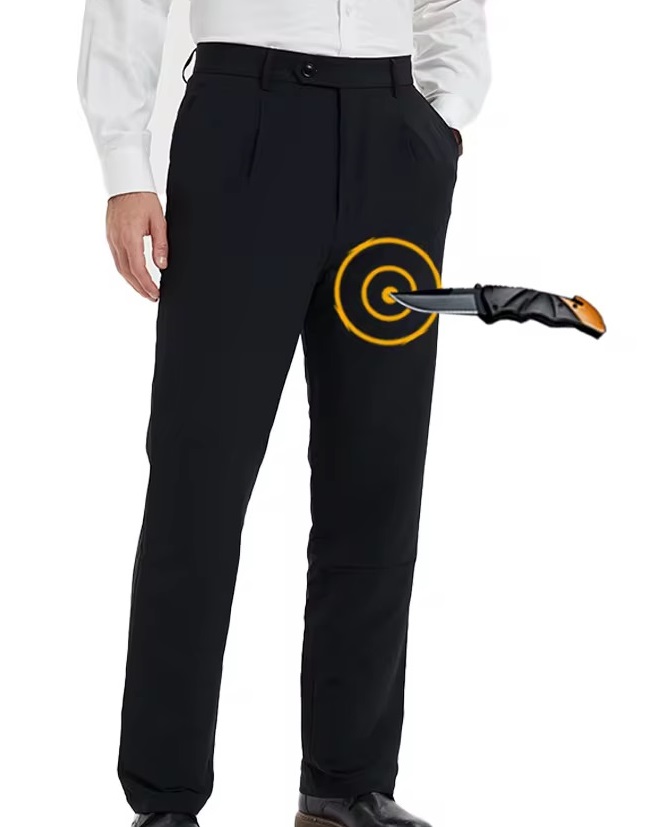
Part 4: Why consider lightweight protective clothing?
Everyday practicality and personal preferences
Protective clothing is not a suitable choice for everyone or every situation. For some people, however, the possibility of wearing a garment with protective features in a familiar casual style is worth exploring.
A T-shirt may appeal to someone who prefers a simple everyday outfit. A hoodie may suit a person who regularly wears casual outer layers, while a long-sleeve jumper may be more appropriate for cooler conditions.
The practical attraction is that these garment types can fit into an existing wardrobe, depending on their actual design. Customers do not necessarily want to change their entire style to investigate protective apparel.
But appearance is only one part of the decision. The garment’s tested performance, weight, fit, coverage and care requirements should carry at least as much importance.
Lightweight does not mean protection can be assumed
The word lightweight describes a potential practical advantage, but it does not by itself establish a garment’s protective performance.
Two products that look similar may have different constructions and specifications. Likewise, a garment that feels comfortable during a brief fitting may behave differently when worn for a full day of walking or commuting.
When comparing products, check the published weight if available, try to understand how protective components affect movement, and confirm whether the garment is designed for the intended use.
The UK National Protective Security Authority specifically recommends considering weight, correct sizing, comfort and possible movement restrictions when selecting body armour. National Patient Safety Agency+1
These are useful considerations for anyone evaluating protective clothing, whether the intended use is commuting, travel or another everyday activity.
Discreet style and ordinary clothing choices
Some shoppers prefer protective apparel that looks similar to conventional clothing rather than equipment worn visibly over an outfit.
A casual garment may be easier to incorporate into a personal wardrobe, but discreet styling should not be confused with guaranteed concealment or protection.
Customers should examine the actual garment photographs, construction details, fit and available colours. They should also consider whether the item can be worn comfortably with the layers they normally choose.
For stabApparel.com shoppers, the relevant categories are T-shirts, hoodies and long-sleeve jumpers. The best choice depends on the individual product specifications and the customer’s intended use, not simply on which style looks most like ordinary clothing.
Weather, movement and comfort
Europe includes Mediterranean coastlines, northern cities with cooler weather, mountainous regions and destinations with changeable conditions. Clothing suitable for a summer afternoon in Athens may not be appropriate for a cold evening in Grenoble.
Think about the season, expected temperatures, rain, walking distance and how much time you will spend indoors or outdoors.
A lighter garment may be more practical in warm weather, while a hoodie or jumper may fit better into a cooler-weather wardrobe. These are clothing considerations, not evidence that one garment offers superior protection.
Comfort also affects whether people can wear a garment as intended. Check sizing, mobility and care instructions, and avoid assuming that a protective garment can be washed or altered in the same way as ordinary clothing.
A realistic role in personal safety
Protective clothing should be considered an optional part of a broader personal safety plan, not a substitute for sensible decisions.
It cannot guarantee that an incident will not happen, and it does not replace leaving a threatening situation, contacting emergency services or following local safety instructions.
For most travel planning, start with the basics: know your route, secure your belongings, keep communication available and research current advice. If you decide to investigate protective clothing as well, evaluate it with the same care you would use for any safety-related purchase.
The goal is not to make travellers fearful of cities. It is to help people make informed decisions about their own circumstances and the products they choose to use.
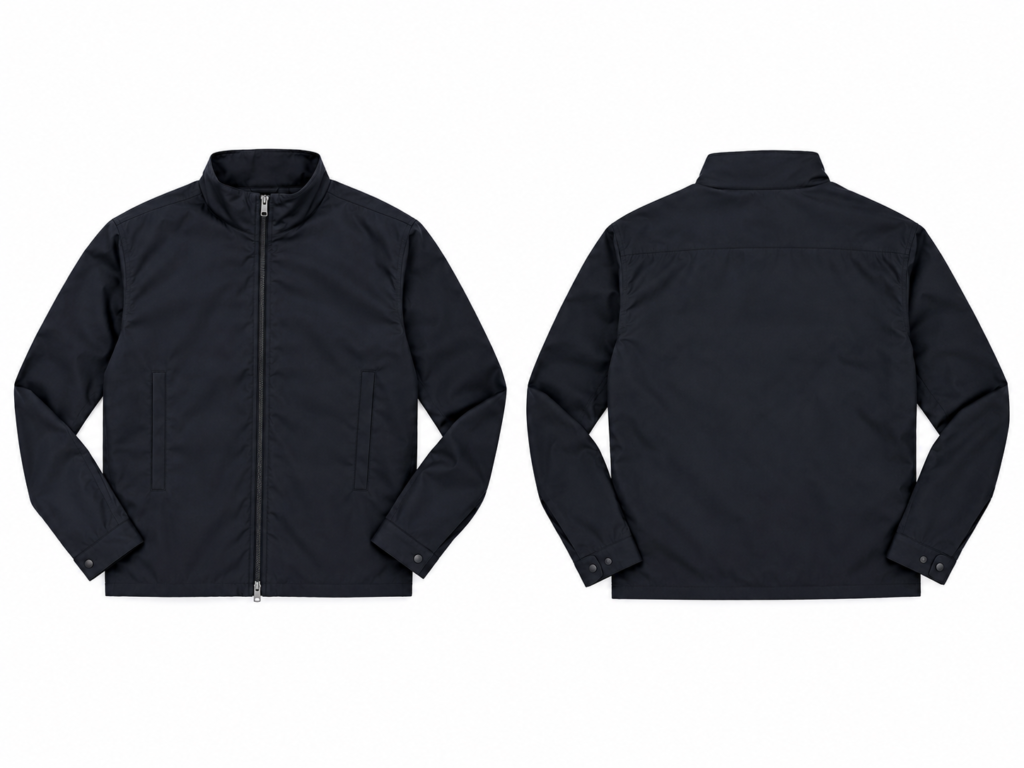
Part 5: Comparing stab-resistant T-shirts, hoodies and long-sleeve jumpers
Choosing between a lightweight stab-resistant T-shirt, a stab-resistant hoodie and a stab-resistant long-sleeve jumper is not simply a question of style. The right choice depends on the intended use, weather, fit, protective coverage, documented performance and personal preferences.
A useful starting point is to separate two questions: which garment best suits your everyday wardrobe, and what evidence supports its protective claims? Answer both before making a purchase.
1. Lightweight stab-resistant T-shirts

A practical option for simple, casual outfits
A T-shirt may appeal to travellers who prefer short sleeves, want a garment that can be worn with familiar casual clothing or need an option for warmer conditions.
Explore the stabApparel product range and confirm the current T-shirt specifications before deciding whether a particular model meets your needs.
What to consider before buying
Weather and layering. A short-sleeve style may be convenient in warm conditions and can be easier to layer beneath a jacket, depending on its design. However, a protective garment may feel different from an ordinary cotton T-shirt because of its construction.
Fit and movement. Check the size chart, measurements and guidance supplied by the retailer. The garment should be worn as instructed, and you should be able to move naturally without excessive restriction.
Protective coverage. Check exactly which areas are protected and whether the published test results apply to the finished garment. A short-sleeve design should not be assumed to protect the arms or other uncovered areas.
Care requirements. Protective components may have specific washing, drying or maintenance requirements. Follow the product instructions rather than assuming ordinary machine washing is suitable.
Evidence of performance. Look for the relevant test method, protection level and documentation. Do not rely solely on the product name or general statements about knife resistance.
Who might prefer this style?
A T-shirt may suit someone who normally dresses casually, travels in warmer weather or wants a garment that works with their existing clothes.
It may be less suitable for someone who wants long sleeves for warmth or additional fabric coverage. Even then, sleeve length alone does not establish a higher level of protection: the construction and tested coverage remain decisive.
2. Stab-resistant hoodies
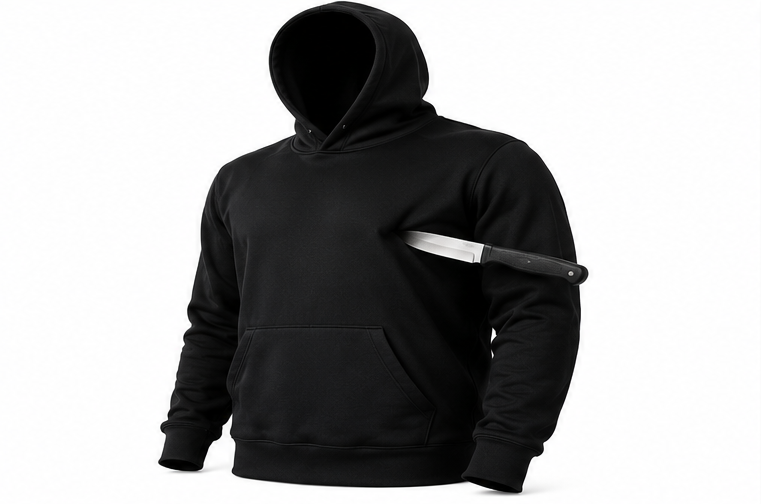
A familiar style for casual and cooler-weather wear
Hoodies are popular for everyday outfits, commuting and layering in cooler conditions. A protective version may appeal to people who already favour this style.
Review the stabApparel range to identify the available hoodie designs and check the specifications of the individual model.
What to consider before buying
Weight and construction. A protective hoodie may be heavier than an ordinary sweatshirt. Check the actual product weight and construction rather than assuming all hoodies are lightweight.
Comfort and mobility. Consider how the garment feels when sitting, walking, reaching and carrying a bag. If it is intended for prolonged wear, comfort and freedom of movement are especially important.
Weather and layering. Hoodies can be useful in cooler conditions, but their warmth depends on the fabric, lining and construction. A protective component may also affect heat retention.
Coverage. A hood does not automatically provide head or neck protection. Likewise, long sleeves do not establish that the arms are protected against a specific threat. Check the actual design and documentation.
Maintenance. Find out whether protective components can be removed, whether the garment can be washed and what inspection is required. Do not modify the garment unless the manufacturer permits it.
Who might prefer this style?
A hoodie may be a sensible wardrobe choice for people who regularly wear casual outer layers and want an item that fits that preference.
It may be less convenient in hot weather or for travellers who prioritise the lightest possible packing. The right decision depends on the particular garment and the conditions in which it will be worn.
3. Stab-resistant long-sleeve jumpers

A conventional long-sleeve option
A long-sleeve jumper may appeal to shoppers who prefer a straightforward everyday look without a hood. It can also be a practical clothing choice for cooler days, depending on its construction.
Check the stabApparel website for current jumper options and their individual specifications.
What to consider before buying
Style and fit. A conventional jumper may be easier to coordinate with work-casual or everyday outfits. Check the actual cut, sizing and available colours rather than assuming every design fits the same way.
Seasonal use. Long sleeves can be useful in cooler weather, but warmth depends on the fabric and construction. Consider whether the garment suits the temperatures you expect to encounter.
Coverage and protection. Sleeve length is not proof of protective performance. Verify which areas are covered and what tests have been conducted on the product.
Ease of use. Think about how the jumper fits beneath a coat, whether it restricts movement and whether its care requirements fit your routine.
Long-term value. Consider the purchase price alongside verified performance, expected use, maintenance and the retailer’s return policy.
Who might prefer this style?
A long-sleeve jumper may be worth considering if you want a conventional silhouette, tend to travel in cooler weather or prefer not to wear a hood.
As with the other options, it should be selected on its actual features and documented performance rather than on assumptions about what a jumper can protect against.
Comparison table: Which garment fits your needs?
| Consideration | T-shirt | Hoodie | Long-sleeve jumper |
|---|---|---|---|
| Typical style | Casual, short-sleeve | Casual, hooded | Casual, long-sleeve |
| Warm-weather wardrobe | Often easier to wear | May feel warmer | Depends on construction |
| Cooler-weather layering | May need an outer layer | Often suited to layering | Often suited to layering |
| Sleeve coverage | Short sleeves | Usually long sleeves | Usually long sleeves |
| Hood | No | Yes | Usually no |
| Fit to check | Chest, shoulders, length | Chest, shoulders, sleeves and hood | Chest, shoulders, sleeves and length |
| Protective coverage | Verify product documentation | Verify product documentation | Verify product documentation |
| Testing evidence | Check the exact model | Check the exact model | Check the exact model |
| Care requirements | Follow the manufacturer’s instructions | Follow the manufacturer’s instructions | Follow the manufacturer’s instructions |
This table compares general clothing characteristics, not measured protection levels. It does not establish that any one garment is more protective than another.
How to choose between the three
Start with the way you intend to use the garment.
If your main consideration is warm-weather clothing, a T-shirt may be the most natural place to start. If you regularly wear hoodies, a protective hoodie may fit your wardrobe more comfortably. If you prefer long sleeves without a hood, a jumper may be a better stylistic match.
Next, examine the evidence. Compare the protection claims, test documentation, body coverage and maintenance requirements of the actual products available. A garment that suits your style is not automatically the best protective choice.
Finally, check the commercial details. Confirm the price, available sizes, delivery arrangements, returns policy and current promotional terms before ordering.
Explore the options: Visit stabApparel.com to review the current range. Use the product descriptions and available documentation to make an informed comparison, and ask the retailer for clarification if any important specification is missing.
Part 6: How to choose the right garment for you and your family
Buying protective clothing is a decision that deserves more consideration than choosing a colour or selecting a familiar size. The garment needs to suit its intended purpose, and its protective claims should be supported by evidence.
The following checklist can help you compare products without relying on fear-based marketing.
1. Start with your actual needs
Ask yourself why you are considering protective clothing.
Are you looking for something to wear during a commute, a particular work activity, a trip abroad or everyday outings? The answer will influence the garment style, how long you may wear it and what features matter most.
Avoid treating a city’s crime-index position as the sole reason to buy a garment. The figures in this guide describe a general index, not your individual likelihood of being attacked.
2. Check the protection claims
This should be one of the first purchasing checks, not an afterthought.
Look for clear information about the exact product, the relevant test method, the performance achieved and the areas protected. If the retailer refers to an independent test or certification, check that it applies to the specific model being sold.
If the evidence is unclear, ask for clarification before purchasing. Do not assume that a product offers a particular level of protection because it is called “stab-proof”.
3. Choose the correct fit
Protective clothing must fit in accordance with the manufacturer’s instructions.
Review the size chart and compare the measurements with a garment you already own. If the retailer provides guidance on chest, shoulder, sleeve or body measurements, use it rather than relying solely on your usual size label.
Consider how the garment behaves when you sit, reach, walk or layer it beneath other clothes. Avoid making alterations that could affect protective components unless the manufacturer confirms that they are acceptable.
4. Think about weight and comfort
A garment intended for occasional use may be assessed differently from one you expect to wear throughout a working day.
Consider its actual weight, flexibility, ventilation, heat retention and effect on movement. Where possible, seek specific information from the retailer rather than assuming that a garment marketed as lightweight will feel light to every wearer.
Protective clothing should not cause you to overlook other practical concerns, including overheating, restricted movement or difficulty performing normal activities.
5. Match the garment to the weather
Plan around the season and activities of your trip.
- For warm destinations, consider whether a T-shirt is the most practical clothing style.
- For cooler conditions, a hoodie or jumper may fit your wardrobe better.
- For variable weather, think about how the garment works with a coat or other layers.
These are comfort and wardrobe considerations. They do not establish which garment offers the greatest resistance to a particular threat.
6. Understand maintenance and replacement
Before buying, establish how the garment should be cleaned, dried, stored and inspected.
Protective components may be affected by improper washing, damage or unauthorised alterations. Follow the supplied instructions and ask the manufacturer whether a damaged garment can still be used.
If the product’s documentation does not explain how to maintain its protective performance, seek clarification.
7. Consider children and family members carefully
Parents naturally want to make sensible decisions about family safety, but protective clothing should not be presented as essential for every child visiting a particular city.
First consider the family’s itinerary, transport arrangements, supervision, accommodation and emergency plan. If you are evaluating protective apparel for a child, check that the specific product is intended and appropriately sized for that wearer.
Do not assume an adult garment is suitable for a child or that a child’s garment provides a particular level of protection without supporting evidence. Comfort, movement and correct fit matter, and children should understand that clothing cannot make them invulnerable.
8. Check the price, returns policy and promotional terms
A product’s value depends on more than its advertised price. Consider its documented features, expected use, care requirements and the retailer’s terms.
The StabApparel returns and exchanges policy publishes conditions relating to returns, unused items, exchanges and customised products. Review the current policy carefully before ordering, especially if correct sizing is important to you. stabapparel.com
The business also advertises a free stab-resistant vest or gloves with orders, free shipping and coverage of applicable local shipping taxes. Confirm the current eligibility conditions, gift availability and precise scope of shipping-tax coverage before checkout.
Your pre-purchase checklist
Before you order
0 of 8I understand the garment’s intended protective function.I have checked the test evidence for the exact product.I understand which body areas are covered.I have reviewed the size chart and fit guidance.I have considered weight, movement and comfort.I know how the garment must be cleaned and maintained.I have checked the price, delivery and returns terms.I have verified the current free-gift and shipping offer.
Reset checklist
A considered purchase is more useful than a rushed one. Take the time to review the evidence and make sure the garment is appropriate for your needs.
Part 7: The 17-city European travel safety guide
The following city guides use the supplied ranking as a reference point for travel research. The scores are not measures of knife crime, and they do not establish that a visitor will experience violence.
Each destination has its own attractions, transport arrangements, climate and travel considerations. The advice below focuses on practical preparation and explains how different clothing styles might fit into an itinerary without suggesting that any garment guarantees safety.
1. Marseille, France — Crime index 66.7

Supplied rank 1
France · Index 66.7
Marseille is a Mediterranean port city known for its historic harbour, coastal scenery, distinctive neighbourhoods and access to the Calanques. Visitors come to explore its markets, restaurants, museums and waterfront, often combining city sightseeing with time by the sea.
Its position at the top of the supplied crime-index ranking should be interpreted cautiously. The figure is consistent with the 2026 Numbeo city ranking, but the index reflects reported perceptions of crime rather than a direct measurement of knife attacks or a visitor’s individual risk. Numbeo+1
Practical safety while exploring Marseille
Plan your routes between attractions, especially if you will be returning to your accommodation late in the evening. Check current transport services, keep valuables secure in busy areas and use reputable transport options when needed.
Marseille contains a variety of residential, commercial and tourist districts. Do not assume that the same conditions apply throughout the city. Consult current local guidance and accommodation advice when planning unfamiliar journeys.
If travelling with children, agree on meeting points and keep the group together in busy public areas. Solo travellers may find it useful to share their itinerary with someone they trust and ensure their phone is charged.
Choosing clothing for Marseille
Marseille’s Mediterranean climate makes weather planning particularly relevant. During warmer periods, a casual T-shirt may be a natural clothing choice. In cooler weather or on breezy evenings, a hoodie or long-sleeve jumper may be more practical.
If you are considering a stab-resistant version of one of these garments, assess its documented performance separately from its style. Confirm its weight, protected areas, fit and maintenance requirements.
A garment’s presence should not influence you to take unnecessary risks or enter a situation that feels unsafe.
Marseille travel checklist
- Check your route and transport options before setting out.
- Keep personal belongings secure in crowded places.
- Plan your return journey after evening activities.
- Choose clothing appropriate for the season.
- Verify any protective garment’s specifications before relying on it.
Explore the clothing options: Visit stabApparel.com to review the current T-shirt, hoodie and jumper range.
2. Birmingham, United Kingdom — Crime index 63.8
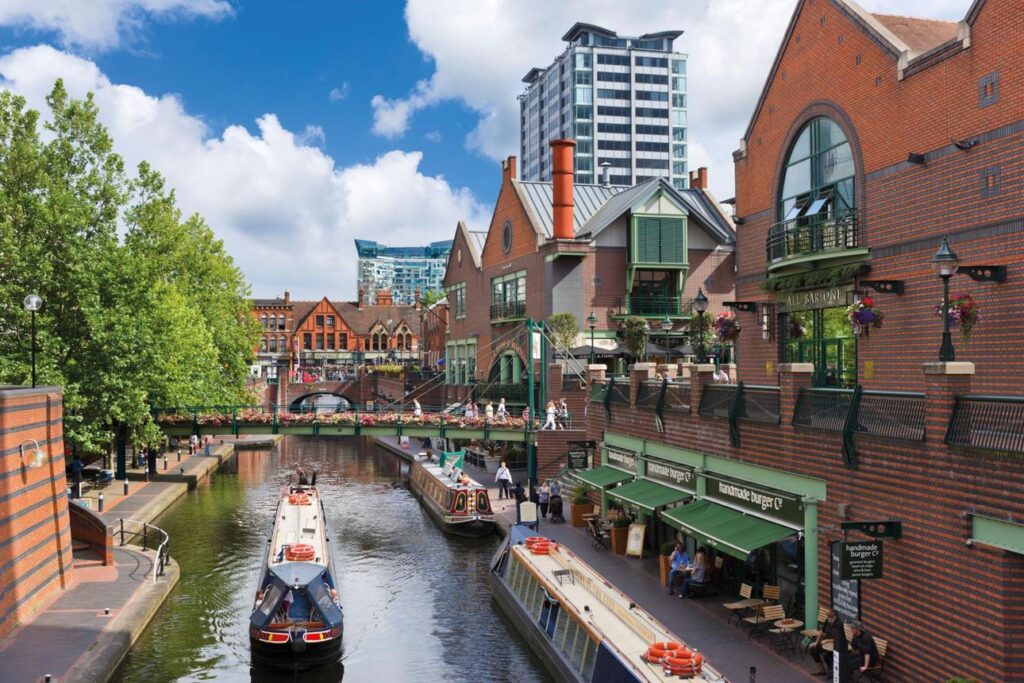
Supplied rank 2
United Kingdom · Index 63.8
Birmingham is a major English city with a broad mix of shopping destinations, cultural venues, restaurants, sporting events and business districts. Its transport connections also make it a convenient base for visiting other parts of the Midlands.
The supplied score of 63.8 closely matches the 2026 Numbeo ranking. It should not be interpreted as a percentage chance of becoming a crime victim, nor as evidence that knife crime is the principal concern for every visitor. Numbeo+1
Practical safety in Birmingham
When attending a concert, sporting event or busy city-centre attraction, check entry arrangements and the transport schedule for your return journey. Large events can create crowds and temporary changes to access routes.
As in any city, take ordinary precautions with phones, wallets and bags. If you are unfamiliar with an area, plan your route before leaving a station or venue rather than relying entirely on your phone while walking.
People travelling for work may have different needs from tourists. If you regularly finish a shift late at night, consider how you will travel home, whether public transport is operating and what alternatives are available.
Families can benefit from identifying an agreed meeting point and ensuring that everyone knows how to contact the group if separated.
Choosing clothing for Birmingham
The UK’s changeable weather often makes layering useful. A long-sleeve jumper or hoodie may be suitable for cooler days, while a T-shirt can be more practical in warmer weather or indoors.
If you are evaluating protective clothing for commuting or travel, check how its construction affects comfort during a full day of wear. Confirm the garment’s weight and documented protection rather than assuming that a casual appearance or a long sleeve establishes performance.
Birmingham travel checklist
- Check event schedules and transport times.
- Plan the journey back to your accommodation.
- Keep valuables secure in crowded shopping and transport areas.
- Dress for changing weather.
- Check the actual test evidence for any protective garment.
Considering protective apparel? Compare the current styles and specifications at stabApparel.com.
3. Coventry, United Kingdom — Crime index 62.7

Supplied rank 3
United Kingdom · Index 62.7
Coventry combines historical landmarks, university life, shopping and cultural attractions. Visitors may arrive for a short city break, an academic visit, a family occasion or a work-related trip.
Its supplied index of 62.7 corresponds to the value shown in the 2026 Numbeo ranking. As with the other figures, it represents a broad crime index rather than a specific measure of knife-related incidents. Numbeo+1
Practical safety in Coventry
For a straightforward visit, plan around the attractions you want to see and the location of your accommodation. Check transport arrangements before setting out, particularly if your plans involve evening events or travel to an unfamiliar part of the city.
Students and people visiting university campuses may need to consider different routes at different times of day. Use official campus information and local transport guidance where available.
For family visits, agree on meeting points in busy public areas and keep contact details accessible. Avoid allowing an index score alone to determine which places you visit; current local information is more useful for specific decisions.
Choosing clothing for Coventry
Coventry’s weather can vary across the year, so consider the season and how much time you will spend outdoors.
A casual T-shirt may suit warmer days or indoor activities. A hoodie or long-sleeve jumper may be a better fit for cooler weather and layered outfits.
For protective apparel, look beyond sleeve length and general product descriptions. Confirm the precise body coverage, relevant testing and care instructions before deciding whether a garment meets your needs.
Coventry travel checklist
- Plan routes between your accommodation and attractions.
- Check transport times, especially for evening journeys.
- Keep your phone charged and contact details accessible.
- Choose clothing for the expected weather.
- Review protective claims before making a purchase.
Explore your options: Visit stabApparel.com to check current garment availability and product information.
4. Grenoble, France — Crime index 62.6

Supplied rank 4
France · Index 62.6
Grenoble sits in southeastern France amid the French Alps. Its urban attractions, university environment and connections to mountain destinations make it appealing to city visitors and people combining a city break with outdoor activities.
The supplied index of 62.6 matches the 2026 Numbeo figure. It should be treated as general crime-index information, not proof of a high incidence of knife attacks or a prediction of an individual traveller’s experience. Numbeo+1
Practical safety in Grenoble
If your visit centres on the city, plan routes between accommodation, restaurants, transport and attractions as you would in any unfamiliar urban environment.
If you are using Grenoble as a base for mountain trips, pay particular attention to the conditions and equipment required for your outdoor activities. Urban clothing may not be suitable for exposed mountain environments, and a protective casual garment should not be confused with technical outdoor equipment.
Check current transport schedules and local information, especially when combining city travel with excursions. Keep belongings secure and plan your return journey if you expect to be out late.
Choosing clothing for Grenoble
Grenoble’s setting makes seasonal planning especially important. Temperatures and conditions can differ significantly between an urban afternoon and a higher-altitude excursion.
A T-shirt may suit warmer city conditions, while a hoodie or long-sleeve jumper can be useful for cooler periods. For mountain activities, choose specialist clothing appropriate to the actual conditions rather than assuming an everyday garment provides weather protection.
If you are considering a stab-resistant item for city wear, confirm the garment’s tested performance, coverage, fit and weight. Do not assume that the same garment is appropriate for every activity on your itinerary.
Grenoble travel checklist
- Check city transport and excursion arrangements.
- Plan for changing temperatures and outdoor conditions.
- Use appropriate specialist equipment for mountain activities.
- Keep personal belongings secure.
- Review the protective specifications of any garment you intend to rely on.
Compare everyday styles: Explore stabApparel.com for current product information and available protective clothing.
5. Naples, Italy — Crime index 62.3
Supplied rank 5
Italy · Index 62.3
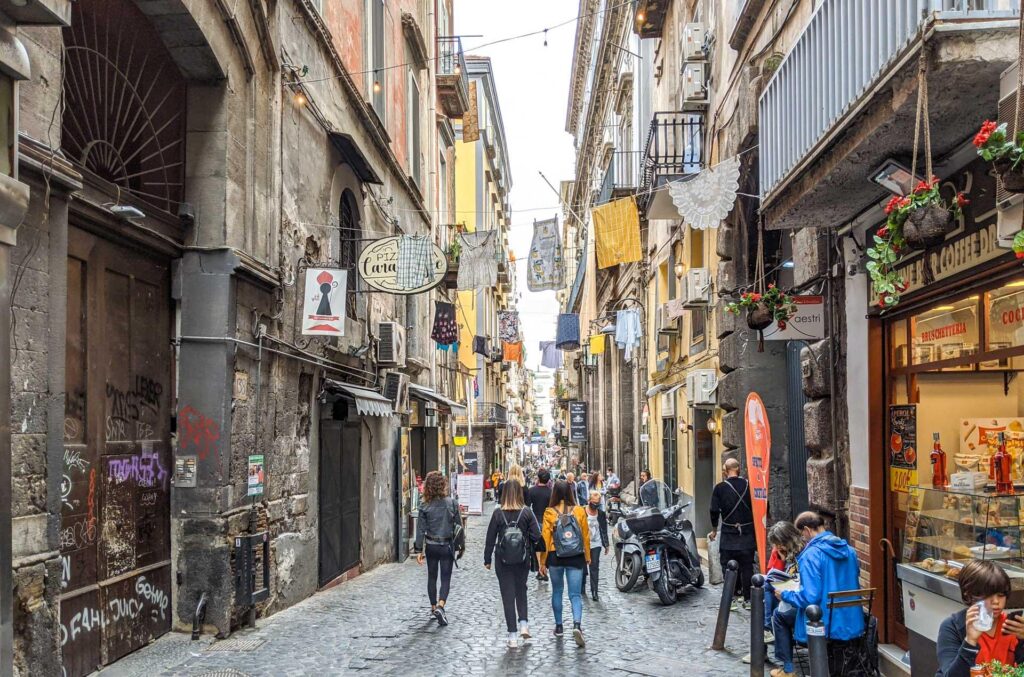
Naples is a lively southern Italian city known for its historic centre, food, architecture, waterfront and access to destinations such as Pompeii and Mount Vesuvius. Visitors can spend their days exploring narrow streets, visiting museums and enjoying the city’s distinctive culture.
The supplied crime index of 62.3 matches the 2026 Numbeo ranking. It does not establish the probability of a tourist experiencing a violent incident, and it should not be interpreted as a knife-crime statistic. Numbeo+1
Practical safety in Naples
Busy streets and crowded visitor attractions make ordinary precautions worthwhile. Keep valuables secure, pay attention to your belongings and check the arrangements for reaching your accommodation before heading out.
If using public transport, confirm routes and operating times through current transport information. When travelling with family, choose a meeting point in case the group becomes separated and make sure everyone knows how to seek assistance.
Visitors planning excursions outside the city should check local transport and entry arrangements separately. Do not assume that a general city index provides information about every attraction or destination on the itinerary.
Choosing clothing for Naples
Naples can be warm during much of the tourist season, making a T-shirt a natural wardrobe choice for many visitors. A hoodie or long-sleeve jumper may be more useful during cooler periods or for evenings when temperatures drop.
A stab-resistant version of a casual garment may interest shoppers who want to investigate protective clothing without changing their preferred style. Before buying, check its actual weight, coverage and performance documentation.
Clothing should never encourage you to confront a threatening person or remain in a situation that you could safely leave.
Naples travel checklist
- Keep valuables secure in crowded areas.
- Check transport arrangements for excursions.
- Plan your return journey before late-night activities.
- Choose weather-appropriate clothing.
- Check the evidence behind protective clothing claims.
Explore the range: stabApparel.com
6. Montpellier, France — Crime index 61.0

Supplied rank 6
France · Index 61.0
Montpellier is known for its historic centre, pedestrian streets, cultural attractions and lively student population. Its Mediterranean setting attracts visitors interested in architecture, food, shopping and nearby coastal destinations.
The supplied figure of 61.0 is consistent with the rounded 2026 Numbeo ranking. It is a broad index, not a direct measurement of violent crime or an individual’s likelihood of being attacked. Numbeo+1
Practical safety in Montpellier
When exploring pedestrian areas and busy public spaces, keep your belongings secure and be aware of your surroundings. Check public transport schedules and plan your journey back to your accommodation if you will be out late.
If your trip includes student-related visits, events or nightlife, review the specific venue and transport arrangements rather than relying on a general city score.
Families may find it helpful to plan routes and meeting points before visiting busy areas. Solo travellers can share their itinerary with someone they trust and keep their phone charged.
Choosing clothing for Montpellier
The city’s Mediterranean climate makes lighter clothing useful during warmer periods. A T-shirt may be the most natural option for hot days, while a hoodie or jumper can be useful for cooler evenings or changes in weather.
If you are considering a protective garment, compare the actual product specifications rather than assuming that all lightweight clothing has the same construction or performance. Check whether the garment’s weight and fit are appropriate for extended walking.
Montpellier travel checklist
- Plan routes through the city and back to your accommodation.
- Check transport arrangements for evening activities.
- Secure valuables in busy pedestrian areas.
- Choose clothing for the season and expected temperatures.
- Verify protective specifications before purchasing.
Find a style to suit your plans: Visit stabApparel.com.
7. Lyon, France — Crime index 59.3

Supplied rank 7
France · Index 59.3
Lyon combines historic architecture, riverside walks, food markets and a celebrated culinary scene. Visitors often explore its old town, central shopping areas, museums and neighbourhoods along the Rhône and Saône.
The supplied crime index of 59.3 is consistent with the 2026 Numbeo figure. It should be read as general index information rather than evidence that visitors face a particular level of knife-related risk. Numbeo+1
Practical safety in Lyon
A well-planned itinerary makes it easier to move between attractions without unnecessary last-minute decisions. Check transport schedules, keep valuables secure and confirm how you will return to your accommodation after dinner or evening events.
As in other major cities, conditions can vary by location and time. Use current local information when planning unfamiliar journeys, and avoid treating an overall ranking as a substitute for specific advice.
If travelling with children or older relatives, consider walking distances, access to transport and rest breaks when planning each day.
Choosing clothing for Lyon
Lyon experiences seasonal changes, so your choice of clothing should reflect the time of year. A T-shirt may suit warmer weather, while a hoodie or long-sleeve jumper can be more appropriate for cooler days.
Travellers considering protective apparel should compare fit, movement, weight, coverage and test documentation. A garment that works well for a short walk may not feel the same during a full day of sightseeing, so practical comfort deserves attention.
Lyon travel checklist
- Plan routes between sightseeing locations.
- Check public transport times.
- Keep valuables secure in crowded areas.
- Dress for the expected weather.
- Check the specific protective evidence for any garment you buy.
Explore protective clothing options: stabApparel.com.
8. Bradford, United Kingdom — Crime index 59.0

Supplied rank 8
United Kingdom · Index 59.0
Bradford has a rich industrial and cultural history, with museums, performance venues, shopping areas and access to the wider West Yorkshire region. Visitors may arrive for family occasions, cultural attractions, business or trips to nearby towns and countryside.
Its supplied crime index of 59.0 corresponds to the 2026 Numbeo figure. That index is not a measure of knife crime specifically and should not be used to make assumptions about local residents or every part of the city. Numbeo+1
Practical safety in Bradford
Plan your transport and route around the places you intend to visit. If you are unfamiliar with the area, check current information before travelling and confirm the options available for returning after an evening event.
Keep valuables secure in crowded shopping and transport areas. If your visit includes travel to neighbouring towns or rural destinations, check those arrangements independently rather than assuming the same transport options apply everywhere.
For family visits, agree on a meeting point and ensure everyone knows how to contact the group. People commuting for work should consider their usual journey, the time they travel and the availability of transport.
Choosing clothing for Bradford
The weather in West Yorkshire can be changeable, so layers may be useful throughout the year. A T-shirt can suit warmer periods or indoor activities, while a hoodie or long-sleeve jumper may be more practical on cooler days.
If considering a protective version, check the garment’s actual weight, fit and documented performance. Do not assume that a long-sleeve design protects the arms or that a casual appearance establishes any particular level of protection.
Bradford travel checklist
- Check routes and transport options before setting out.
- Plan your return journey after evening activities.
- Keep valuables secure.
- Choose layers appropriate to the weather.
- Review product specifications and protective testing.
Compare available styles: Visit stabApparel.com.
9. Nantes, France — Crime index 58.6

Supplied rank 9
France · Index 58.6
Nantes is a western French city known for its historic architecture, cultural attractions, riverside setting and creative public spaces. Visitors may explore the Château des Ducs de Bretagne, enjoy its cafés and markets or use the city as a starting point for exploring the wider region.
The supplied index of 58.6 matches the 2026 Numbeo ranking. It reflects a general crime index, not a direct measure of knife crime or the likelihood of an individual tourist being attacked. Numbeo+1
Practical safety in Nantes
Plan your routes between accommodation, attractions and transport stops. If visiting unfamiliar areas, consult current local information and check transport schedules before leaving, particularly for evening journeys.
In busy pedestrian areas, keep your belongings secure and pay attention to your surroundings. Families can agree on a meeting point in advance, while solo travellers may wish to share their plans with a trusted contact.
Avoid assuming that a city-wide score describes the conditions in every neighbourhood or at every time of day.
Choosing clothing for Nantes
Nantes can experience changeable weather, so layers may be useful. A T-shirt may work well on warmer days, while a hoodie or long-sleeve jumper can be useful when temperatures fall or conditions are breezy.
For anyone considering protective apparel, check the specific product’s fit, weight, coverage and test documentation. The style of a garment should be considered separately from the level of protection its evidence supports.
Nantes travel checklist
- Check transport schedules and return routes.
- Secure valuables in busy public areas.
- Prepare for changes in weather.
- Keep communication available when travelling alone.
- Verify the protective specifications of any garment you consider buying.
Explore the current range: stabApparel.com.
10. Liège, Belgium — Crime index 58.3

Supplied rank 10
Belgium · Index 58.3
Liège is a city in eastern Belgium with a historic centre, cultural venues, markets and transport connections to other Belgian and European destinations. Its character makes it appealing for a city break or as part of a wider itinerary.
The supplied score of 58.3 corresponds to the 2026 Numbeo figure. As with the other entries, it is an overall crime index rather than a measure of knife-related incidents. Numbeo+1
Practical safety in Liège
If you are arriving by train or connecting to another destination, check your onward transport and allow sufficient time for changes. Plan how you will reach your accommodation, particularly if arriving late or carrying luggage.
When exploring the city centre, take sensible precautions with phones, wallets and bags. If your plans include evening entertainment, check the return transport arrangements before setting out.
Families may find it useful to plan the day’s route and agree on a meeting point. Visitors unfamiliar with the local area should consult current information rather than relying on the crime index alone.
Choosing clothing for Liège
Belgium’s weather can be variable, so layering is often a practical clothing strategy. A T-shirt may be suitable for warmer periods, while a hoodie or long-sleeve jumper may be more comfortable during cooler conditions.
A protective version of one of these garments should be evaluated on its documented features, not its appearance. Check its weight, fit, intended protective function and care requirements before deciding whether it is appropriate for your trip.
Liège travel checklist
- Confirm arrival and onward transport details.
- Plan routes between accommodation and attractions.
- Keep valuables secure.
- Prepare for changeable weather.
- Check product documentation before relying on protective clothing.
Compare everyday protective styles: Visit stabApparel.com.
11. Paris, France — Crime index 58.0

Supplied rank 11
France · Index 58.0
Paris is one of Europe’s most visited cities, attracting people to its museums, monuments, architecture, restaurants, shopping streets and neighbourhood cafés. The city offers an extensive public transport network and a wide range of attractions for different types of traveller.
The supplied index of 58.0 is consistent with the 2026 Numbeo ranking. It is not a knife-crime score or an individual risk estimate. Numbeo+1
Practical safety in Paris
Crowded tourist areas and busy transport locations make ordinary awareness particularly useful. Keep your phone, wallet and travel documents secure, and be mindful of your belongings when boarding trains or visiting popular attractions.
Before setting out, check the routes between attractions and your accommodation. If you expect to return late, confirm transport times and consider a reputable alternative if public transport is unavailable or unsuitable.
Travelling with family can be easier when everyone knows the day’s plan and has a clear meeting point. Solo travellers should keep their phone charged and share their itinerary with someone they trust if appropriate.
The city’s index should not be used to assume that every neighbourhood or attraction has the same conditions. Use current local information to inform specific decisions.
Choosing clothing for Paris
Parisian weather varies across the year. A T-shirt may be suitable for warmer days, while a hoodie or jumper can be useful in cooler conditions. Layers can help when moving between outdoor sightseeing and heated indoor venues.
If you are considering a stab-resistant garment, look at its construction, documented protection, fit and weight. A conventional appearance may be appealing, but it is the evidence behind the actual product that matters.
Paris travel checklist
- Secure valuables in crowded tourist and transport areas.
- Plan transport between attractions.
- Check return journeys after evening activities.
- Dress for the season.
- Review the product’s protective documentation before purchasing.
Explore the garment options: stabApparel.com.
12. Manchester, United Kingdom — Crime index 55.9

Supplied rank 12
United Kingdom · Index 55.9
Manchester combines music, sport, shopping, museums and a busy hospitality scene. Visitors may arrive for football matches, concerts, nightlife, business meetings or a weekend exploring the city’s neighbourhoods.
The supplied score of 55.9 matches the 2026 Numbeo ranking. It should not be interpreted as a percentage probability of crime or evidence of a specific risk of knife attack. Numbeo+1
Practical safety in Manchester
Sporting fixtures, concerts and other large events can create busy transport routes and crowds. Check venue information and transport schedules in advance, and allow time for your return journey.
If visiting bars or nightlife areas, keep your phone and valuables secure, remain aware of your surroundings and make a plan for getting home. If a situation becomes uncomfortable or confrontational, leave if you can do so safely rather than escalating it.
Commuters and night-shift workers may have different requirements from visitors attending a single event. Consider your actual journey, travel times and available transport options.
Choosing clothing for Manchester
The weather can be changeable, making layers useful for much of the year. A T-shirt may be practical indoors or during warmer spells, while a hoodie or long-sleeve jumper may suit cooler days and evening journeys.
A protective garment should be selected according to its verified specifications and intended use. Check its weight and comfort for the activities you expect to undertake, as well as the body areas covered by the design.
Manchester travel checklist
- Check event and transport schedules.
- Plan your return journey before going out.
- Keep belongings secure in crowds.
- Choose clothing appropriate for changing weather.
- Verify the product’s testing evidence and limitations.
Review available options: Visit stabApparel.com.
13. Nice, France — Crime index 55.6

Supplied rank 13
France · Index 55.6
Nice is a popular Mediterranean destination known for its seafront promenade, beaches, historic old town, markets and access to other parts of the French Riviera. Many visitors spend their time walking between coastal attractions, restaurants and cultural sites.
The supplied index of 55.6 matches the rounded value in the 2026 Numbeo ranking. It should not be treated as a knife-crime statistic or a prediction of an individual’s risk. Numbeo+1
Practical safety in Nice
When exploring busy tourist areas, keep valuables secure and pay attention to your belongings. Plan your transport between your accommodation and the attractions you intend to visit, especially if you will be out late.
For beach visits, consider where you will keep your phone, travel documents and other valuables while enjoying the waterfront. If travelling with children, agree on meeting arrangements and establish clear boundaries around water and crowded public areas.
Check current local advice for events, transport changes and any specific issues affecting your planned activities.
Choosing clothing for Nice
Nice’s Mediterranean climate makes breathable, weather-appropriate clothing an important consideration. A T-shirt may be suitable for warmer days, while a hoodie or jumper may be useful during cooler evenings or outside the warmest season.
If you are considering protective clothing for everyday use, check whether the specific garment’s weight, fit and construction suit the temperatures you expect. Do not assume that a garment marketed as lightweight will feel equally comfortable in all conditions.
Nice travel checklist
- Plan routes between coastal attractions and accommodation.
- Keep valuables secure during beach visits.
- Check transport arrangements for evening journeys.
- Choose clothing suited to the season.
- Verify the protective performance of any garment you consider buying.
Explore the current styles: stabApparel.com.
14. London, United Kingdom — Crime index 55.6
Supplied rank 14
United Kingdom · Index 55.6
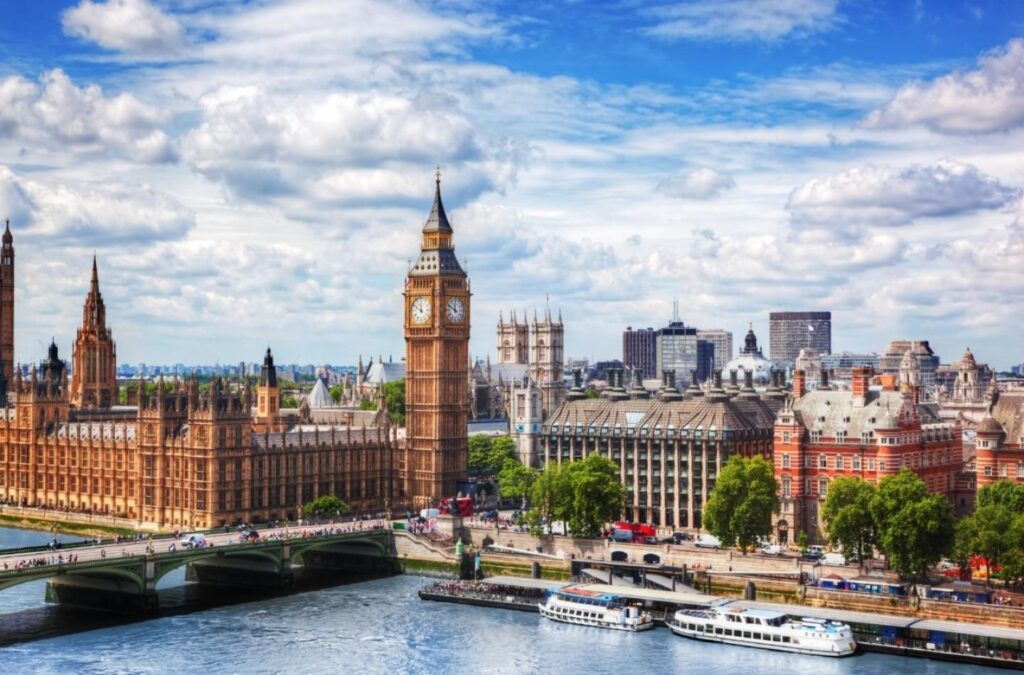
London offers an enormous range of attractions, including museums, theatres, markets, parks, historic landmarks and restaurants. Its extensive transport network allows visitors to cover considerable distances, but navigating an unfamiliar city can still require planning.
The supplied score of 55.6 is consistent with the 2026 Numbeo ranking. This general index does not establish an individual’s likelihood of experiencing violent crime or knife-related harm. Numbeo+1
Practical safety in London
Plan journeys using current transport information and allow extra time during major events or service disruptions. At busy stations and tourist attractions, keep valuables secure and pay attention to your surroundings.
If you are visiting several locations in one day, check the route between each stop rather than assuming they are close together. For evening entertainment, decide how you will return to your accommodation before setting out.
Commuters may wish to consider their regular route, departure time and alternatives if services are disrupted. Families can agree on meeting points and make sure children know how to seek help if separated.
Do not interpret the crime index as meaning that all parts of London have the same safety conditions. Local information and the nature of your journey are more useful for specific decisions.
Choosing clothing for London
London’s weather can change quickly, so layers may be helpful. A T-shirt may work for warmer conditions or indoor activities, while a hoodie or long-sleeve jumper can be useful on cooler days.
For anyone considering a stab-resistant garment, comfort during extended wear, fit and documented protection deserve careful attention. Confirm what areas the garment is designed to protect and which testing evidence applies to the model.
London travel checklist
- Plan journeys between attractions and accommodation.
- Check transport services before travelling.
- Keep valuables secure in crowded areas.
- Prepare for variable weather.
- Verify protective claims before purchasing.
Compare everyday protective clothing: Visit stabApparel.com.
15. Brussels, Belgium — Crime index 55.4

Supplied rank 15
Belgium · Index 55.4
Brussels is known for its historic Grand-Place, museums, cafés, architecture and role as an international centre. It is also a transport hub for people travelling between Belgian cities and other European destinations.
The supplied index of 55.4 matches the rounded value in the 2026 Numbeo ranking. It is not a direct measurement of knife crime or a percentage estimate of personal risk. Numbeo+1
Practical safety in Brussels
If your visit involves rail connections or travel between international transport hubs, check departure information and allow enough time to reach your platform or terminal.
When exploring busy public areas, keep valuables secure and remain aware of your surroundings. Before evening activities, confirm how you will return to your accommodation and check whether the transport options you intend to use are operating.
Business travellers may have different needs from tourists, particularly when attending meetings across several districts. Plan each journey in advance and use current local information when deciding how to travel.
Choosing clothing for Brussels
Brussels can experience cool and changeable weather, making layering useful. A T-shirt may suit warmer days, while a hoodie or jumper can be useful when temperatures fall.
If considering protective apparel, check the actual weight, fit, coverage and testing documentation. Do not assume that a garment’s appearance or sleeve length establishes its performance.
Brussels travel checklist
- Check international and local transport arrangements.
- Plan routes between accommodation and appointments.
- Secure valuables in crowded places.
- Prepare for variable weather.
- Confirm the product’s protective specifications before purchase.
Explore available styles: stabApparel.com.
16. Athens, Greece — Crime index 55.2

Supplied rank 16
Greece · Index 55.2
Athens brings together ancient landmarks, archaeological sites, lively neighbourhoods, markets and modern urban life. Visitors often spend long days walking between attractions, enjoying outdoor cafés and exploring the city’s historic districts.
The supplied index of 55.2 matches the rounded 2026 Numbeo figure. It is a broad crime index, not evidence of a particular knife-crime rate or an individual’s likelihood of being attacked. Numbeo+1
Practical safety in Athens
Plan sightseeing around the distance between attractions, available transport and the weather. During hot periods, schedule breaks, carry water and avoid assuming that every walking route will be comfortable in the midday heat.
Keep your belongings secure in busy public areas and check current transport information before setting out. If visiting archaeological sites or attending evening events, confirm opening times and how you will return to your accommodation.
Families should consider walking distances, shade, water and rest stops. Solo travellers can share their itinerary with someone they trust and keep their phone charged.
Choosing clothing for Athens
In warm weather, a T-shirt may be a practical clothing choice. A hoodie or long-sleeve jumper may be more appropriate in cooler conditions, although the garment’s construction and weight will affect comfort.
If considering protective clothing, make sure the specific product suits the climate and your intended activities. Check the documented protection and fit, and do not assume that wearing a protective garment removes the need for sensible travel precautions.
Athens travel checklist
- Plan routes and sightseeing times.
- Prepare for heat during warmer months.
- Keep belongings secure.
- Check transport and attraction information.
- Assess protective garments using verified product evidence.
Review the available range: Visit stabApparel.com.
17. Odesa (Odessa), Ukraine — Crime index 55.2

Supplied rank 17
Ukraine · Index 55.2
Odesa is a historic Black Sea city known for its architecture, cultural heritage and maritime history. However, travel decisions involving Odesa must be considered in the context of Russia’s ongoing war against Ukraine, not simply through the lens of an urban crime index.
The supplied index of 55.2 is consistent with the rounded value shown in the 2026 Numbeo ranking. That figure does not capture the full range of risks associated with armed conflict, missile and drone attacks, air-raid alerts or disruptions to essential services. Numbeo+1
Travel safety takes priority over clothing
As of 28 October 2026, the UK Foreign, Commonwealth & Development Office advises against all travel to most regions of Ukraine, with specified exceptions in parts of western Ukraine where advice is against all but essential travel. Odesa is not within those exceptions. The FCDO warns of frequent missile and drone attacks across Ukraine, including attacks affecting civilian infrastructure and transport hubs. GOV.UK+1
For travellers subject to this advice, the appropriate response is not to choose a more protective T-shirt or hoodie. It is to take the official warning seriously and avoid travel to Odesa.
Travel advice can change, so consult the current official guidance before making or changing any travel plans. Also consider the implications for travel insurance, transport availability, emergency assistance and the ability to leave if conditions deteriorate.
Anyone already in Ukraine should follow instructions from local authorities, respond promptly to air-raid alerts and identify suitable shelter locations in advance. Follow official advice about movement, curfews and other emergency measures.
Can stab-resistant clothing address war-related threats?
No. Stab-resistant clothing is not designed to protect a wearer from missiles, explosions, falling debris or the broader hazards of armed conflict. It should never be presented as a substitute for appropriate shelter, official emergency instructions or decisions about whether travel should take place.
Even in destinations without armed conflict, protective clothing cannot guarantee safety. In Odesa, the distinction is especially important because the principal travel concern addressed by current official warnings is not an ordinary urban crime index.
Odesa travel checklist
- Read the current official Ukraine travel advice before making plans.
- Do not travel to areas where your government advises against travel.
- If already in Ukraine, follow local authority instructions and air-raid alerts.
- Check emergency arrangements and transport information through official sources.
- Never rely on stab-resistant clothing as protection from military threats.
For Odesa, the most responsible personal safety recommendation is to prioritise official travel advice over any clothing purchase.
Part 8: Everyday safety strategies beyond clothing
Protective clothing is only one possible consideration in a broader approach to personal safety. Many useful precautions do not require purchasing anything. They involve planning, awareness, communication and knowing how to respond when circumstances change.
Plan your journey before setting out
Before leaving your accommodation, take a few minutes to check your destination, route and expected journey time. If you are visiting several attractions, organise them in a practical order rather than making every decision while walking around.
Save your accommodation details and essential travel information somewhere accessible. Keep your phone charged and consider carrying a power bank if you expect to be out all day.
If your plans include an evening event, decide how you will return before you leave. Check the latest transport schedules and identify a suitable alternative if your original plan becomes impractical.
Keep belongings secure
Phones, wallets, passports and travel documents can be inconvenient to replace, so take sensible steps to protect them.
- Keep bags closed in crowded areas.
- Avoid displaying valuable items unnecessarily.
- Store backup copies of important documents securely.
- Keep payment cards and travel documents organised.
- Be alert to your surroundings when using your phone in busy public places.
These measures are useful in busy destinations regardless of their position in a crime-index ranking.
Stay aware without becoming fearful
Awareness is not the same as expecting something bad to happen. It means noticing your surroundings, understanding your options and being prepared to change plans if necessary.
If a situation feels uncomfortable, consider moving towards a staffed public venue, a well-used route or another suitable place where you can seek assistance. Avoid unnecessary confrontations and leave if you can do so safely.
If somebody threatens you or you believe you are in immediate danger, prioritise getting away and contacting local emergency services. Do not stay in a dangerous situation because you are wearing protective clothing.
Make a plan with family and friends
When travelling as a group, agree on basic arrangements before leaving.
Choose a meeting point in case you become separated, ensure everyone knows how to contact the group and discuss what to do if transport plans change.
For children, provide age-appropriate instructions about seeking help from a trusted adult or local authorities. Keep essential contact details accessible, and do not assume that a garment or other personal item can replace supervision.
Solo travellers may also benefit from sharing their itinerary with a trusted contact, especially when plans involve unfamiliar destinations or late returns.
Follow local instructions
Check current official advice when travelling, and pay attention to local announcements and instructions during emergencies.
The appropriate response depends on the situation. A transport disruption may require an alternative route; a serious security incident may require leaving an area or following instructions from emergency personnel.
In destinations affected by armed conflict, follow official guidance about shelter, alerts and movement. Ordinary stab-resistant clothing is not designed to address missile, explosion or other military threats.
Where does protective clothing fit?
For people who choose to investigate stab-resistant apparel, a useful approach is to treat it as a supplementary measure whose value depends on the product’s actual performance.
Before buying, confirm what the garment has been tested to resist, what areas it covers and what limitations apply. A product description should not be taken as a guarantee that an injury cannot occur.
The most responsible safety plan combines informed decisions with practical precautions. Protective clothing may be one part of that plan, but it cannot replace avoidance, emergency services or official instructions.
Part 9: Introducing stabApparel.com
When considering protective apparel, customers often want a garment that suits their usual clothing preferences while providing clearly explained protective features. That makes product information, sizing and evidence particularly important.
stabApparel.com is the retailer featured in this guide. Its website advertises a range that includes stab-resistant T-shirts, hoodies and long-sleeve jumpers, giving shoppers several clothing styles to investigate.
The retailer’s product information should be reviewed model by model. Do not assume that every item has the same weight, materials, protection level, body coverage or care requirements.
Explore three everyday clothing styles

Stab-resistant T-shirts
A possible option for shoppers who prefer short sleeves and a simple casual look. Compare sizing, construction, intended use and the documented protective performance of the specific model.
Stab-resistant hoodies
A style worth considering if you regularly wear hoodies for commuting or everyday activities. Check the actual garment weight, fit, coverage and care instructions before purchasing.
Stab-resistant long-sleeve jumpers
A conventional long-sleeve style for shoppers who prefer a jumper without a hood. Check how the garment fits, which areas it is intended to protect and what evidence supports its claims.
These descriptions are intended to help customers compare clothing styles. The images are illustrative rather than verified photographs of specific StabApparel products. Check the retailer’s actual product pages for available models and their specifications.
What should customers look for?
A responsible purchase begins with evidence.
Review the product description, size chart and any available technical documentation. Look for information about the finished garment’s protective performance, the testing method, the covered areas and the limitations of the design.
If a product page refers to a standard or certification, confirm exactly what the reference establishes. Do not assume that every product sold by a retailer has the same independent testing or certification.
Customers should also review the return policy before ordering. The published StabApparel returns page describes conditions concerning returns, unused items, exchanges and customised products. Make sure you understand the current terms and any applicable restrictions before completing a purchase. stabapparel.com
The advertised free-gift and shipping offer
StabApparel has advertised the following offer:
- A free stab-resistant vest or stab-resistant gloves with orders.
- Free shipping.
- Coverage of applicable local shipping taxes at no additional cost.
These are promotional details supplied for this article and should be confirmed against the retailer’s current terms before publication or purchase.
Check whether customers can choose between the vest and gloves, whether any products or destinations are excluded, and exactly which local taxes or import charges are covered. Do not assume that every customs duty or government-imposed charge worldwide is included unless the retailer confirms it.
The free gift may be a useful addition to an order, but its value should not replace the more important decision of whether the main garment meets your requirements.
A sensible next step
If you are interested in protective casual clothing, begin by comparing the actual products and asking questions about any unclear specifications.
Visit stabApparel.com to review the available range and current offers. Choose based on the evidence, fit, intended use and commercial terms rather than on fear or a general crime-index position.
Part 10: How to buy with confidence
An online product page should help you understand what you are buying, what it is intended to do and what you can reasonably expect from it.
Before ordering protective apparel, use the following steps to make an informed decision.
Step 1: Read the product specifications
Confirm the exact product name, available sizes, materials, weight where stated and intended use.
Do not transfer specifications from one garment to another. A hoodie and a T-shirt from the same retailer may have different constructions or protective features.
Step 2: Ask for the testing evidence
If the product is advertised as stab-resistant, ask what testing supports that claim.
Where appropriate, verify the test method, performance level, testing organisation and whether the results apply to the finished garment. If the product page does not provide enough information, request clarification before relying on the product for protection.
Step 3: Check sizing carefully
Use the retailer’s size chart and compare the measurements with a garment that fits you well.
If you are between sizes or unsure how protective components affect fit, ask the retailer for guidance before ordering. Do not assume that you can change the size after an order has been confirmed.
Step 4: Review care and maintenance instructions
Check whether the garment can be washed normally, whether any protective components can be removed and how the item should be inspected for damage.
Follow the manufacturer’s instructions. Do not alter protective components or use cleaning methods that have not been approved.
Step 5: Understand delivery, returns and exchanges
Check the current delivery estimates and the retailer’s return and exchange conditions. Read any restrictions concerning used items, customised products or order cancellations before purchasing.
The published StabApparel returns and exchanges policy sets out conditions that customers should read carefully. stabapparel.com
Step 6: Confirm the promotional offer
If you are ordering to receive the advertised free vest or gloves, check the current eligibility conditions and how the gift is selected or supplied.
Likewise, confirm the scope of free shipping and local shipping-tax coverage for your destination. A clear understanding of the terms will help you compare the total cost of your order.
Step 7: Make the decision on evidence and value
The best purchase is not necessarily the cheapest garment or the one with the most confident marketing language. Consider the verified protective performance, fit, intended use, maintenance, price and applicable terms together.
If a product’s critical claims cannot be verified, do not assume that they are true simply because they appear on a sales page.
Ready to compare your options? Visit stabApparel.com to review the current product range, read the available specifications and check the terms of the latest offer.
Part 11: Frequently asked questions about stab-resistant clothing
1. What is stab-resistant clothing?
Stab-resistant clothing is designed to resist penetration under defined testing conditions. Its performance depends on the garment’s materials, construction, coverage and the particular test used.
Customers should check the evidence for the specific product rather than assuming all garments described as stab-resistant offer the same protection.
2. Are stab-proof T-shirts genuinely stab-proof?
The term stab-proof can be misleading if it implies that a garment is guaranteed to prevent every knife injury. A more cautious description is stab-resistant, where the product’s performance is supported by relevant testing.
Before purchasing a T-shirt, check which tests have been conducted, what protection level was demonstrated and which areas are covered. No garment should be assumed to make the wearer invulnerable.
3. What is the difference between stab-resistant and cut-resistant clothing?
Cut-resistant clothing is intended to resist cutting or slicing forces, while stab-resistant clothing is intended to resist penetration by a pointed object under specified conditions.
The two functions are different. Evidence that a material resists cuts does not automatically establish that it provides equivalent resistance to a stabbing force.
4. Can lightweight stab-resistant clothing be worn every day?
That depends on the garment’s construction, fit, weight, care instructions and intended use.
A casual design may suit someone’s everyday wardrobe, but customers should confirm that the particular product is appropriate for prolonged wear and follow its fitting and maintenance instructions.
5. Are stab-resistant hoodies suitable for travelling?
A hoodie may be a practical clothing style for travel, particularly for people who already prefer casual outer layers. However, suitability depends on the specific product, weather, comfort and intended use.
Check the garment’s actual weight, fit, protective coverage and testing documentation. Do not assume that all hoodies offer the same performance.
6. What are the potential advantages of a stab-resistant long-sleeve jumper?
A long-sleeve jumper may appeal to someone who prefers a conventional casual style without a hood. Depending on its construction, it may also fit naturally into a cooler-weather wardrobe.
Sleeve length alone does not establish protection. Review the actual product specifications and confirm what areas the garment is intended to protect.
7. How do I choose between a T-shirt, hoodie and jumper?
Begin with your intended use, the weather and your clothing preferences.
A T-shirt may suit warmer conditions, a hoodie may fit a casual layered outfit, and a jumper may suit someone who prefers long sleeves without a hood. Then compare the individual garments’ weight, fit, testing evidence, coverage and care requirements.
Do not choose solely on the assumption that one style is more protective than another.
8. Can stab-resistant clothing guarantee protection against a knife attack?
No. Protective clothing cannot guarantee that an injury will not occur. Its performance depends on the product’s tested capabilities, coverage and the circumstances of an incident.
It should be considered only as a potential supplementary measure, not a substitute for avoiding danger, leaving threatening situations or contacting emergency services.
9. Does stab-resistant clothing protect the entire body?
Not necessarily. Coverage varies by design, and areas outside the garment remain exposed. Even within covered areas, the level of protection depends on the specific product and its demonstrated performance.
Check the manufacturer’s documentation rather than assuming that a T-shirt, hoodie or jumper provides full-body protection.
10. What should I look for in protective clothing testing?
Look for the exact product tested, the applicable standard or test method, the testing organisation, the demonstrated performance level and any stated limitations.
If a seller refers to a certification, confirm what it actually establishes and whether it applies to the finished garment. A general claim or a reference to a standard is not enough to establish that a particular product has passed a particular test.
11. Can stab-resistant clothing be washed normally?
Not necessarily. Cleaning and maintenance requirements depend on the product’s construction and protective components.
Read the manufacturer’s instructions before washing, drying, ironing or altering the garment. If the instructions are unclear, ask the retailer or manufacturer before proceeding.
12. Is protective clothing suitable for children?
Suitability depends on the particular product, its intended wearer, sizing and documented performance.
Do not assume that an adult garment is suitable for a child or that a child-sized item provides a particular level of protection without evidence. Parents should also prioritise supervision, sensible travel planning and age-appropriate safety guidance.
13. Should I wear stab-resistant clothing in every European city?
There is no universal requirement for every traveller to wear stab-resistant clothing in every city.
Your decision should depend on your circumstances, intended activities and an informed assessment of the garment itself. A general crime index does not establish that every visitor faces the same risk or needs the same equipment.
Practical travel precautions remain important regardless of what you wear.
14. Does a high crime index mean a city is unsafe for tourists?
Not necessarily. A city-wide crime index is a broad measure and does not tell you precisely what an individual visitor will experience.
The supplied ranking closely matches the 2026 Numbeo city index, which should not be confused with a direct measure of police-recorded crime or knife attacks. Numbeo+1
Use it as one source of context alongside current official travel advice, local information and your planned itinerary.
15. What other personal safety precautions should travellers take?
Plan routes, check transport times, keep your phone charged, secure valuables and share your itinerary with someone you trust when appropriate.
Avoid unnecessary confrontations, leave uncomfortable situations when you can do so safely and follow local emergency instructions. For destinations affected by armed conflict, official travel advice should take priority over ordinary urban safety planning.
16. What free gift does stabApparel.com offer with orders?
The advertised offer supplied for this article is a free stab-resistant vest or stab-resistant gloves with orders.
Customers should confirm the current terms, availability, eligibility and whether they can choose between the gifts before placing an order.
17. Does stabApparel.com offer free shipping?
The retailer’s advertised offer includes free shipping. Check the current checkout terms and destination-specific conditions to confirm how the offer applies to your order.
18. Does stabApparel.com cover local shipping taxes?
The supplied offer states that the retailer covers applicable local shipping taxes at no additional cost.
Before ordering internationally, confirm the exact scope of this promise. Do not assume that every customs duty, import charge or government-imposed fee is covered unless the retailer explicitly confirms it.
19. How can I choose the right size?
Start with the size chart and measurements provided for the exact garment. Compare them with clothing you already own and consider how the product’s construction affects fit and movement.
If you are unsure, contact the retailer before ordering. Review the current returns and exchange policy as well, since conditions may apply to used, customised or otherwise restricted items. The published policy is available on the StabApparel website. stabapparel.com
20. Where can I find more information about stabApparel products?
Visit stabApparel.com to explore the current product range and available offers.
Review each product’s specifications, sizing and care instructions, and request supporting testing documentation if it is not available. Check the current shipping, tax, return and promotional terms before purchasing.
Part 12: Conclusion — Make informed choices about personal safety and protective clothing
Travelling through Europe offers opportunities to explore remarkable cities, experience different cultures and enjoy time away from home. Marseille, Birmingham, Coventry, Grenoble, Naples and the other destinations covered in this guide each have their own attractions, practical considerations and local circumstances.
The supplied 2026 crime-index ranking offers a starting point for further research, but it should not be mistaken for a list of cities ranked by knife crime. A broad index cannot predict what will happen to an individual traveller, and a high score does not mean that every neighbourhood or visitor faces the same circumstances.
The most useful approach is to plan sensibly. Research your destination, organise transport, protect your belongings, keep communication available and follow current official guidance. If you are travelling with family, make sure everyone understands the itinerary and knows how to seek assistance if plans change.
For some people, protective clothing is another consideration worth investigating.
Lightweight stab-resistant T-shirts, hoodies and long-sleeve jumpers may appeal to shoppers who prefer casual clothing styles. However, the value of a particular garment depends on its actual construction, verified protective performance, fit, coverage and maintenance requirements—not simply its name or appearance.
Take time to compare products. Ask for the testing evidence, check which areas are protected and make sure you understand the limitations. No garment can guarantee that an injury will not occur, and protective clothing cannot replace avoiding danger, seeking help or following emergency instructions.
Explore the StabApparel range
If you are considering protective casual clothing, stabApparel.com is a place to review the available T-shirt, hoodie and long-sleeve jumper options.
The advertised offer supplied for this guide includes a free stab-resistant vest or gloves with orders, free shipping and coverage of applicable local shipping taxes at no additional cost. Confirm the current terms and eligibility conditions before checkout.
The right purchasing decision should balance your needs, the garment’s evidence, comfort, price and the terms of the order. If an important product claim is unclear, ask for further information before relying on it.
Make your next step an informed one: compare the available styles, review the specifications and decide whether a particular garment is appropriate for your circumstances.
Personal safety is not about assuming the worst in every city. It is about understanding the situation, preparing sensibly and making choices based on reliable information.